
Miranda Lambert’s Crisco, released October 2, 2026, takes country music onto the dance floor without leaving its complicated women at the door. The title gives away the country-and-disco idea, but the more interesting question is what Lambert does with it. Can a brighter, more luxurious setting make room for the wit, restlessness and emotional contradictions that give her songs their staying power?
The album’s case rests on more than a mirror ball. Ella Langley joins the opening “Snakeskin Boots,” Chris Stapleton returns on “A Song To Sing,” and a Jim Croce cover puts songwriting itself near the center of the closing stretch. Our assessment: Crisco is most persuasive when its danceable premise serves a character or a feeling. Its appeal is the conversation between country storytelling and an expansive arrangement, rather than novelty alone.
This Miranda Lambert Crisco review is a research-led editorial assessment. Our sources and listening limitations are explained below.
For the longer story behind this era, start with our Miranda Lambert artist page, covering her biography, major songs, albums and career.
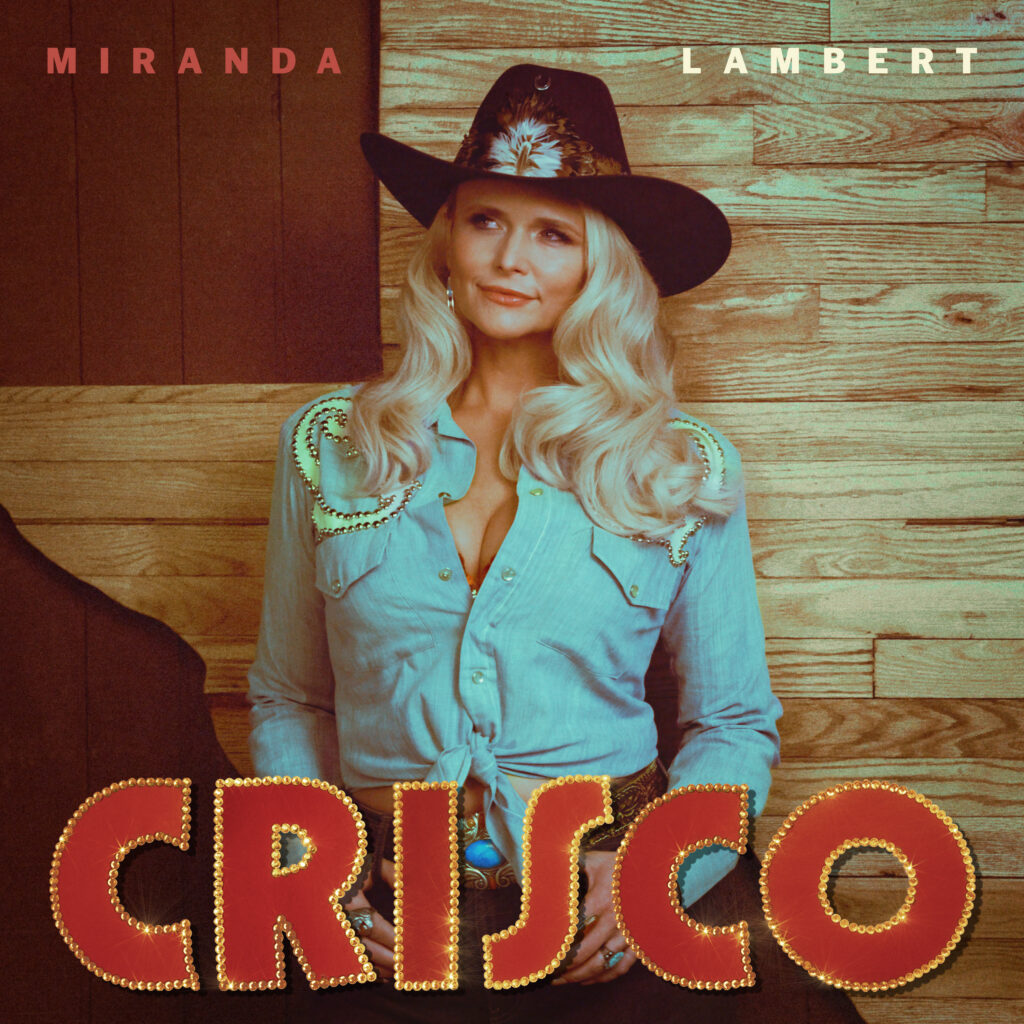
Crisco at a glance: release, guests and background
Crisco is a 12-song Miranda Lambert album released through MCA on October 2, 2026. The recording copyright is Vanner Records under license to UMG. The standard album runs approximately 38 minutes. It follows Postcards from Texas, released in 2024, and develops a musical direction already signaled by the Chris Stapleton duet.
Lambert and Jesse Frasure lead the album’s production. Their recording sessions at Nashville’s Blackbird Studio included a nine-piece string section. That detail matters: the orchestral component is part of the project’s foundation, rather than just an ornamental flourish added to its marketing.
The release campaign introduced “Crisco,” “Till The Going’s Gone,” “Sunset Marquis” and “Two Things Can Be True” ahead of the album. “Snakeskin Boots” received an iHeart premiere on release day, with its country-radio impact date announced for October 12. “A Song To Sing” first arrived in July 2025, so its appearance here gives an earlier collaboration a full-album setting.
Country and disco share more ground than the title suggests
Disco offers a steady invitation to move; country offers reasons somebody might need to. That is the useful tension behind this record. Dancing can mean celebration, but it can also mean keeping yourself together, avoiding an uncomfortable conversation or finding a little company after disappointment.
Lambert’s stated references reach beyond a single genre. In her track commentary, she connects the project to classic country, orchestral pop and soft rock. Those influences help explain why Crisco is better approached as a collection of related moods than as twelve variations on one dance beat.
The production concept also challenges a familiar assumption about authenticity. A steel guitar and a string arrangement can carry the same emotional message. A polished backdrop does not automatically make a country story less specific. The real test is whether a song has something to say after the pleasure of its surface wears off.
That gives listeners a practical way into the album: pay attention to who is speaking, what she wants and how the arrangement changes the meaning. The country/disco combination is an opening argument. The characters have to finish it.
The songs that explain the album
“Snakeskin Boots”: Ella Langley enters Lambert’s world
The opening duet with Ella Langley makes a smart first impression conceptually: two distinctive country singers share a cinematic Western setting. Lambert has identified Nancy Sinatra’s “Bang Bang” as an inspiration. The point is atmosphere and swagger, giving the record a dramatic entrance before its title track spells out the premise.
It is also a meaningful exchange between collaborators. Lambert helped write and produce Langley’s “Choosin’ Texas”; Langley now appears on Lambert’s own record. This is a working musical relationship, and the guest placement carries more weight than a familiar name added to a tracklist.
The released credits name Lambert, Frasure, Natalie Hemby and Brendan McLoughlin as the songwriters. Langley is credited as a featured performer, which is an important distinction from her shared writing history with Lambert elsewhere. Fans following that partnership can also explore our Ella Langley Dandelion album coverage.
“Crisco”: the premise needs a sense of humor
The title track is the album’s calling card. Its playful framing makes the stylistic combination easy to grasp. Lambert describes its arrangement in terms of a seventies disco rhythm section and strings, with a deliberately kitschy spirit.
That willingness to be a little silly is useful. Country humor has always made room for exaggerated situations and memorable turns of phrase. Here, the title gives listeners permission to enjoy the idea before debating genre boundaries. The limitation is equally clear: a concept song can introduce a record, but cannot supply all of its emotional depth. The surrounding songs need to give the party a reason.
Watch the official “Crisco” video on YouTube.
“Cowgirl Curtsy” and “Two Things Can Be True”: room for heartbreak
These songs are important to the album’s balance. Lambert places “Cowgirl Curtsy” in the orbit of Patsy Cline and describes “Two Things Can Be True” as a companion, with an arrangement inspired in part by Santo & Johnny’s “Sleep Walk.” Their presence keeps the album’s lighter mission from becoming emotionally one-dimensional.
The second title also expresses a particularly country kind of problem: understanding your feelings does not necessarily simplify them. A good relationship song can admit conflicting truths without rushing toward either reconciliation or revenge. Within a record built around movement, that kind of hesitation is a valuable change of perspective.
“Cuttin’ Onions”: a funny excuse with a bruise underneath
This is the most immediately revealing songwriting idea in the sequence. Its narrator uses a kitchen explanation for tears she would rather not attribute to a man. The joke gives her control over the story, even as the explanation leaves room for doubt.
That is why it deserves attention beyond its punch line. Humor can be a defense, and a strong country narrator can insist she is fine while allowing the audience to recognize the effort behind the insistence. The song’s premise offers a direct bridge to the attitude longtime Lambert listeners already know.
“Till The Going’s Gone”: movement becomes its own answer
Lambert’s commentary identifies Harry Nilsson’s “Everybody’s Talkin’” as a reference, with twelve-string guitar and steel among the arrangement’s defining elements. This is a different kind of motion from a dance-floor invitation: the restless urge to keep traveling.
The song helps widen the album’s setting. A record about freedom becomes more interesting when freedom has more than one meaning. Leaving can be brave, impatient or avoidant. Placing a road song alongside romantic and humorous material gives the listener another way to interpret that release.
“A Song To Sing”: Chris Stapleton belongs in this setting
The duet with Chris Stapleton gives the album a clear romantic center. Its country-soul approach connects the project’s spacious production to two singers whose voices can command attention without an elaborate explanation.
Lambert has described the song as a modern nod to the Kenny Rogers/Dolly Parton duet tradition and Barry Gibb’s influence. That reference makes the pairing easy to understand: the pleasure is in the exchange between the singers, rather than a contest to deliver the biggest note.
There is an important credit distinction here. Dave Cobb is the producer of “A Song To Sing,” with Frasure credited for additional production. Lambert, Stapleton, Frasure and Jenee Fleenor wrote it. Treating every track as an identical Lambert/Frasure production would miss this earlier recording’s role in the album’s development.
Watch the official “A Song To Sing” music video.
The Croce cover and “Sunset Marquis”: two ways to close the circle
“I’ll Have To Say I Love You In A Song” is a Jim Croce composition, placed immediately after the Stapleton duet. The sequence is thoughtful: one song celebrates a shared musical expression of affection, and the next turns to a classic about using a song to communicate it.
“Sunset Marquis” then supplies a change of scenery. Lambert’s commentary describes a tribute to the Los Angeles hotel. Closing with a place gives the album a destination after its changing emotional and musical settings. The ending asks listeners to remain inside the world it has built, rather than closing with a grand statement about the experiment.
Songwriting and production: the details behind the polish
The released recording credits offer a more useful picture than a simple guest list. Kris Wilkinson is credited with string arrangements and conducting. Natalie Hemby contributes writing and background vocals on several tracks. Ashley Monroe and Waylon Payne have writing and background-vocal credits on “To Everything” and “Sunset Marquis.” McLoughlin shares writing credits on five songs.
Those contributions matter because the album’s premise depends on craft. Orchestration can make the same lyric feel more vulnerable, more theatrical or more assured. Background voices can suggest companionship around an otherwise solitary narrator. The production question is not merely how much is happening; it is whether those choices give the song a clearer emotional shape.
Lambert’s involvement as writer and producer also keeps the concept tied to her own decisions. Crisco offers a useful reminder that an artist’s identity can live in phrasing, characters and taste as much as in one preferred set of instruments.

Where Crisco fits in Miranda Lambert’s career
The immediate comparison is with Postcards from Texas. The new record takes a different organizing idea: instead of making geography its headline, it builds around the possibilities of a musical meeting point. That shift gives listeners a fresh route through a familiar songwriter’s concerns.
Our Miranda Lambert biography and album guide traces the broader catalog, including Kerosene, Platinum, The Weight of These Wings, The Marfa Tapes and Palomino. Against that history, an album centered on orchestral color and pleasure is another choice of perspective. It need not replace the earlier records to justify itself.
For longtime fans, the telling question is whether they recognize Lambert’s people inside the new setting. The guarded humor of “Cuttin’ Onions,” the emotional complications of the heartbreak songs and the restless road-song impulse give them several entry points. A listener who mainly wants her most confrontational material may connect less readily with the record’s lighter purpose.
Who should spend time with Crisco?
Newer country listeners drawn in by Ella Langley should begin with “Snakeskin Boots,” then follow the record beyond its guest features. Stapleton fans have an obvious starting point in “A Song To Sing,” but the surrounding sequence explains why that duet belongs on this particular album.
For listeners who enjoy classic country duets, orchestral pop or country songs with humor, the project’s references create a promising overlap. The album also offers an approachable length: twelve songs leave enough room for a range of moods without requiring a marathon commitment.
Its potential dividing line is polish. People who value a rougher, more exposed setting may find the concept less appealing. That is a matter of musical preference, rather than evidence that a brighter album is inherently shallow. The songs deserve to be judged on what their chosen setting allows them to express.
Final assessment: the stories make the experiment matter
Crisco has a strong organizing idea and several compelling reasons to explore it. The collaborations connect Lambert to both a current country breakout and an established vocal partner. The humor, heartbreak and traveling impulse give the concept more than one emotional job. Its strongest argument is that joy and complexity can occupy the same country record.
The most useful starting tracks are “Snakeskin Boots,” “Cuttin’ Onions,” “Two Things Can Be True” and “A Song To Sing.” Together, they show the different questions the album raises: attitude, self-protection, contradiction and connection.
Our research-led assessment is favorable to the project’s ambition, with its character-driven songs offering the clearest reasons for lasting interest. The test over time will be whether listeners return to those songs after the country/disco concept becomes familiar. Lambert has given them more to consider than the title alone.
Complete Crisco tracklist
- Snakeskin Boots (with Ella Langley)
- Crisco
- Cowgirl Curtsy
- Two Things Can Be True
- Cuttin’ Onions
- Till The Going’s Gone
- To Everything
- Whiskey Business
- Right Where We Left It
- A Song To Sing (with Chris Stapleton)
- I’ll Have To Say I Love You In A Song
- Sunset Marquis
Sources and review basis
Checked October 5, 2026. This is a research-led editorial assessment based on published recording credits, official release information, Lambert’s track commentary and documented arrangements. Firsthand full-album listening was unavailable for this review. The official videos above let readers explore two key recordings directly.