
Who is Allen Frizzell
Allen Frizzell occupies a distinctive place in country music history: not as a mass-market superstar, but as a working singer-songwriter who came out of one of country music’s most influential family lines and built a career across two adjacent worlds, traditional country and Christian-country. The Frizzell surname alone carries unusual weight. Allen’s older brother Lefty Frizzell was inducted into the Country Music Hall of Fame in 1982 and remains one of the most influential vocal stylists in country history, while brother David Frizzell became a major hitmaker of the late 1970s and early 1980s. Allen’s story matters because it extends that family history into a less documented, but still authentic, line of work: charting country singles, Nashville label activity, professional songwriting, testimony-rooted Christian-country records, and later family collaborations that kept the Frizzell catalog alive for new audiences.
Any authoritative Allen Frizzell biography has to begin with a point of caution as well as a point of pride. Publicly indexed sources do not yet provide a completely clean, day-by-day archival record of his life and catalog. Secondary catalog notes consistently place his birth in Paris, Texas, in 1951, and official family-adjacent coverage reinforces that East Texas origin story, but I did not locate a primary public source for his exact full birthdate during this research pass. That is precisely why a well-built biography page can carry real SEO value: it can become the best-organized and most transparent destination on the web for Allen Frizzell queries by clearly separating verified facts from reasonable but still unconfirmed details. Done properly, the page should read not as hype, but as a careful reconstruction of an artist whose career intersected with major country names, major family history, and a meaningful spiritual second act.
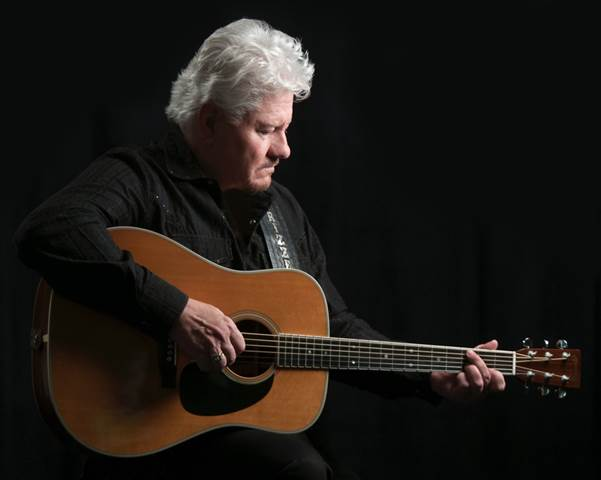
Early life and the Frizzell family legacy
Allen Frizzell was born in Paris, Texas into one of country music’s most legendary families. From there his family moved to Tulare, California where was raised got married to his first wife and had a son named Allen Jeffrey Frizzell. Allen Frizzell was born into a family whose musical identity was already being formed by the time he reached adulthood. The Frizzell brothers became associated with both artistry and songwriting over multiple decades, and Allen’s official biography presents him as the youngest brother in a family whose name had been visible on the charts since the early 1950s. That family context is not just decorative background; it helps explain both the opportunities and the shadows surrounding Allen’s career. Lefty’s voice and phrasing changed the sound of postwar honky-tonk, and David later became a charting country star with major duet and solo success. Growing up in that environment meant Allen inherited not only a recognizable last name, but also a very specific standard: in the Frizzell world, singing was not enough unless a singer could also bring emotional conviction, phrasing, and song sense.
Allen’s official account says he began his musical journey at nineteen, singing and playing guitar with his older brothers. That detail matters because it places his development inside the lived machinery of country music rather than at its edges. He did not emerge from a talent contest or a sudden label showcase. He learned in the long, traditional way: onstage, in family proximity, under the pressure of comparison, and in the practical reality of musicianship. Official and secondary sources alike suggest that his early years involved substantial West Coast activity, which fits the broader Frizzell family migration story and the California chapter of Lefty’s career. Even when the public record gets thin, the pattern stays recognizable: Allen was shaped by the same geographic and musical circuits that defined mid-century country professionalism — Texas roots, Arkansas and oil-town family movement in the wider Frizzell story, California stage experience, and eventual Nashville gravity.
The first fork in the road
One of the strongest and most human elements of Allen Frizzell’s biography is that his first major musical fork was not simply commercial; it was spiritual. According to his official biography, he initially felt called toward gospel music after becoming a Christian and built a three-piece band that ministered around California. That is a crucial piece of the Allen Frizzell story because it shows that the faith-centered phase of his career was not an afterthought invented late in life. It had roots much earlier, even before his most visible country-chart moment. In other words, the Christian-country era was not a sudden rebrand. It was, in his own telling, a return to an earlier conviction that had already been present before Nashville, labels, personal upheaval, and commercial pressure took over.
That early gospel impulse, however, did not immediately become the center of his professional identity. His official site says that with “little encouragement,” he shifted back toward country music, began working the West Coast in a more conventional country lane, and soon saw results. This is the part of the biography where Allen becomes most legible as a professional country artist rather than simply a member of a famous family. He was not just trading on the Frizzell name; he was working, adapting, and learning how to move in the industry’s realities. A useful biography page should make this tension explicit: Allen Frizzell’s life is not best understood as a straight line. It is a pendulum between tradition and testimony, family legacy and individual identity, country stardom and spiritual vocation. That tension is one of the page’s best editorial assets, because it gives the story shape and emotional credibility.
Dottie West, Nashville, and the label years
The most important career-break anecdote in Allen Frizzell’s official biography is his connection to Dottie West. The site says Allen opened a show for West, impressed her with his talent, and was urged by her to move to Nashville and work for her. For a biography page, that story does several jobs at once. First, it gives Allen a direct bridge into the core Nashville establishment rather than leaving his move as a vague aspiration. Second, it connects him to one of country music’s most respected female stars. Third, it provides a clean narrative transition from regional work to Music Row visibility. If you are building an SEO page meant to satisfy searchers looking for “How did Allen Frizzell get started?” this is one of the most valuable verified details on the web.
Allen’s official biography goes on to say that he later signed with MCA and Sony Records as a recording artist, appeared on numerous well-known television shows, and worked with some of the biggest names in the business. Bear Family’s capsule biography, meanwhile, places Sound Factory and Epic among his label associations and identifies “Beer Joint Fever” as his first hit in 1981. A good production page should present these label years carefully. It should say that Allen’s recording career moved through multiple label relationships — including Sound Factory, MCA, Sony, and, in secondary sources, Epic and CMS — while also acknowledging that public indexing of the full release list from his Nashville label period remains incomplete. That is the right balance between authority and honesty. It recognizes that Allen was not merely a local or amateur figure, but it avoids pretending that the release chronology is cleaner than current documentation allows.
The breakthrough single and early chart history
Allen Frizzell’s first solidly documented country-chart milestone is “Beer Joint Fever.” MusicVF, drawing on Billboard-style country chart references, lists the song at No. 86 on the U.S. country chart in 1981 on Sound Factory 429, and Bear Family identifies it as his first chart hit that same year. In practical biography terms, that makes “Beer Joint Fever” the anchor song of Allen’s early mainstream storyline. It may not have been a Top 10 smash, but it proves that Allen was not simply adjacent to country success through his family. He entered the national chart conversation under his own name. That is exactly the kind of fact that belongs high on the page and early in the narrative, because it answers the user’s likely question in one sentence: yes, Allen Frizzell did chart as a country singer.
Secondary discography work also points to an earlier Dot single period in 1977 and an additional Sound Factory follow-up in 1981, including “She’s Livin’ It Up (And I’m Drinkin’ ’Em Down).” Those releases fit the broader picture of Allen as a traditional country artist trying to establish himself in the commercial marketplace of the late 1970s and early 1980s. But the page should not oversell them until label-copy confirmation is added. A rigorous Allen Frizzell biography should therefore phrase this era like this: Allen’s documented early discography shows him moving through Dot and Sound Factory in the late 1970s and early 1980s, with “Beer Joint Fever” standing as the clearest verified chart record from that period. That formulation is accurate, searchable, and defensible. It avoids the twin problems that plague many music biographies online: vagueness on the one hand, and unearned certainty on the other.
Allen Frizzell as songwriter
If “Beer Joint Fever” is Allen Frizzell’s clearest performer-side chart fact, then “You’re Out Doing What I’m Here Doing Without” is his clearest songwriter-side credential. MusicVF lists the Gene Watson recording at No. 2 on the U.S. country chart in 1983, and secondary chart references also show a No. 5 peak in Canada. For biography and SEO purposes, this is a major asset. It expands Allen’s value beyond performer searches and connects him to another durable traditional-country name. Searchers do not only look up “Allen Frizzell songs.” They also look up “Who wrote Gene Watson’s ‘You’re Out Doing What I’m Here Doing Without’?” If your page owns that answer, it can attract a broader search audience and reinforce Allen’s credibility as more than a family-name vocalist.
Allen’s official biography also highlights his BMI Million-Air performance award, calling it BMI’s recognition of achievement in American music. Taken together, the Gene Watson credit and the BMI honor are enough to justify a key editorial point in the finished biography: Allen Frizzell should be framed not only as a singer who recorded, but as a songwriter whose work traveled into the repertoires of more commercially visible artists. That is especially important because family-name pages often collapse the less famous sibling into a support role. In Allen’s case, the songwriting evidence helps resist that flattening. He was not just “Lefty’s younger brother” or “David’s brother.” He was a working writer with a nationally significant credit and an officially claimed performance-award distinction. That distinction should be woven through the page in natural ways, particularly in headings, image captions, and internal links to individual song pages.
Personal turbulence, testimony, and the shape of his second act
Allen Frizzell’s official testimony provides the emotional center of any serious biography page because it explains both the fracture in his story and the logic of his later work. In that testimony, Allen writes about the pressures and temptations of the music industry, the impact of watching Lefty die young, a nearly two-year period of touring tied to drugs and alcohol, the death of his mother, depression, a highly publicized divorce and custody fight over his daughter Tess Marie, a Bel’s palsy diagnosis, and even a suicide attempt. That is heavy material, but it is self-disclosed on Allen’s official site, and it gives essential context to his later Christian-country output. Without it, the faith-centered albums can seem like just another genre switch. With it, they read as autobiographical continuation.
This same testimony also helps correct the biography’s tone. Allen does not present himself as a triumphant careerist who simply found a new market. He presents himself as a man who believes he was pulled back from collapse and given a second chance. He writes that he met his wife Gayle in 1985 and speaks of the gratitude he feels for family, church service, and the opportunity to travel the United States sharing the gospel since 2007. That testimony-driven framework is not incidental; it is the grammar of the later Allen Frizzell story. A good biography page should therefore avoid a sterile discography-only approach. It should instead show how personal upheaval, family fracture, survival, and renewed faith shaped the records that followed. In SEO terms, that also broadens the page’s relevance to searches like “Allen Frizzell testimony,” “Allen Frizzell Christian music,” and “Allen Frizzell gospel songs.”
Marriage, family, and the next generation
Allen Frizzell’s story also intersects with another major country lineage through Shelly West. Public family-adjacent coverage and artist profiles identify Allen as the former husband of Shelly West, daughter of Dottie West, and Allen’s own testimony references the public divorce and custody battle over their daughter Tess Marie. Tess Frizzell’s official site now describes her as the daughter of Shelly West and Allen Frizzell and places her within the larger family tree that includes Dottie West, Lefty Frizzell, and David Frizzell. This matters for more than gossip or family trivia. It explains why Allen Frizzell searches so often overlap with searches for Shelly West, Dottie West, and Tess Frizzell. The page should be built to answer those overlaps clearly and responsibly.
That family continuity is also one of the strongest reasons Allen remains relevant in legacy-country conversation. He is not just a historical footnote attached to better-known relatives. He is a connective figure between multiple eras and branches of country music: Lefty’s classic honky-tonk revolution, David and Shelly’s early-1980s crossover glory, Dottie West’s Nashville institutional presence, and Tess Frizzell’s contemporary touring and family-heritage storytelling. In practical publishing terms, this gives the biography page a strong internal-link ecosystem. A reader entering through “Allen Frizzell biography” can naturally move to Lefty, David, Shelly, Dottie, and Tess pages without the experience feeling forced. That is exactly what a good content silo in music biography publishing should do: turn one artist query into a coherent family-and-catalog journey.
The Christian-country catalog
Allen Frizzell’s modern public discography begins most clearly with Christian-country releases from 2007 onward. Apple Music indexes I’m Just a Nobody in 2007 on F.H.M. Label Group, and A Little Bit of Lefty Left in Me in 2008, while AllMusic’s accessible discography timeline surfaces those same two albums. Bear Family additionally confirms Classic Hymns – Unplugged as an FHM CD release, and Allen’s own official site displays About My Father’s Business, Classic Hymns – Unplugged, and A Piece of My Heart among the featured titles in his music section. This cluster of records tells you what Allen’s later recording identity became: a blend of testimony songs, classic hymns, overtly Christian material, and a preservationist return to Frizzell-family country repertoire.
The Christian-country market also produced some of Allen’s most concrete later chart evidence. PR.com industry publicity says “Man of His Word” reached No. 1 on the Power Source Christian Country chart in April 2009, while a Nashville Music Guide PDF notes that “Until Then” reached No. 1 on the Christian Voice Christian Country Top 100 in October 2010 and reports that Allen had four charting gospel singles, three of which reached No. 1. Those facts should not be buried; they are the clearest chart successes of Allen’s later life. In biography terms, they prove that the Christian-country move was productive, not merely personal. In SEO terms, they justify building sub-sections and internal links around songs such as “Man of His Word,” “Until Then,” “I’m Just a Nobody,” and “About My Father’s Business,” because those are the songs most likely to capture long-tail search intent.
A little bit of Lefty left in him
One of the smartest and most emotionally resonant titles in Allen Frizzell’s catalog is A Little Bit of Lefty Left in Me. It works because it says plainly what many listeners will already suspect: Allen is not Lefty, but he carries Lefty’s inheritance. The album title is not only a tribute; it is also a thesis statement for Allen’s place in country history. He is one of the few people who could credibly embody the Frizzell influence not as imitation, but as bloodline, stage craft, and lived memory. The record’s contents reinforce that position, drawing from songs associated with Lefty and the wider classic-country canon while still including material that reflects Allen’s own voice and convictions. Apple Music and Amazon track listings make clear that the album sits squarely in country tradition, but it does so with an interpretive tenderness that fits Allen’s older-persona identity rather than a youthful attempt at revivalism.
That Lefty-centered identity also spilled into live work. Coverage of LeftyFest from the Houston Chronicle and a 2019 PR Newswire release documents Allen’s involved role in family-led tribute activity around Lefty Frizzell’s legacy. The LeftyFest material later reached digital platforms; Apple and Audiomack track pages tie Allen to songs such as “I Wanna Be With You Always (Live),” “I Never Go Around Mirrors (Live),” “An Uncloudy Day (Live),” and collaborations with family members and guests. This later chapter is editorial gold for a biography page because it unifies Allen’s major themes: country lineage, personal redemption, Christian sensibility, family continuity, and live storytelling. It shows Allen not simply as a singer with a past, but as a custodian of a shared country music inheritance.
New collaborations and the Texas Country Music Hall of Fame honor
Allen Frizzell’s public profile gained a fresh layer of relevance in 2025 and 2026. David Frizzell’s official site announced the 2025 release of David Frizzell Presents Frizzell & Friends: A Tribute to Brother Lefty Frizzell, a project that includes Allen on the opening track “Always Late,” credited with David and Lefty, and on “Bandy The Rodeo Clown.” Apple Music confirms the album’s 2025 release, while Allen’s Apple artist page shows the 2025 single “Always Late (With Your Kisses)” as his latest indexed release and also surfaces his presence on holiday family recordings. Together, those sources show that Allen’s catalog presence is not purely archival. He remains part of the active circulation of the Frizzell name in the streaming era, even if that circulation is largely legacy-driven rather than radio-driven.
Then, in March 2026, East Texas reporting relayed a Texas Country Music Hall of Fame press release announcing Allen Frizzell as a 2026 inductee. That development should sit prominently near the top of any updated biography page, because it is both newsworthy and validating. It tells readers that Allen’s career is not only being remembered privately by family and niche-country audiences, but also being publicly formalized within a Texas country heritage institution. A careful page should still note that the Texas Country Music Hall of Fame’s public inductee archive had not yet been fully updated in the indexed page I reviewed, but the announcement itself is real and local press coverage treated it as an official hall-of-fame press release. As a narrative endpoint, it works perfectly: Allen Frizzell’s story begins in the shadow of one country dynasty and, decades later, arrives at a public honor in the state where that story began.
Why Allen Frizzell still matters
Allen Frizzell matters because country music history is not made only by the artists who dominate every canonical list. It is also made by the artists who keep traditions alive across decades, write songs that travel into other careers, hold family repertoires together, and turn private failure into public testimony. Allen’s story contains all of that. He charted as a country recording artist. He wrote or co-wrote major material, including a No. 2 Gene Watson hit. He connected directly to Dottie West, Shelly West, David Frizzell, Lefty Frizzell, and now Tess Frizzell. He re-emerged in Christian-country music with verified No. 1 chart placements and a ministry-forward touring life. And he returned, late in life, to the songs and stories that made the Frizzell name endure.
For readers, that makes Allen Frizzell worth more than a dismissive “brother of.” For editors and SEO publishers, it makes him an ideal biography subject: specific enough to stand apart, connected enough to sit inside a larger country-music content universe, and under-served enough that a careful, source-rich page can become the web’s default reference. The best Allen Frizzell biography page will therefore do three things at once. It will tell the truth with precision. It will preserve a family-linked country story that spans chart country and Christian-country. And it will give searchers a single place where Allen Frizzell the singer, songwriter, witness, collaborator, and honoree can finally be understood in full.