
Chris Stapleton Biography
Chris Stapleton’s story is one of those rare music stories that still feels grounded even after the fame, the awards, and the arena crowds. He did not arrive in country music as a polished industry invention or as a fast-rising teen star. He came from eastern Kentucky, wrote for years behind the scenes, paid his dues in bands, and slowly built a reputation as one of the most respected songwriters in Nashville before the wider public caught up. By April 2, 2026, he stood not just as one of the biggest names in country music, but as one of the most admired singers in American music, period. His rise was not instant, even if it looked that way to casual listeners after 2015. It was long, difficult, and shaped by place, work ethic, songwriting discipline, and an uncommon voice that seemed to carry country, blues, soul, Southern rock, and bluegrass all at once.
Christopher Alvin Stapleton was born on April 15, 1978, in Lexington, Kentucky, and was raised in Staffordsville, a small community in Johnson County in the eastern part of the state. That setting matters. Stapleton’s art has always sounded like it came from somewhere real, and rural eastern Kentucky is central to that identity. The Country Music Hall of Fame notes that he was raised in mountainous Johnson County and began writing songs and playing guitar as a teenager, teaching himself after just one formal lesson. Even before fame, the foundations were there: a quiet place, a strong regional identity, and a musical imagination that would eventually connect old-school country feeling with blues grit and Southern soul.
His family background also shaped him. Chris Stapleton has spoken about his father’s influence on his work ethic, and reporting tied to those comments notes that his father worked in the coal industry. He came from a family with deep connections to coal-country labor, while his mother worked in public health. That kind of upbringing helps explain both the blue-collar seriousness in his public image and the lack of flash in the way he has approached his career. Even after superstardom, Stapleton has generally presented himself less like a celebrity than like a craftsman who happens to sing at an elite level.
As a student, Stapleton was not a drifter or an obvious stereotype of a future music star. He graduated from Johnson Central High School, where he was class valedictorian. He also played football there. That detail is revealing because it complicates the lazy myth that great artists are always detached from conventional achievement. Stapleton was clearly intelligent, disciplined, and capable of succeeding in structured environments. That combination later showed up in his songwriting career, where he built an enormous catalog through persistence and professionalism long before his face was widely known.
After high school, Stapleton moved to Nashville in 1996 to attend Vanderbilt University, initially studying engineering. The Country Music Hall of Fame says he first went there for biomedical engineering, later shifted toward business, and ultimately lost interest in college altogether. He returned to Kentucky after his first year, dropped out, and worked a series of regular jobs, including selling cars, driving an ice truck, and working at a pizzeria, while writing songs and playing in bars. That chapter is essential to understanding him. The eventual star was not handed a clean runway. He was trying to figure out what he wanted, how to live, and whether music could be more than a passion.
What changed his life was learning that songwriting itself could be a profession. According to the Hall of Fame’s Stapleton exhibit materials, he realized that people could actually make a living as salaried songwriters. That discovery gave direction to his move toward music. Soon after, he signed with Sea Gayle Music and began building a serious career in Nashville. In time he developed a reputation as a prolific and versatile writer, with sources describing him as someone who wrote more than a thousand songs over roughly the next decade. Not every song was recorded, of course, but the sheer volume says a lot about how he learned his craft: through repetition, discipline, and a working-writer mentality rather than through image-building.
Before most mainstream listeners knew his name, people in Nashville knew his songs. Stapleton became one of those writers whose fingerprints started showing up everywhere. He co-wrote Josh Turner’s “Your Man,” Kenny Chesney’s “Never Wanted Nothing More,” George Strait’s “Love’s Gonna Make It Alright,” and Luke Bryan’s “Drink a Beer,” among other major songs. He also earned songwriting credits connected to artists as varied as Adele, Kelly Clarkson, Brad Paisley, Dierks Bentley, Taylor Swift, and Justin Timberlake. That range mattered. Stapleton was not just a writer who fit one narrow radio lane; he was someone who could write across styles while keeping emotional directness at the center.
His writing success, however, did not immediately make him a solo star. In fact, one of the most interesting things about Stapleton’s career is how long he remained partly hidden in plain sight. For a time, he explored different musical homes through bands rather than by pushing himself as a solo frontman. In 2007 he became a founding member and lead singer of the SteelDrivers, a bluegrass group that helped establish him as a powerful vocalist among serious roots-music listeners. The band earned Grammy nominations during that era, including recognition for “Blue Side of the Mountain” and for the album Reckless. The SteelDrivers period showed that Stapleton was more than a songwriter-for-hire; he was already an artist with a distinct voice, even if the mainstream market had not fully opened for him yet.
After leaving the SteelDrivers in 2010, Stapleton moved into another lane with the Jompson Brothers, a Southern rock outfit. This was not a random detour. It revealed the breadth that would later define his solo records. His music has never belonged entirely to one genre box. Country is the center of gravity, but the force of his singing and guitar playing draws on blues, rock, soul, outlaw country, and bluegrass traditions. The Jompson Brothers helped make that plain, and they also reinforced the point that Stapleton’s eventual solo sound was not newly invented in 2015. It had been forming for years.
His first major attempt at a solo recording career did not explode right away. After signing with Mercury Nashville, Stapleton released “What Are You Listening To?” in 2013, and an album was reportedly recorded but never released. On paper, that kind of false start can look minor in retrospect, but it matters in a serious biography because it shows how close his path came to being very different. Even after years of writing hit songs, Stapleton was not guaranteed success as a solo artist. The machine did not immediately click into place for him. He had to keep going until the right songs, the right team, and the right moment aligned.
A crucial part of his life and work is Morgane Stapleton. Chris and Morgane met in Nashville in 2003 while both were working as songwriters, and they married in 2007. Their partnership has been both personal and artistic. Morgane has often sung with him, contributed creatively to his records, and been central to the emotional atmosphere of his music. People’s reporting on the couple’s relationship and family notes their long marriage, their collaborative history, and their choice to keep much of their family life private even as Chris became a major public figure. That privacy has become part of the Stapleton image: intensely visible onstage, but guarded and grounded off it.
Their family expanded over the years, and by 2026 the couple had five children together. People reports that they had their oldest son in 2009, a daughter in 2010, twin sons in 2018, and another son in 2019. Stapleton has generally kept his children out of the spotlight, which fits his broader resistance to turning private life into content. Even so, his speeches and interviews have occasionally shown how much his identity as a husband and father shapes him. That tension between public success and private rootedness is one reason his stardom has felt unusually credible to so many listeners.
The real breakthrough came with Traveller, released on May 5, 2015. Stapleton co-produced the album with Dave Cobb, and it was recorded at RCA Studio A in Nashville. The title song came out of a road trip Chris and Morgane took through the American Southwest, a detail that fits the album’s emotional tone: restless, reflective, road-worn, searching. Traveller was not just a debut; it was a statement of identity. It sounded lived-in. It carried country songwriting but also rock muscle, bluegrass instincts, blues phrasing, and gospel-like emotional weight. More importantly, it gave Stapleton a body of work strong enough to survive beyond hype.
Then came the turning point that changed everything: the 2015 Country Music Association Awards. Stapleton’s performance with Justin Timberlake was electric, but just as important, it introduced millions of viewers to a singer who felt radically different from much of country radio’s polished mainstream. The Country Music Hall of Fame notes that he catapulted to stardom after that performance and that he swept the three CMA categories in which he was nominated that year: Male Vocalist of the Year, Album of the Year, and New Artist of the Year. In the aftermath, Traveller shot to No. 1 on both the country chart and the all-genre Billboard 200, while “Tennessee Whiskey” surged in popularity and became one of the defining recordings of Stapleton’s career.
Traveller quickly became much more than a successful debut. At the 2016 Grammys, the album won Best Country Album, while the title track won Best Country Solo Performance. Over the years the record only grew in stature. Billboard later described it as the No. 1 country album in its recap of the first 25 years of the 21st century, and RIAA certifications tracked its rise from platinum to multi-platinum status. By January 12, 2026, Stapleton’s recording of “Tennessee Whiskey” had reached Diamond certification from the RIAA, one of the clearest signs that what began as a rootsy breakout had become part of the broader American songbook.
If Traveller made Stapleton a star, his next records proved he was not a one-album phenomenon. In 2017 he released From A Room: Volume 1, which debuted strongly and further cemented his place near the top of modern country music. Billboard noted its strong chart performance, and the album later won Best Country Album at the Grammys. That same Grammy cycle also brought a win for “Either Way” in Best Country Solo Performance. These were not simply repeat victories. They showed that Stapleton’s acclaim was durable and that the industry did not see Traveller as a fluke.
Later in 2017 came From A Room: Volume 2, continuing the same era while deepening his catalog. Together, the two From A Room albums broadened the public understanding of what a Chris Stapleton record could be. He could cut aching ballads, swaggering blues-country tracks, stripped-down roots material, and songs that felt almost classic-rock in scale. Throughout, his voice remained the constant. Critics and institutions alike kept circling back to the same point: almost nobody sounded like him. The Grammys, CMAs, and ACMs continued to treat him as one of the genre’s premier artists, and his reputation only grew.
Stapleton also kept moving outside rigid genre borders. His collaboration with Justin Timberlake on “Say Something” in 2018 became a major crossover moment, debuting at No. 9 on the Billboard Hot 100 and giving Stapleton his first top-10 appearance on that chart. The song demonstrated that his voice could function powerfully in a more pop-facing environment without losing its character. He also collaborated with artists across genres, including appearances and work involving Elton John tribute material, Ed Sheeran, Bruno Mars, and others. Importantly, these moves did not feel like commercial gimmicks. Because Stapleton’s musical instincts were already broad, crossover never seemed like costume change.
Another major marker of his stature came in 2019, when the Academy of Country Music recognized him as its inaugural Artist-Songwriter of the Decade. That honor captured something essential about Stapleton’s place in the business. He was not just being rewarded for having a great voice or a few major singles. He was being recognized as a foundational creative force: someone who had shaped the sound of country music as both performer and writer. In a field where those roles often split into separate careers, Stapleton had achieved elite standing in both.
In 2020 he released Starting Over, his fourth solo studio album. The timing was significant. Much of the world was anxious, shut down, and uncertain, and the album’s title itself sounded like a thesis statement for the moment. The Grammys later awarded it Best Country Album, adding yet another top-tier honor to his résumé. The title track also became a major song in his catalog, and CMA recognition followed as well. The broader point is that by the early 2020s, Stapleton had moved from breakout success to sustained dominance. Each new project now arrived with major expectations, and he kept meeting them.
His fame also expanded beyond traditional music-industry moments. In February 2023, Stapleton performed the national anthem before Super Bowl LVII. The NFL’s official coverage identified him as the anthem performer for the game, and the performance was widely praised for its restraint, emotional weight, and unmistakable vocal authority. It felt like a perfect national showcase for an artist whose appeal had grown beyond country audiences alone. By that point, Stapleton had become one of those rare performers who could appear at one of the largest television events in America and still come across as himself rather than as a media product.
Later in 2023, he opened another chapter with Higher, his fifth solo studio album, officially announced in July and released on November 10, 2023, through Mercury Nashville. The official announcement said the album would be preceded by “White Horse,” written by Stapleton and Dan Wilson. Higher continued the team approach that had served him so well, with Dave Cobb and Morgane Stapleton involved in production. It also showed that he was still expanding musically. Even after years of awards and commercial success, he did not sound artistically settled in the complacent sense. There was still movement in the music.
“White Horse” quickly became one of the signature songs of the Higher era. At the 2024 Grammys, it won Best Country Song and Best Country Solo Performance. The track also went on to win major CMA recognition in 2024, including Single of the Year and Song of the Year. These wins mattered because they reaffirmed both halves of Stapleton’s identity: elite singer and elite songwriter. Even after nearly a decade at the top as a solo artist, he was still making work that the industry judged to be among the year’s best.
Another song from Higher, “Think I’m in Love With You,” showed a different side of Stapleton: smoother, looser, and more groove-driven. It first appeared in 2023 and later became an official single in 2024. By 2025, the official music video had been released, and the song had become another key part of his recent catalog. It also pointed again to his refusal to be boxed in by genre purists. Stapleton can deliver a bruising country-soul roar one moment and a softer, rhythm-forward performance the next, and both feel authentic because his phrasing and conviction remain intact.
Awards kept piling up. At the 58th CMA Awards in 2024, Stapleton was described by the CMA as the night’s big winner with three awards, tying Brooks & Dunn for the most CMA wins of all time at that point. Then, in 2025, the Academy of Country Music announced he had received six nominations for the 60th ACM Awards. When winners were announced, he took Male Artist of the Year, marking his second consecutive win in that category and his fifth overall. The ACM also noted in 2025 that his Artist-Songwriter of the Year recognition brought him to 20 ACM Awards to date, and by January 2026 his official site referred to him as a 21-time ACM Award winner and 19-time CMA Award winner.
The Grammys told a similar story. His official Grammy artist page documents his earlier wins for Traveller and later recognition across multiple projects, while Grammy’s 2025 winners page shows that he won again there as well. By January 2026, Stapleton’s official site identified him as an 11-time Grammy winner. That number alone would be enough to define most careers. In Stapleton’s case, it serves more as confirmation of a larger truth: over a sustained period, institutions across the industry kept returning to him because he consistently delivered music with both craft and force.
A major reason for that sustained respect is that Stapleton never seems fully severed from the songwriter’s mindset. Even after becoming a headliner, he retained the aura of someone who still values songs more than strategy. That comes through in the way peers talk about him, the way award bodies honor his writing, and the way his catalog keeps balancing radio-ready tracks with album cuts that feel deeply personal. It also helps explain why he has remained such a credible bridge figure between country traditionalists, roots audiences, classic-rock fans, and mainstream listeners. He is broad without sounding diluted.
His musical identity is difficult to reduce neatly, but a few patterns stand out. He draws heavily from country tradition, yet his singing often has the depth and grit associated with blues and soul. The Country Music Hall of Fame and Grammy coverage both point to the ways he moves among country, blues-rock, bluegrass, and soul-inflected traditions. That explains why his records can feel both classic and contemporary. He is not copying older sounds so much as metabolizing them. When listeners hear Merle Haggard, Otis Redding, Keith Whitley, Southern rock, and mountain music all echoing somewhere inside a Chris Stapleton performance, that is not confusion. That is the point.
Stapleton’s public persona has also stayed unusually stable. In an era when celebrity culture often rewards overexposure, he has maintained a relatively low-drama, low-disclosure presence. He tours, releases music, wins awards, collaborates selectively, and keeps much of the rest of his life private. That restraint has likely helped preserve his credibility. It allows the songs and performances to stay central. Even his style, instantly recognizable though it is, feels less like branding than continuity. The beard, the hat, the long hair, the sparse interviews, the focus on live performance: it all reinforces the sense that he is more interested in the work than in the machinery surrounding it.
By the beginning of 2026, Stapleton was still in active forward motion. His official website announced additional 2026 “All-American Road Show” dates on January 8, 2026, with a schedule that included major venues such as Nissan Stadium, Mercedes-Benz Stadium, Ford Field, Rogers Stadium, and Fenway Park. The tour page showed that dates extended into 2026, confirming that he remained a huge live draw as he approached the eleventh anniversary of Traveller and the midpoint of his forties. That matters because some artists become legacy acts by this stage. Stapleton, as of April 2, 2026, still looked like a contemporary force rather than a nostalgia figure.
So where did Chris Stapleton stand on April 2, 2026? He stood as one of the defining country artists of his era, but that description is still too small. He had become a major American singer-songwriter whose influence reached far outside country radio. He had built a rare résumé: elite songwriter for others, respected band frontman, late-blooming solo superstar, crossover collaborator, arena headliner, and award magnet. He had a Diamond-certified signature recording in “Tennessee Whiskey,” a debut album now treated as historic, multiple Grammy-winning albums, and a catalog that kept growing without obvious decline.
More than that, Stapleton represented a certain kind of artistic possibility. He proved that a musician could take the long way, learn the craft in public and in private, fail before succeeding, resist image-first marketing, and still become huge. He proved that roots matter, that songwriting still matters, and that a voice carrying real strain, texture, and emotional risk can still cut through a crowded culture. From Staffordsville to Nashville, from publishing rooms to the SteelDrivers, from false starts to Traveller, from CMA shockwave to Grammy mainstay, Chris Stapleton’s biography is not really a story about overnight success. It is a story about what happens when depth finally meets visibility. And by April 2, 2026, that story was still being written.
Chris Stapleton Awards & Nominations (Complete Overview)
Major Career Totals (as of 2026)
- Grammy Awards: 11 wins / 20+ nominations
- CMA Awards: 19 wins / 30+ nominations
- ACM Awards: 21 wins / 30+ nominations
- Billboard Music Awards: Multiple nominations (few wins)
- Other awards (ASCAP, CMT, iHeart, etc.): 30+ combined wins
Total career:
- 80+ major nominations
- 70+ major wins
Grammy Awards (Grammy Awards)
Wins (11)
- 2016 – Best Country Album (Traveller)
- 2016 – Best Country Solo Performance (Traveller)
- 2018 – Best Country Album (From A Room: Volume 1)
- 2018 – Best Country Solo Performance (Either Way)
- 2021 – Best Country Album (Starting Over)
- 2021 – Best Country Solo Performance (You Should Probably Leave)
- 2023 – Best Country Solo Performance (You Should Probably Leave)
- 2024 – Best Country Song (White Horse)
- 2024 – Best Country Solo Performance (White Horse)
- 2025 – Best Country Album (Higher)
- 2025 – Additional category win tied to Higher era
Notable Nominations (20+)
- Album of the Year (Traveller)
- Record of the Year (Tennessee Whiskey)
- Song of the Year (Tennessee Whiskey)
- Best New Artist (2016)
- Best Country Song (multiple years)
- Best Country Album (multiple years)
- Best American Roots Performance
- Best Rock Performance (collaborations)
Stapleton is one of the most consistently nominated country artists of the modern era.
CMA Awards (Country Music Association Awards)
Wins (19 – tied all-time record)
- Male Vocalist of the Year (multiple years: 2015, 2016, 2018, 2021, 2022, 2023, 2024)
- Album of the Year (Traveller, others)
- New Artist of the Year (2015)
- Song of the Year (Tennessee Whiskey, Starting Over, White Horse)
- Single of the Year (White Horse)
- Musical Event of the Year (with Justin Timberlake)
Nominations (30+)
- Entertainer of the Year (multiple times)
- Male Vocalist of the Year (almost every year since 2015)
- Album of the Year (multiple albums)
- Song of the Year (multiple songs)
- Single of the Year
- Musical Event of the Year
Key note:
Stapleton is tied with Brooks & Dunn for most CMA wins ever.
ACM Awards (Academy of Country Music Awards)
Wins (21)
- Male Artist of the Year (5x, including 2025)
- Album of the Year (Traveller, Starting Over)
- Song of the Year (Tennessee Whiskey, others)
- Single Record of the Year
- Artist-Songwriter of the Year
- Artist-Songwriter of the Decade (2010s)
Nominations (30+)
- Entertainer of the Year
- Male Artist of the Year (frequent nominee)
- Album of the Year
- Song of the Year
- Single Record of the Year
ACM recognizes both his performing AND songwriting dominance, which is rare.
Billboard Music Awards (Billboard Music Awards)
Wins
- Limited wins compared to other awards (Billboard favors chart-heavy pop artists)
Nominations
- Top Country Artist
- Top Country Album (Traveller)
- Top Country Song (Tennessee Whiskey)
Despite fewer wins, Stapleton consistently charts strongly.
CMT Music Awards (CMT Music Awards)
Wins
- Collaborative Video of the Year (with Justin Timberlake)
Nominations
- Video of the Year
- Male Video of the Year
- Performance of the Year
CMT is fan-voted, so wins are less frequent compared to industry awards.
iHeartRadio Music Awards
Wins
- Country Song of the Year
- Country Artist of the Year
Nominations
- Multiple yearly nominations across country categories
ASCAP Country Music Awards (Songwriting)
Wins (10+)
- Songwriter of the Year
- Song of the Year (Your Man, Drink a Beer, etc.)
These awards highlight his pre-fame dominance as a songwriter.
Other Notable Honors
- Artist-Songwriter of the Decade (ACM)
- Country Music Hall of Fame featured exhibit artist
→ Country Music Hall of Fame and Museum - Multiple RIAA certifications:
- Tennessee Whiskey → Diamond
- Super Bowl National Anthem performer (2023)
→ Super Bowl LVII
Awards by Album Era
Traveller (2015)
- Grammy wins (2)
- CMA sweep (3 major awards)
- ACM Album of the Year
- Billboard No. 1 country album of the 21st century (ranking)
From A Room: Volume 1 & 2 (2017)
- Grammy wins
- CMA & ACM recognition
Starting Over (2020)
- Grammy Album of the Year (country category)
- CMA Album + Song wins
Higher (2023–2025)
- Grammy wins (White Horse)
- CMA Song & Single of the Year
- ACM Male Artist of the Year (2025)
Chris Stapleton Discography (Complete Guide)
Studio Albums
1. Traveller (2015)
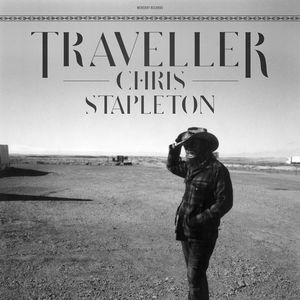
Label: Mercury Nashville
Key Tracks:
- Tennessee Whiskey
- Traveller
- Fire Away
- Nobody to Blame
- Parachute
Notes:
- Breakout album after CMA 2015 performance
- Won Grammy – Best Country Album
- Tennessee Whiskey → Diamond certified
2. From A Room: Volume 1 (2017)

Key Tracks:
- Broken Halos
- Either Way
- Second One to Know
Notes:
- Grammy-winning album
- Continued success after Traveller
3. From A Room: Volume 2 (2017)

Key Tracks:
- Millionaire
- Midnight Train to Memphis
- Drunkard’s Prayer
Notes:
- Companion album to Volume 1
- Showed more blues/soul influence
4. Starting Over (2020)

Key Tracks:
- Starting Over
- You Should Probably Leave
- Cold
- Arkansas
Notes:
- Won Grammy – Best Country Album
- Strong pandemic-era release
5. Higher (2023)

Key Tracks:
- White Horse
- Think I’m In Love With You
- Higher
Notes:
- Continued evolution of sound
- Multiple Grammy & CMA wins (White Horse)
Major Singles (As Lead Artist)
2015–2016 (Traveller Era)
- Tennessee Whiskey
- Nobody to Blame
- Parachute
- Fire Away
2017–2018 (From A Room Era)
- Broken Halos
- Either Way
- Millionaire
2020–2022 (Starting Over Era)
- Starting Over
- Cold
- You Should Probably Leave
- Joy of My Life
2023–2025 (Higher Era)
- White Horse
- Think I’m In Love With You
- Higher
Notable Collaborations
With Justin Timberlake
- Say Something (2018) → Billboard Top 10
With Ed Sheeran & Bruno Mars
- Blow (2019)
With Pink
- Love Me Anyway (2019)
With Taylor Swift
- I Bet You Think About Me (Taylor’s Version) (2021)
Other collaborations include:
- Adele
- Post Malone (live/rumored collaborations)
- Tom Petty tribute performances
Songwriting Discography (Major Hits Written by Stapleton)
Before becoming famous as a solo artist, Stapleton was one of Nashville’s most successful writers.
Huge Songs He Wrote:
- “Your Man” – Josh Turner
- “Drink a Beer” – Luke Bryan
- “Never Wanted Nothing More” – Kenny Chesney
- “Love’s Gonna Make It Alright” – George Strait
Over 1,000+ songs written, one of the most prolific writers in country music.
Band Discography (Pre-Solo Career)
The SteelDrivers (Bluegrass)
- The SteelDrivers (2008)
- Reckless (2010)
Earned Grammy nominations
The Jompson Brothers (Rock)
- The Jompson Brothers (2010)
Showed his Southern rock influence
Discography Summary
Studio Albums: 5
Major Singles: 20+
Collaborations: 15+
Songs Written: 1,000+
Genres Covered:
- Country
- Blues
- Southern Rock
- Bluegrass
- Soul
Watch Chris Stapleton
These official videos show two sides of Stapleton’s appeal: the cinematic intensity of “White Horse” and the timeless country-soul phrasing that made “Tennessee Whiskey” a signature recording.
“White Horse” — Official Music Video
“Tennessee Whiskey” — Official Audio
Explore More Country Music
Continue with our guide to the best country songs of all time, or discover more influential performers in the Modern Country Stars directory.
More artist guides: Cody Johnson and Zac Brown Band.