
COUNTRY MUSIC • ARTIST BIOGRAPHY
Randy Travis: Biography, Songs & Country Legacy
Randy Travis is a country singer, songwriter and actor whose deep baritone helped bring traditional country sounds to the center of Nashville’s commercial success in the 1980s. His landmark recordings include “On the Other Hand,” “Forever and Ever, Amen,” “Diggin’ Up Bones” and “Three Wooden Crosses.”
This Randy Travis biography follows the journey from North Carolina clubs to Storms of Life, his country and gospel albums, and the continuing life of his music after his 2013 stroke.
Birth name Randy Bruce Traywick
Grand Ole Opry member Since 1986
Country Music Hall of Fame Class of 2016
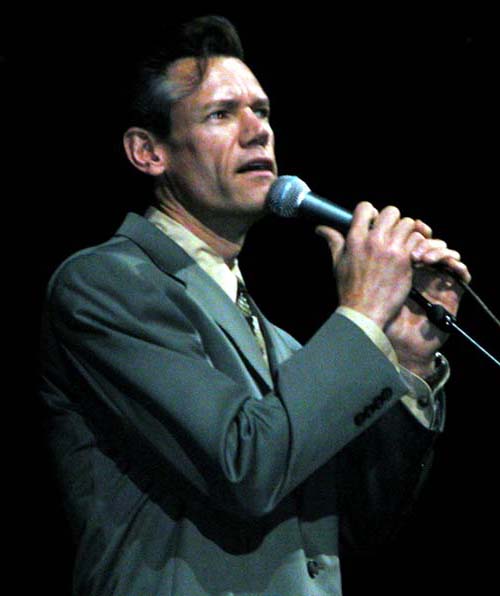
Who Is Randy Travis?
Travis became one of the defining voices of the neotraditional country movement. His importance rests partly on timing. Storms of Life arrived in 1986 as Nashville was finding a large audience for singers whose records foregrounded country phrasing, acoustic instruments and recognizable storytelling. His success gave that approach commercial weight. The Country Music Hall of Fame identifies him as a central figure in the traditional country resurgence.
A Travis performance often turns on a small decision. He can hold a word, shorten a phrase or descend at the end of a line and change what a narrator seems willing to admit. That control helps connect the drinking songs, domestic stories, declarations of loyalty and gospel recordings that span his catalog.
Early Life and Musical Background
Born Randy Bruce Traywick, Travis grew up in a large farming family near Marshville. His early listening included Lefty Frizzell, Hank Williams, Ernest Tubb and George Jones. His father’s records provided a vocabulary of country singing before a record company became involved. He performed locally with his brother while still young.
Travis left school in his teens and had a troubled adolescence. Music gradually supplied a more durable direction. A talent contest at Charlotte’s Country City USA led to regular work at the club and a professional association with its owner, Elizabeth “Lib” Hatcher. The Grand Ole Opry’s artist history traces the importance of those early club performances to his development.
How Randy Travis Started His Music Career
Before the familiar stage name, he recorded as Randy Traywick and performed as Randy Ray. The name changes reflect a long period of trying to get heard. Travis and Hatcher moved to Nashville in 1981, where he worked at the Nashville Palace, cooking, washing dishes and singing. The club gave him somewhere to develop an audience while seeking a label deal.
Warner Bros. signed him in 1985. Producer Kyle Lehning became an essential collaborator, shaping records that placed the voice prominently while leaving room for fiddle, steel guitar and the rhythm section. The working relationship continued across decades and later became central to presenting archival material from Travis’s recording career.
His Breakthrough in Country Music
“On the Other Hand” initially made a modest chart showing before “1982” established momentum. Reissued in 1986, “On the Other Hand” became a defining hit. The song’s narrator weighs an immediate temptation against the commitment represented by a wedding ring. Travis makes the turn believable by letting the dilemma unfold in ordinary speech.
Storms of Life gathered that performance with “Diggin’ Up Bones,” “1982” and “No Place Like Home.” Its reach demonstrated the appeal of his approach across an entire album. Always & Forever followed in 1987 with “Forever and Ever, Amen” and “I Told You So,” giving him a second collection that could sustain the attention the debut had generated.
The Rise of Neotraditional Country
The term neotraditional describes a renewed use of country’s established musical language in contemporary recordings. Travis shared the period with George Strait, Ricky Skaggs, Dwight Yoakam and Keith Whitley. Their records differed, but together they made room for sounds and singing styles associated with earlier country music inside a growing modern market.
For Travis, tradition worked through the performance. His measured phrasing let complicated feelings arrive in simple language. He could make a polished studio recording feel like a story being told directly to one listener. That balance helps explain why the records reached listeners beyond country’s established audience.
Randy Travis’s Biggest Songs and Where to Start
The recordings that established his voice
- “On the Other Hand” — A compact moral argument that reveals the conversational side of his singing.
- “1982” — A request to turn the clock back, giving regret a concrete setting.
- “Diggin’ Up Bones” — Memories become objects the narrator keeps returning to.
- “Forever and Ever, Amen” — Paul Overstreet and Don Schlitz’s enduring promise of love, delivered with humor and assurance.
- “I Told You So” — Travis’s own song, built around the fear of asking for a second chance.
Later essentials
“Hard Rock Bottom of Your Heart,” “He Walked on Water,” “If I Didn’t Have You” and “Look Heart, No Hands” extend the range from dependence to family memory and trust. “Three Wooden Crosses,” written by Kim Williams and Doug Johnson, brought his narrative singing to a new audience in 2003. Its story withholds information until the closing revelation changes the listener’s understanding of the journey.
For more listening context, explore our selection of country songs with lasting influence.
Randy Travis Albums and Selected Discography
These releases provide a path through his country, collaborative and gospel work. Compilations and archival collections add other perspectives to this selected album guide.
| Album | Year | Why it matters |
|---|---|---|
| Storms of Life | 1986 | The breakthrough collection, including “1982” and “On the Other Hand.” |
| Always & Forever | 1987 | Home to “Forever and Ever, Amen” and “I Told You So.” |
| Old 8x10 | 1988 | Continued his early run of major country albums. |
| No Holdin’ Back | 1989 | Includes “Hard Rock Bottom of Your Heart” and “He Walked on Water.” |
| Heroes & Friends | 1990 | A duet collection connecting Travis with musical heroes and peers. |
| High Lonesome | 1991 | Highlights his songwriting partnership with Alan Jackson. |
| Wind in the Wire | 1993 | A cowboy-themed project. |
| This Is Me | 1994 | Includes the family story “The Box.” |
| Inspirational Journey | 2000 | A key entry in his gospel catalog. |
| Rise and Shine | 2002 | Includes “Three Wooden Crosses.” |
| Worship & Faith | 2003 | Traditional hymns and sacred songs. |
| Glory Train | 2005 | Further exploration of faith and gospel repertoire. |
| Around the Bend | 2008 | A later country studio collection. |
| Same Old Way | 2026, announced | 12 archival recordings, scheduled for November 13. |
Album chronology cross-checked against AllMusic’s artist discography and official release information.
His Distinctive Voice and Musical Style
Travis’s baritone has a rounded low register and a recognizable country inflection. The emotional force often comes from restraint. In a regretful song, he can make the listener feel the distance between what the narrator knows and what the narrator is prepared to say. In a love song, that same steadiness becomes reassurance.
The arrangements support those differences. Steel guitar can answer a vocal line, fiddle can lift a chorus, and a spare rhythm part can keep attention on a story. Gospel recordings draw on another part of the same vocabulary, allowing the low voice to carry the gravity of a hymn without requiring a different musical identity.
Songwriting and Musical Influences
Travis was both an interpreter and a writer. His own “I Told You So” sits beside songs selected from Nashville’s professional writing community. With Alan Jackson, he co-wrote “Forever Together” and “Better Class of Losers.” His writing credits also include “Promises” and “The Box.”
The distinction matters when listening across the catalog. A performance can bear his signature even when somebody else wrote it. His artistic identity developed through choosing material, understanding a narrator and finding the pace at which the story should be revealed. The link to Lefty Frizzell is especially relevant to that emphasis on phrasing and emotional detail.
Awards and Career Achievements
- Inducted into the Grand Ole Opry in 1986.
- Received the CMA Horizon Award in 1986 and Male Vocalist of the Year in 1987 and 1988.
- Earned seven Grammy Awards across country and gospel recordings.
- Received a Hollywood Walk of Fame star in 2004.
- Inducted into the Country Music Hall of Fame in 2016.
- Received the ACM Milestone Award in 2025.
The Recording Academy’s awards record documents the breadth of his Grammy recognition. His official biography reports lifetime album sales exceeding 25 million. Chart totals vary with the chart and territory being counted, so individual songs and documented milestones offer the clearest guide to his reach.
Collaborations and Notable Performances
Heroes & Friends made collaboration the organizing idea of an album, allowing listeners to hear him alongside artists from the traditions that shaped him. The later duet of “I Told You So” with Carrie Underwood connected a younger country audience with a song from his early catalog and earned the pair a Grammy.
His work also extended to acting. Film appearances include The Rainmaker and Black Dog, with television work including Touched by an Angel. Those appearances broadened his public presence while his recordings remained the foundation of his career.
Health Challenges and Subsequent Career Developments
A severe stroke in 2013 changed Travis’s ability to speak, sing and perform. Recovery has involved extensive rehabilitation and support from his wife, Mary. At his 2016 Hall of Fame induction, his singing of “Amazing Grace” became an emotional moment shared with the country music community. His 2019 memoir, written with Ken Abraham, recounts his life, faith and recovery.
“Where That Came From,” released in 2024, introduced a carefully disclosed use of AI-assisted vocal technology developed with his participation. The release also became part of Randy and Mary Travis’s public advocacy for artists’ rights. The More Life Tour brings Travis together with his band and guest singer James Dupré. Official tour descriptions explain that Dupré handles the lead singing while Travis appears onstage and engages with the audience. Read the artist’s description of the tour format.
Randy Travis’s Influence on Later Country Artists
His success helped create commercial room for later singers who put traditional country delivery at the center of their records. The connection can be heard in the continuing appeal of low voices, narrative songs and arrangements that foreground fiddle and steel. Our Zach Top article offers a contemporary point of entry into that renewed interest in classic country sounds.
Travis’s influence also involves repertoire. New recordings and shared performances of his songs keep them in circulation. A song such as “I Told You So” gives another singer a demanding interpretive problem, asking for vulnerability without losing the thread of a simple melody. That is a legacy musicians can work with, as well as one audiences can remember.
Recent Music and Same Old Way
Same Old Way is scheduled for November 13, 2026, through Warner Records Nashville. The 12-track collection draws on Travis’s earlier recordings, some stored for decades, restored and renewed by Kyle Lehning in collaboration with Travis.
The previews include “I Know Where I’d Be Without You,” “Fish On,” “I Don’t Care,” “Mission of Love,” “Same Old Way” and “Set the Blues Back.” The archive-based project provides a different context from the technology used for “Where That Came From.” Its recordings preserve performances Travis made before his stroke.
The October 30 announcement confirms the date, track count and archival background. This section establishes the album’s place in his career ahead of a separate review after release.
Randy Travis’s Lasting Legacy
Randy Travis helped make traditional country a major commercial force at a moment when the genre was expanding. He also supplied a catalog that rewards close listening long after its chart run. The narrator might be weighing a choice, sorting through a memory or renewing a promise. Travis’s voice gives each of those actions time to become believable.
For a first listen, begin with Storms of Life and Always & Forever, then turn to Rise and Shine and Worship & Faith. Together they show how much he could do with the same fundamental strengths, a distinctive voice, carefully chosen songs and a close attention to the story.
Further reading and listening: official Randy Travis website • Country Music Hall of Fame biography • Grand Ole Opry profile • Biography.com