
Georgia Roots and Early Musical Influences
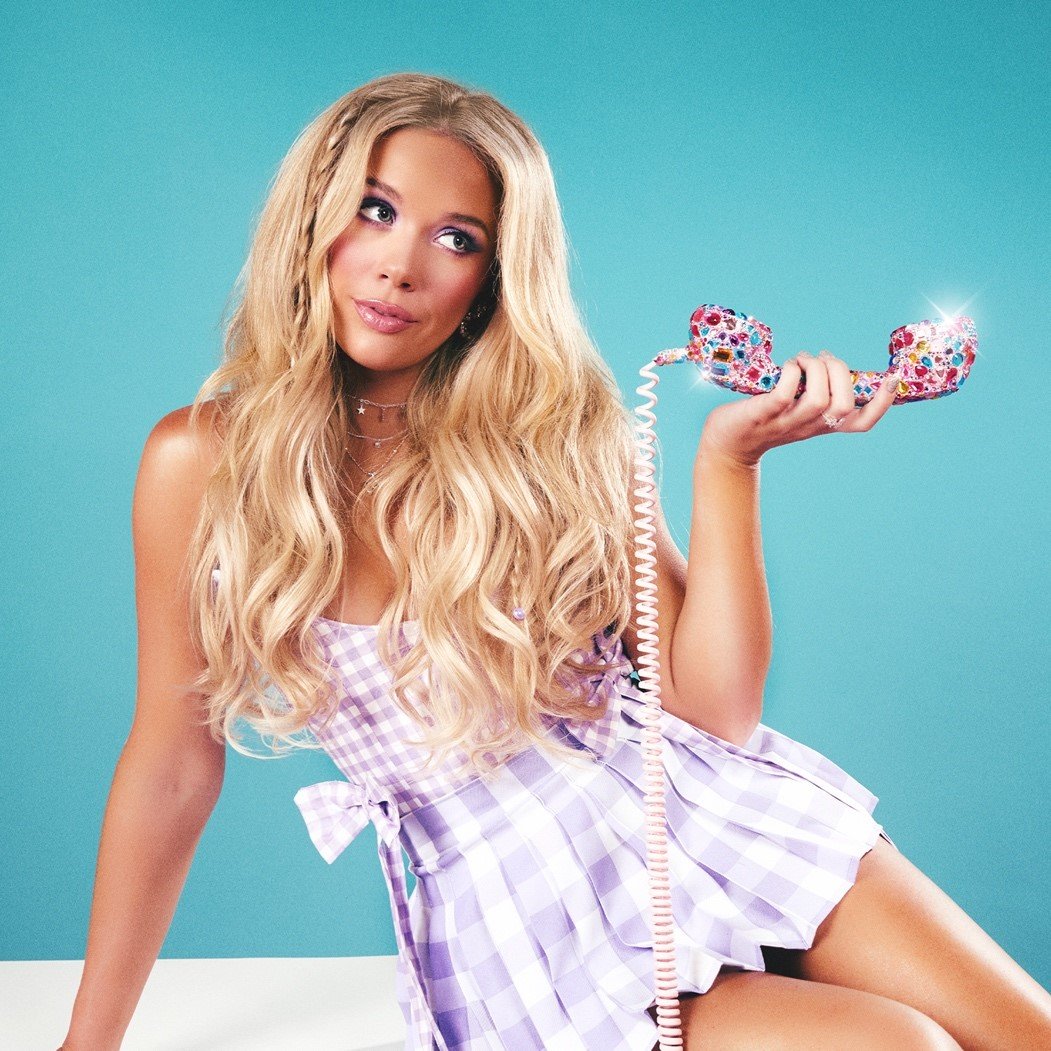
Megan Ann Moroney was born on October 9, 1997, in Savannah, Georgia, and grew up primarily in Douglasville, west of Atlanta. That Georgia background is not a minor detail in her story. It is one of the central facts that explains both her personality and her music. Long before she became one of country music’s most recognizable young voices, she was being shaped by a Southern family environment in which music was present, accessible, and normal.
Moroney has said she grew up around a music room in the house, and profiles of her career consistently describe her upbringing as deeply tied to country music, family influence, and Georgia identity. That regional identity would later become a core part of her songwriting brand, especially because her songs often feel rooted in very specific places, moods, and memories rather than generic radio-country imagery.
Her childhood appears to have combined artistic exposure with a fairly grounded, conventional family structure. Moroney has spoken about the fact that her mother was an accountant, which mattered more than it might seem at first glance. For a long time, Megan assumed she would follow a stable, practical path rather than jump immediately into entertainment. That practical streak shows up repeatedly in her biography: she did not begin as the classic child-star type who had one goal from the age of five and never looked back.
Instead, she seems to have grown into music gradually while still imagining a more traditional future for herself. At the same time, music was never far away. She has described being raised in a musical household, and reporting on her early life notes that she learned instruments young and spent time recording covers for fun before music became something she viewed as a career.
As a girl in Georgia, Moroney absorbed the sounds and storytelling habits that would later define her work. She has said that she listened to country music from childhood, and sources on her background point to early musical study that included piano before her public identity became more associated with vocals and guitar. She was not raised in Nashville’s industry machine. She came out of the broader Southern culture that still treats songs as part diary, part entertainment, part emotional record.
That matters because Moroney’s later music would be praised not just for catchy hooks but for a conversational, almost confessional way of writing. Even in her biggest songs, she rarely sounds like she is trying to imitate an older style of country grandeur. Instead, she often sounds like someone from a real place telling the truth as she sees it, and that instinct appears to go all the way back to the environment she grew up in.
Her school years also helped shape the performer she would become. Reporting on her early life notes that she attended Robert S. Alexander High School and participated in activities like cheerleading and musical theater. Those details are useful because they suggest Moroney was never solely a behind-the-scenes songwriter type. There was always a performance streak there, even before music became her full vocation. Musical theater, in particular, tends to teach projection, timing, stage comfort, and a sense of drama, all of which later became strengths in her live performances and videos.
At the same time, being a teenager in suburban Georgia rather than an industry incubator likely helped preserve the relatability that fans often respond to in her songs. Her work has always had polish, but it has also carried the feel of someone who remembers ordinary school, college, friendships, crushes, awkwardness, and heartbreak from the inside rather than from a media-managed distance.
The University of Georgia and Her First Songs
When it came time for college, Moroney enrolled at the University of Georgia. That decision became one of the most important turning points in her life. She joined Kappa Delta, lived inside the social atmosphere of a major SEC school, and initially pursued accounting, following the practical instincts she had inherited from her mother. Later, she shifted academically and ultimately graduated in 2020 with a bachelor’s degree and a music-business-related credential, according to biographical reporting.
The University of Georgia period matters because it gave her both a backup-plan mindset and the exact social world that would eventually feed her songwriting voice. Her songs would later capture the language, emotional logic, and romantic chaos of young adulthood in a way that resonated powerfully with college-age and post-college listeners. UGA was not just where she studied. It was where the character of “Megan Moroney” as listeners now understand her really started to form.
One of the most famous pieces of her origin story is the sorority performance that helped reveal what direction her life was really headed. During her time at Georgia, Moroney performed at a Kappa Delta event, and that moment began to alter the scale of her ambitions. Multiple accounts describe her college performance life as the bridge between hobby and calling. She has said that while studying accounting, she was pushed into situations where she had to sing publicly, and that those performances made it clear she loved being onstage.
That realization was crucial because it came before major label attention, before viral songs, and before award-show recognition. Moroney did not first discover herself in a boardroom or a publishing office. She discovered herself in front of people. The stage came first; the industry followed.
Another defining college-era break came when Chase Rice heard her perform and gave her an opportunity to open for him at the Georgia Theatre, but with one condition: she had to write an original song. Moroney has repeatedly cited that moment as the point where she wrote her first song, around age 19, and began to understand that songwriting could be more than a distant idea. That detail is huge in her biography because it means the artist known for her writing was not someone who had been stockpiling songs since elementary school. Her songwriting career began because an opportunity forced her to create.
The pressure produced a new identity. After that first show, she has said she fell in love with performing and wanted to pursue music seriously, even to the point of considering leaving school. She did finish college, but by then the direction of her life had clearly shifted.
During this period, Moroney also built useful industry relationships. Reporting on her early career notes that while still in college she opened for Jon Langston and interned for Kristian Bush of Sugarland. Bush would become one of the most important figures in her development, later producing key material and helping connect her with Nashville songwriters. These early ties matter because they show Moroney’s rise was not purely accidental or algorithmic. Yes, she eventually benefited from streaming and social-media momentum, but she also spent time learning the machinery of songwriting and artist development.
Interning for an established musician and staying connected after graduation gave her access to experience, mentorship, and professional standards that many aspiring singers do not get early enough. When she moved to Nashville after graduating in 2020, she was not arriving entirely cold. She had enough experience and enough contacts to start building real momentum.
The move to Nashville marked the true beginning of her professional life. Like many aspiring artists, she entered the city before fame arrived and had to assemble her career piece by piece. Her first official single, “Wonder,” was released in 2021, and that was followed by the EP Pistol Made of Roses. Those releases did not make her a household name overnight, but they established some of the traits that would later define her: emotionally direct lyrics, a distinctly feminine point of view, and a willingness to write her own material rather than rely on a prefabricated identity.
Early songs such as “Hair Salon” helped introduce the world to her writing voice. It was a voice that felt diaristic but not shapeless, sharp but not cynical, and vulnerable without losing wit. In retrospect, these early releases read like the first public chapters of a songwriter still learning how much of her own life she could turn into commercially compelling country music.
“Tennessee Orange” and a Career-Changing Breakthrough
Her breakthrough arrived in 2022 with “Tennessee Orange.” The song became the kind of breakout hit every new artist wants but very few actually get: specific enough to feel original, catchy enough to spread quickly, and conversation-starting enough to generate a genuine cultural moment. Produced by Kristian Bush, the song first gained traction online and then broke wider, giving Moroney her first major chart attention.
It reached the Billboard Hot 100 and Hot Country Songs chart, and its success helped drive her label situation forward as Sony Music signed her, initially through Arista Nashville before later shifting her to Columbia Nashville after internal label restructuring. More importantly, “Tennessee Orange” introduced the public to the full Megan Moroney package: a Georgia artist who could write with humor, flirt with controversy, package heartbreak and regional identity into a hook, and make young listeners feel as though country music still had room for fresh, female-first storytelling.
As “Tennessee Orange” grew, it also gave Moroney one of country music’s most important forms of momentum: legitimacy with both fans and institutions. She made her Grand Ole Opry debut on February 11, 2023, a milestone that signals not just buzz but recognition from one of the genre’s central historic stages. The Opry lists Douglasville as her hometown and confirms that debut date, placing her squarely inside country’s formal tradition even as her music spoke most strongly to a younger generation. Around the same period, her breakout single kept accumulating commercial strength.
By 2025, the RIAA listed “Tennessee Orange” among her certifications, and by March 2026 multiple reports indicated the song had reached 5x platinum status in the United States. Whether one sees the track as playful, romantic, provocative, or simply brilliantly marketed, it undeniably changed her life. It converted promise into a career.
Lucky, Am I Okay? and Country Stardom
Moroney capitalized on that breakthrough with her debut album, Lucky, released on May 5, 2023. The album was a major test. Viral hits can create temporary attention, but albums reveal whether an artist has depth. Lucky answered that question decisively. Billboard reported on the album as a showcase for her songwriting and musicality, not just her image or social-media appeal. It reached the Billboard 200 top 40 and helped prove that Moroney could sustain interest across a full project, with songs like “I’m Not Pretty” expanding her audience further. Critics also responded.
Billboard later included it among the best country albums of 2023, and other coverage emphasized how naturally she fused sharp lyric writing with a conversational modern tone. In other words, Lucky did not simply confirm that “Tennessee Orange” was not a fluke. It established Megan Moroney as one of the most credible new country artists of her generation.
By late 2023 and into 2024, Moroney had gone from interesting newcomer to one of the hottest young names in the genre. She launched The Lucky Tour in 2023, further proving she could pull fans into rooms under her own name, not just as an opener. The awards world also started catching up. She was part of the 2024 CRS New Faces of Country Music Show, a respected indicator of industry belief in an artist’s trajectory. At the 2024 CMT Music Awards, she tied for the lead in nominations with three nods, underscoring how quickly her visibility had exploded.
Meanwhile, “No Caller ID,” released in January 2024, became another significant success. Billboard noted its strong chart debut, and the RIAA later certified it platinum. Instead of fading after one giant single, Moroney was doing the harder thing: stacking recognizable songs, deepening her brand, and proving that fans wanted the next chapter.
A major career milestone came in May 2024 when the Academy of Country Music announced Moroney as the winner of New Female Artist of the Year for the 59th ACM Awards. This mattered for more than prestige. Industry awards can sometimes lag behind public excitement, but in Moroney’s case the ACM recognition signaled that Nashville was not merely tolerating her rise; it was embracing it.
She had also led female artists in ACM nominations that year, earning six nods including Female Artist of the Year and Song of the Year recognition for “Tennessee Orange.” That combination of fan traction and institutional endorsement positioned her unusually well. She was no longer the promising singer of one viral SEC-adjacent hit. She was now a decorated country artist with awards credibility, growing tour power, and a catalog that kept widening.
Her second album, Am I Okay?, released on July 12, 2024, represented a critical next step. Sophomore records can trap artists: repeat the debut too closely and you look stagnant; move too far away and you lose the identity that got people invested. Moroney managed that transition well. Sony described the album as highly anticipated, and Billboard noted that it debuted at No. 9 on the all-genre Billboard 200, a significant jump from Lucky.
The project contained one of her biggest-era songs in “No Caller ID,” and later reporting highlighted how quickly the album helped cement her as one of the defining country voices of that year. Songs like “Am I Okay?” and “Indifferent” showed she could keep mining heartbreak, self-awareness, sarcasm, and emotional contradiction without sounding repetitive. The album did not reinvent her. It sharpened her.
The Am I Okay? era also expanded Moroney’s visibility beyond country-only circles. She earned the Rulebreaker Award at Billboard Women in Music in 2025 and performed at that event, which positioned her not merely as a country success story but as a broader music-industry figure. Press profiles in 2024 and 2025 increasingly treated her as one of the faces of a new generation of female country artists who could succeed commercially without sanding off personality. Coverage from the Los Angeles Times emphasized the tension in her work between glittery image and bruised emotional reality.
People and other outlets documented how openly she talked about heartbreak, bad decisions, and the value of staying truthful in songwriting even when speculation followed. The result was a public persona that felt less corporate than many emerging stars: glamorous, yes, but also self-mocking, emotionally candid, and unusually readable to fans.
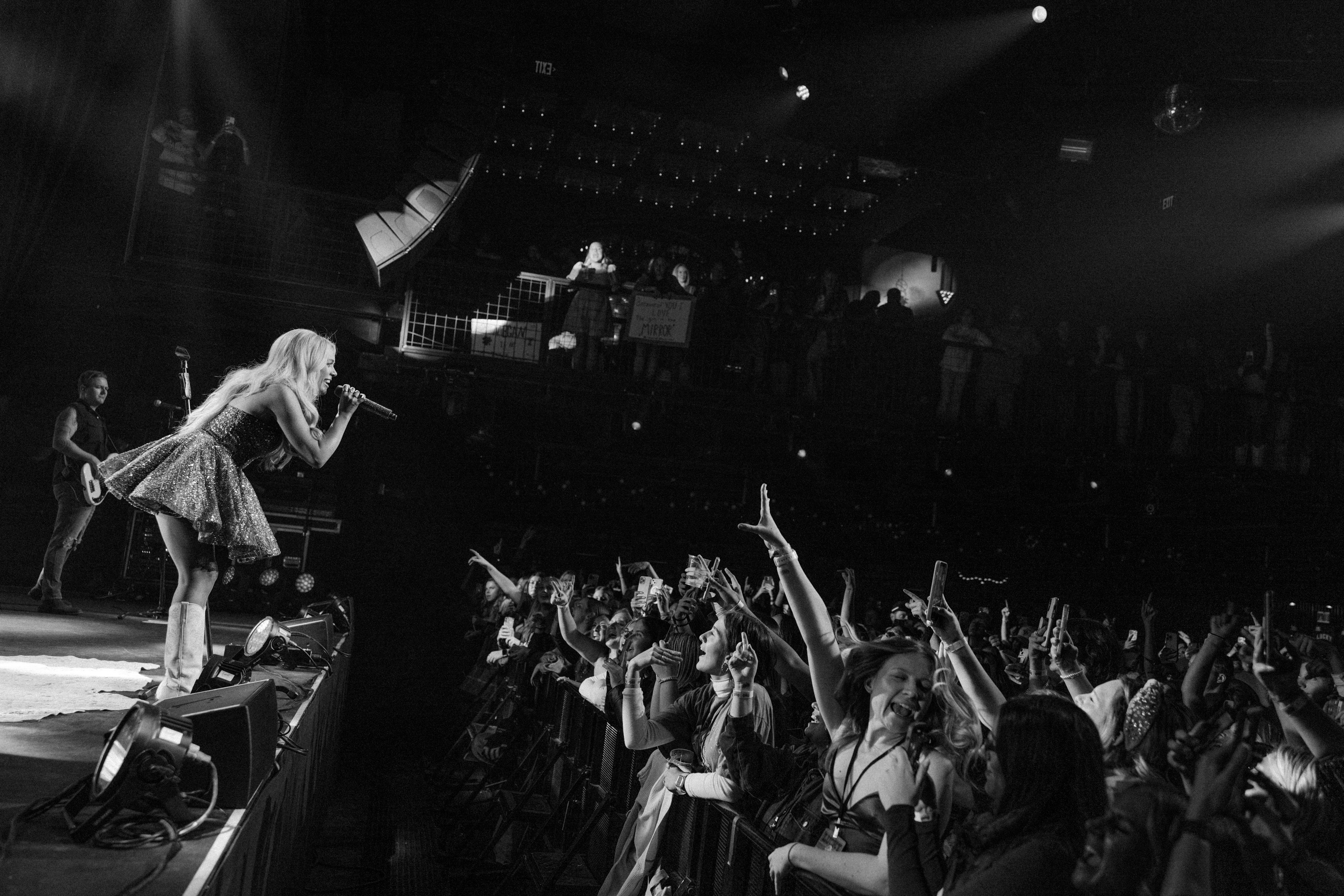
One of the most important relationships in Moroney’s rise during this phase was her connection with Kenny Chesney. In 2024 she opened on Chesney’s Sun Goes Down stadium tour, and later coverage from People described that experience as a turning point in her career. Chesney did more than place her in front of large audiences. He became a mentor figure, someone Moroney studied closely as a live performer and someone she later credited with boosting her. Their friendship deepened enough that she co-wrote “You Had to Be There” as a thank-you and released it with Chesney in 2025.
The collaboration became significant in its own right, earning a 2025 CMA nomination for Musical Event of the Year. Biographically, this matters because it shows Moroney was learning not just how to write songs but how to scale a career: how to hold a stadium crowd, how to navigate fame, and how to step from club/theater success into something much larger.
The year 2025 further confirmed that her momentum was not slowing. She received two nominations at the 60th ACM Awards, including Female Artist of the Year and Album of the Year for Am I Okay? She also performed at the ACM ceremony, remained a major festival and touring draw, and played high-profile events like CMA Fest, where the CMA noted she drew a capacity crowd at the Chevy Riverfront Stage.
Atlanta-area coverage in 2025 described her as “Georgia’s new country queen,” which may sound like promotional shorthand, but it reflected something real: by then she had become one of the most visible Georgia-born country stars of the moment, with a particularly strong emotional connection to fans across the South and beyond. She also made appearances such as NPR’s Tiny Desk Concert in early 2025, demonstrating that her songs could hold up in stripped-down form, without arena-size production or radio packaging.
Then came one of the most important professional victories of her career so far: on November 20, 2024, she won CMA New Artist of the Year, and by 2025 she was no longer just the artist being introduced. She was an established nominee in higher-profile categories. The CMA’s 2025 nominations gave her nods for Album of the Year, Female Vocalist of the Year, and Musical Event of the Year, bringing her career CMA nomination total to 11 at that point. She also performed on the 2025 CMA Awards broadcast.
Even though she did not leave the 2025 ceremony with multiple wins, the nominations themselves showed how quickly she had moved up the ladder. In only a short span, she had gone from breakthrough curiosity to one of the most consistently recognized women in mainstream country.
The Cloud 9 Era and a New Level of Success
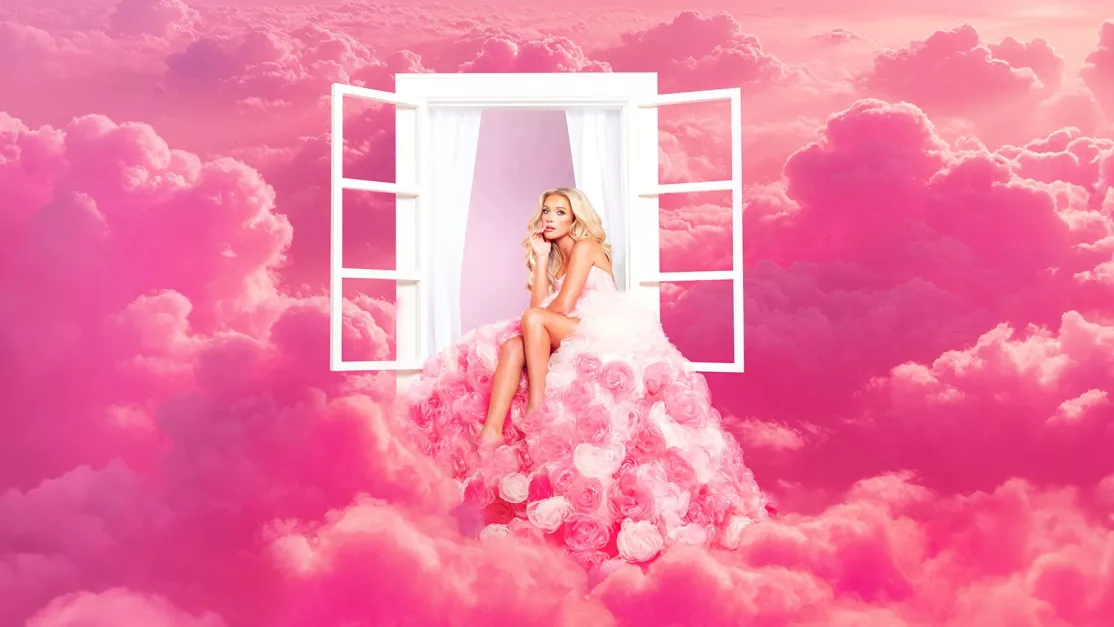
Late 2025 and early 2026 opened yet another chapter. Moroney released “6 Months Later” in June 2025 and “Beautiful Things” in October 2025, then officially announced her third studio album, Cloud 9, for release on February 20, 2026. Coverage around the project framed it as both a continuation and an evolution. Country Now described it as a more confident era, while a 2026 Los Angeles Times interview quoted Moroney describing the album as reflecting greater maturity, more confidence, and less willingness to stay in toxic situations.
That progression fits neatly with the emotional arc visible across her catalog. Lucky introduced the diarist. Am I Okay? sharpened the post-breakup wit. Cloud 9 appeared to present a woman who had survived enough chaos to write from a steadier place without losing her vulnerability.
Commercially, Cloud 9 pushed her to a new level. Billboard reported that the album debuted at No. 1 on the Billboard 200 in March 2026, giving Moroney her first chart-topping album on that list. Billboard also noted that her previous two albums had peaked at No. 38 (Lucky) and No. 9 (Am I Okay?), making the leap all the more significant. This was not just another successful release. It was proof that she could command all-genre attention at a scale bigger than before.
Around the same time, the official Megan Moroney website promoted Cloud 9 as her new album and listed major 2026 tour dates, while reporting from late 2025 described the Cloud 9 Tour as her biggest headlining run yet, including arena dates and international stops. By September 2026, Moroney was no longer merely rising. She had clearly arrived as one of country music’s major young stars.
Megan Moroney’s 2026 momentum continued beyond the album release. Her 43-date Cloud 9 Tour opened May 29 and expanded her headlining reach across North America, the United Kingdom, and Europe. She also led all artists with nine nominations at the 61st Academy of Country Music Awards—including her first Entertainer of the Year and Artist-Songwriter of the Year nominations—although she did not win during the May 2026 ceremony. In August, she performed “Beautiful Things” at the 19th ACM Honors before presenting songwriter Jessie Jo Dillon with an award. Together, those milestones showed that the Cloud 9 era was not simply a strong album cycle; it marked Moroney’s move into country music’s top commercial and touring tier.As of September 2, 2026, Megan Moroney’s biography reads like one of the clearest recent examples of how modern country stardom can still be built on songwriting, identity, and emotional clarity rather than image alone. She is a 28-year-old Georgia-born artist who moved from a musical household to a practical accounting track, from University of Georgia sorority performances to Nashville writing rooms, from an early EP to a viral breakout, and from there to ACM and CMA recognition, major tours, platinum-certified songs, and a Billboard 200 No. 1 album.
Along the way, she has built a public image that feels unusually coherent. The sparkly stage clothes, the candid humor, the romantic wreckage, the self-awareness, the Georgia specificity, and the sharp songwriting all belong to the same person. That coherence is a big reason her career has lasted past the viral stage. She does not feel invented after the fact. She feels legible.
What stands out most in Megan Moroney’s story is that her ascent has happened quickly, but it has not felt random. The ingredients were there early: a musical household, an instinct for performance, a practical brain, a willingness to write honestly, and a college environment that accidentally gave her both subject matter and an audience. Then came the right catalytic moments: Chase Rice pushing her to write an original song, Kristian Bush helping open doors, “Tennessee Orange” breaking through, Lucky proving depth, Am I Okay? confirming staying power, and Cloud 9 elevating her into a different commercial tier.
By September 2, 2026, Megan Moroney stands as one of the most important young women in country music not because she fits an old template perfectly, but because she has made her own lane feel inevitable.
Watch Megan Moroney
Experience three key moments from her career through videos from Megan Moroney’s official YouTube channel.

Studio Albums
1. Lucky (2023)

- Release Date: May 5, 2023
- Label: Columbia Nashville
- Peak: Billboard 200 Top 40
Notable Tracks:
- “Tennessee Orange” (breakout hit)
- “I’m Not Pretty”
- “Lucky”
- “Girl in the Mirror”
- “Kansas Anymore”
Why It Matters:
This is the album that introduced Megan Moroney to the world. It blends heartbreak, humor, and very personal storytelling—setting the tone for her entire career.
2. Am I Okay? (2024)
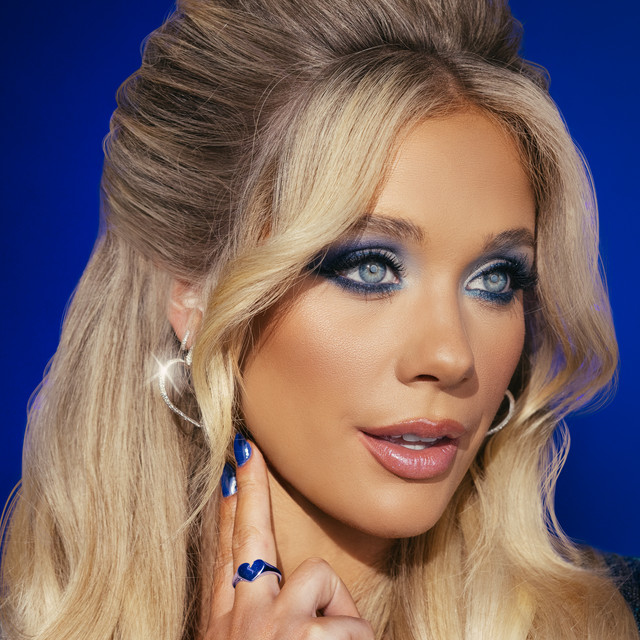
- Release Date: July 12, 2024
- Peak: #9 on Billboard 200
Notable Tracks:
- “No Caller ID”
- “Am I Okay?”
- “Indifferent”
- “28th of June”
- “Man on the Moon”
Why It Matters:
This album proved she wasn’t a one-hit artist. It’s more confident, sharper lyrically, and expanded her audience significantly.
3. Cloud 9 (2026)

- Release Date: February 20, 2026
- Peak: #1 on Billboard 200
Notable Tracks:
- “6 Months Later”
- “Beautiful Things”
- “You Had to Be There” (with Kenny Chesney)
- Additional tracks (full tracklist varies by release version)
Why It Matters:
This is her big leap into superstar status—her first #1 album across all genres.
EPs
Pistol Made of Roses (2022)
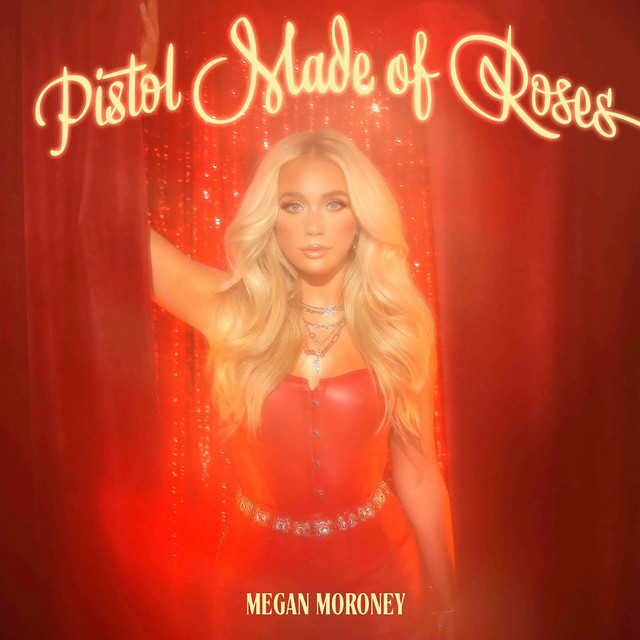
- Release Date: 2022
- Type: Debut EP
Key Tracks:
- “Hair Salon”
- “Fix You Too”
- “Wonder”
Why It Matters:
This project introduced her songwriting style—honest, emotional, and very conversational.
Major Singles (Career Highlights)
Breakout & Career-Defining
- “Tennessee Orange” (2022)
- 5× Platinum
- First Billboard Hot 100 hit
Follow-Up Hits
- “I’m Not Pretty” (2023)
- “No Caller ID” (2024) — Platinum
- “Am I Okay?” (2024)
- “28th of June” (2024)
Collaborations
- “You Had to Be There” (2025) — with Kenny Chesney
- “Can’t Break Up Now” — with Old Dominion
New Era (Cloud 9 Rollout)
- “6 Months Later” (2025)
- “Beautiful Things” (2025)
Discography Snapshot
- Studio Albums: 3
- EPs: 1
- Major Hits: 5+
- #1 Albums: 1 (Cloud 9)
- Multi-Platinum Songs: Tennessee Orange
More artist guides: Ella Langley.