
Cody Johnson Biography
Cody Johnson’s rise in country music has never looked like the standard Nashville script. He did not come out of a polished talent pipeline, and he was not handed a career by a label before he had built an audience. He came out of Texas, out of church music, out of rodeo culture, out of the prison system where he once worked with his father, and out of years of grinding in front of live crowds before the national industry fully caught up with what his fans already knew. By the time the broader country world embraced him, Cody Johnson had already built something unusually sturdy: a loyal audience, an independent brand, and a reputation for treating country music like a calling rather than a trend. That combination is a huge part of why his story matters. It is not only the story of a successful singer. It is the story of a modern country star who got big without surrendering the identity that made people care in the first place.
Cody Daniel Johnson was born on May 21, 1987, in Sebastopol, Texas, near Huntsville. He grew up in a small-town East Texas environment where music, church, hard work, and cowboy culture all overlapped naturally. Multiple biographical sources and interviews point to those same foundations again and again: he learned music early, he was shaped by rural Texas values, and he grew up around people who took responsibility seriously. Southern Living’s 2024 feature on him highlights the same themes that recur throughout his career narrative: growing up in a small Texas town, music always being part of his life, working in the prison system with his dad, growing up in church, and staying close to ranching and rodeo traditions even after fame arrived. Those details are not side notes in his biography. They are the backbone of it.
Music entered his life young. He has said that his father played music at church, and early accounts of his life note that Johnson began playing around age 12. That matters because his later style never sounded manufactured. Even when he became a major-label artist, his phrasing, his attachment to traditional country melody, and his comfort with gospel and cowboy imagery felt lived-in. He was not reverse-engineering authenticity for an audience. He had already grown up inside the world he would later sing about. In a country music era that often leans toward pop gloss, Johnson’s background gave him a different center of gravity. When he sings about faith, ranch life, marriage, work, regret, or home, it lands differently because those ideas were not bolted onto his public image after the fact.
Before music became his full-time future, Johnson chased another demanding path: rodeo. He rode bulls and embraced the cowboy lifestyle long before it became part of his national branding. That world shaped both his identity and his songwriting. It also gave him firsthand experience with risk, injury, toughness, pride, and loss, all of which became part of the emotional vocabulary in his music. The official materials around Dear Rodeo: The Cody Johnson Story make clear that rodeo was not some decorative phase in his past. It was central to who he was. The documentary, inspired by his duet “Dear Rodeo” with Reba McEntire, traced his path from his early love of rodeo to the moment he left that life behind and found another future in music. In Johnson’s case, country stardom did not erase the cowboy. It gave him a larger platform from which to speak as one.
At the same time, Cody Johnson also worked in the prison system, following a path connected to his father and his local world. That piece of his biography often stands out because it feels so far removed from the music industry, yet it makes perfect sense in the larger story. He has spoken about the reality of that work, and later coverage has noted that some former inmates even recognized him after he became famous. The prison job was practical, adult, and rooted in responsibility. It also represented a life he could have stayed in. That is what makes the eventual choice to go all-in on music more dramatic. He was not walking away from nothing. He was walking away from a real job, a clearer paycheck, and a predictable life in order to pursue something much riskier.
One of the formative moments in his life story is the encouragement he received to take music seriously. Accounts of Johnson’s early years note that while he was still balancing work and music, the prison warden where he worked urged him to pursue the artistic path full time. That kind of encouragement often becomes mythologized in biographies, but in Johnson’s case it fits the larger pattern of his career: people around him could see that he had something unusual. The bigger point is not merely that someone encouraged him. It is that he had already earned the kind of reaction that made a practical authority figure look at him and say, in effect, you need to go do this. That says something about how obvious his talent and drive must have been even before country radio fully knew his name.
Johnson formed the Cody Johnson Band in the mid-2000s and began releasing music independently. This stage of his career is essential to understanding him because it explains why he later had enough leverage to deal with Nashville on his own terms. He was not a blank-slate signing. He was an artist who had already spent years building infrastructure: records, touring habits, a crowd, and a recognizable identity. His early independent releases included Black and White Label, Six Strings One Dream, A Different Day, Cowboy Like Me, and eventually Gotta Be Me. Those records were part of a long Texas build rather than an overnight national launch. He was earning fans state by state, show by show, and that kind of growth tends to produce loyalty that streaming-era artists often struggle to create.
By 2011, Johnson’s reputation in the Texas and regional country scene was strong enough that he won Texas Regional Music Award recognition as New Male Vocalist of the Year. Awards at that level do not make a national superstar by themselves, but they matter in biographies because they mark the point where a local success story becomes difficult to ignore. He was no longer just another hardworking Texas singer. He was becoming one of the names that symbolized the state’s still-powerful pipeline of country talent. Texas has long sustained its own parallel ecosystem of touring, radio, and fan culture, and Johnson’s early success inside that environment gave him something many future major-label artists never get: proof that he could move people without mainstream machinery.
The independent breakthrough became much harder to dismiss in 2014 and 2016. Cowboy Like Me put him on the Billboard country radar, and Gotta Be Me was the major independent leap. Gotta Be Me debuted at No. 2 on Billboard’s Top Country Albums chart and No. 11 on the Billboard 200, a remarkable result for an artist still operating outside the usual major-label structure. Billboard later referred back to that period when explaining how Johnson’s career had already become one of the most impressive independent success stories in country music. This was the phase where industry people had to stop viewing him as a regional phenomenon. He had become commercially undeniable. He was not just respected in Texas. He was beginning to force the national conversation to include him.
That momentum led to one of the most symbolic milestones in his biography: his Houston Livestock Show and Rodeo breakthrough. In 2018, Johnson became the first unsigned or independent artist to sell out RodeoHouston, a massive achievement in a venue and event deeply tied to Texas identity and country music prestige. Billboard highlighted that accomplishment at the time, and later official and industry sources kept returning to it because it was not just another sold-out concert. It was proof that he could draw superstar-level crowds before the major-label world fully absorbed him. In country music, live dominance is often the truest form of power. Johnson had it. The audience was there first. The industry recognition came second.
In June 2018, Warner Music Nashville announced a partnership with Johnson, but the way the deal was described matters. This was not presented as a standard artist-development arrangement where the label owned the whole equation. It was a partnership under CoJo Music/Warner Music Nashville, reflecting the leverage he had earned through his independent success. Billboard later reported on Johnson’s thinking around that decision, and the broad picture was clear: he signed only after building enough power to protect his identity. That is one reason the Cody Johnson story remains so compelling to country fans who distrust slick industry reinvention. He went major label, but he did not arrive there desperate. He arrived there with bargaining power.
His first major-label album, Ain’t Nothin’ to It, arrived on January 18, 2019. The record was a defining moment because it answered a question that follows many independent artists into their next chapter: can they scale up without losing the thing that made them special? Commercially, the answer was yes. Billboard reported that Ain’t Nothin’ to It became Johnson’s first No. 1 on the Top Country Albums chart. Official materials later noted the same achievement and added that it also helped propel him further into the national mainstream. The album featured “On My Way to You,” which became a significant early radio breakthrough and proved he could connect with wider country audiences without abandoning his core sound.
Ain’t Nothin’ to It also mattered artistically because it sharpened the image Johnson would carry through the next phase of his career. He was not trying to become some hybrid pop-country crossover built for playlists first and biography second. The record leaned into traditional tones, emotional storytelling, and the kind of vocal delivery that made comparisons to classic-minded country singers feel natural rather than forced. Even when his audience expanded nationally, Johnson remained closely associated with the idea that country music should still sound like country music. That stance later became almost a mission statement in his touring and promotional language, but the foundation was already visible here. He was building a national career without shedding his musical convictions.
The next several years expanded Johnson’s visibility dramatically. He built a reputation for explosive live shows, and official biographies repeatedly described his fanbase as passionately loyal and his concerts as regular sellouts. This was not marketing fluff pulled out of nowhere. His touring strength kept showing up in statistics, venue records, and repeat demand. By 2019, official reports were already talking about more than 500 million career on-demand streams and a packed touring schedule. By later years those numbers would climb into the billions, but the pattern had already been established: he was one of the rare artists whose growth was powered as much by live connection as by radio or algorithmic momentum.
His relationship with the Grand Ole Opry became another important line in his biography. Opry materials note that Johnson debuted there in 2017 as an independent artist, before signing a major-label deal. That alone matters, because the Opry often functions as a measure of whether a performer is seen as part of country music’s lineage rather than merely its current marketplace. Then, in 2022, he received an Opry invitation from Bill Anderson. For an artist whose brand is rooted in reverence for traditional country values and sounds, that invitation was more than ceremonial. It represented institutional validation from one of the genre’s most enduring homes.
In 2021 Johnson released Human: The Double Album, his second major-label studio album, and it marked a major creative and commercial expansion. Officially announced in September 2021 and released on October 8, the project was ambitious by contemporary country standards: 18 tracks spread across a double album format. Johnson and his team framed it as something closer to the experience of one of his live shows, and Billboard’s coverage of the record emphasized the personal and professional journey behind it. It was not a quick, disposable follow-up. It was a statement record from an artist now confident enough to widen his canvas without diluting his identity.
Human: The Double Album performed strongly right away. Official updates said it debuted as the top country album the week of its release and reached the top 10 of the all-genre Billboard 200. That kind of result reinforced the idea that Johnson was no longer simply a beloved traditionalist with a strong niche. He was a major commercial force. Yet what made Human especially important was the song that would become the pivot point of his mainstream ascent: “‘Til You Can’t.” Released from the album, the song quickly grew into his signature breakthrough, not only because it performed well, but because it distilled his whole appeal into one accessible anthem. It was country, direct, emotional, practical, and morally urgent without sounding preachy. It sounded like Cody Johnson.
“‘Til You Can’t” changed everything. In March 2022, Johnson landed his first No. 1 at country radio when the song topped Billboard’s Country Airplay chart. Official reporting also noted that it had reached No. 1 on Hot Country Songs and had already logged over 200 million global streams by that point. The track’s message about not wasting time, taking action, and saying or doing what matters while you still can made it resonate far beyond standard radio success. It became an identity song, the kind of record that expands an artist’s audience because listeners feel that the song says something central about who the singer is. Johnson did not just get a hit. He found a career-defining anthem.
The awards followed. At the 2022 CMA Awards, “‘Til You Can’t” won Single of the Year and Music Video of the Year. Those were Johnson’s first major CMA wins and a clear sign that his long, patient climb had entered a new phase. The song also won Best Country Song at the 2023 Grammys, an award that goes to the songwriters Ben Stennis and Matt Rogers, but the win still reflected the scale of the song’s impact and the platform Johnson had given it. In the same broad season of recognition, he also picked up CMT honors tied to “‘Til You Can’t” and “Dear Rodeo,” and he won Best New Country Artist at the 2023 iHeartRadio Music Awards. Suddenly, the artist who had once been the outsider from Texas was no longer knocking on the door. He was taking trophies home from inside the building.
The 2021 period also included one of Johnson’s most personal and revealing projects: Dear Rodeo: The Cody Johnson Story. Released first through a theatrical event and later expanded in streaming reach, the documentary pulled together the two major halves of his identity: rodeo and music. Official material around the film said it followed his journey from “the dusty rodeo arenas of rural Texas to some of the biggest musical stages in America.” That framing works because it captures the emotional logic of his biography. Johnson’s story is not about rejecting where he came from in order to become something shinier. It is about carrying that original world with him into larger and larger rooms. The documentary helped formalize that narrative and gave fans a fuller picture of the sacrifices, injuries, and decisions behind the public success.
Johnson’s family life has also been a recurring source of emotional grounding in his work. He has often kept his private life relatively guarded, but certain songs and interviews have opened a window. In 2021 he released “God Bless the Boy (Cori’s Song),” a song tied to his daughter, and Billboard noted that his wife and two daughters sang on “Silent Night” from his Christmas music. Those details matter because Johnson’s music often presents domestic life not as background decoration but as one of the main places where meaning is found. His songs about marriage, fatherhood, and home carry unusual weight because they align with the way he talks about his real life: as the center of who he is rather than a side narrative to career ambition.
By the time Johnson moved into the Leather era, he had become one of country music’s most stable and trusted stars. Leather was released on November 3, 2023, as his third major-label studio album. Official material described it as a follow-up to Ain’t Nothin’ to It and Human while also emphasizing the sheer momentum behind him. The album included collaborations with Brooks & Dunn and Jelly Roll, and it arrived at a time when Johnson had already accumulated multiple certifications, a Pandora Billionaire Award, and billions of streams. But Leather was not simply a victory-lap release. It was another test of whether he could keep growing after “‘Til You Can’t” without becoming repetitive. The answer, again, was yes.
The first major single from Leather was “The Painter,” announced in 2023 and later elevated into one of the defining songs of Johnson’s catalog. Billboard documented its rise to No. 1 on the Country Airplay chart in March 2024, giving Johnson his second Country Airplay leader. The song also earned major songwriter recognition, with NSAI naming “The Painter” Song of the Year in 2024 for Benjy Davis, Kat Higgins, and Ryan Larkins. As a hit, “The Painter” worked differently from “‘Til You Can’t.” Instead of motivational urgency, it offered tenderness and gratitude, centering on the way love changes the world a person sees. That shift mattered. It showed Johnson was not trapped inside a single emotional lane. He could deliver big declarative songs, but he could also land a gentler one with equal force.
Leather’s next major moment came with “Dirt Cheap,” a song that deepened Johnson’s reputation as an interpreter of emotionally resonant material. Official sources later noted that “Dirt Cheap” became one of his No. 1 singles and that it won Storyteller Song of the Year at the 2024 People’s Choice Country Awards. At the 2025 ACM Awards, it won Song of the Year, giving Johnson a major ACM victory and underscoring how effectively he had become a vessel for strong country songwriting. “Dirt Cheap” reinforced one of the clearest truths about Johnson’s career: he does not only succeed because he is a believable cowboy figure or because he tours hard. He succeeds because he consistently chooses songs that ordinary people hear as reflections of their own values, losses, and relationships.
The biggest honor of the Leather cycle, at least up to that point, came at the 2024 CMA Awards, where Leather won Album of the Year. The CMA’s official winners release confirms the victory, and Johnson’s own official site later emphasized what a banner year it had been for him. This win was particularly important because Album of the Year is not just about one song catching fire. It is a broader artistic endorsement. It said that Johnson was no longer simply the guy with the blue-collar backstory and the anthemic radio smash. He was now being recognized for full-length work at the highest level of country music’s institutional awards system. That elevated him into a more durable category of artist.
Late 2024 brought another major move: Leather Deluxe Edition, released on November 1, 2024. The official announcement said the deluxe edition added 13 new songs to the original 12-song Leather album, bringing the total to 25 tracks. That is an enormous amount of material, and it reflected Johnson’s continuing confidence in giving fans abundance rather than cautious minimalism. Around the same time, he released “I’m Gonna Love You,” a long-anticipated duet with Carrie Underwood that was positioned as the first single from his next studio chapter. The song quickly became another major hit, climbing into the country airplay top 10 and later reaching No. 1 at country radio according to subsequent reporting.
In 2025, Johnson’s award profile expanded again. He received seven ACM nominations, showing how fully he had moved into the upper tier of the genre. In May, the ACM announced that he had won Song of the Year for “Dirt Cheap,” one of the first ACM wins of his career. That recognition mattered because the ACMs have long been one of country music’s key indicators of broad industry momentum. At this point in Johnson’s career, the major organizations were no longer treating him as a respected exception or a traditionalist favorite. They were treating him as one of the format’s defining voices.
His touring in 2025 also widened his geographical reach. In March 2025, official news reported that Johnson had wrapped his first-ever overseas headline dates in Australia and New Zealand, and that those shows were sold out. This might seem like a secondary detail compared with award wins, but it is actually significant in biography terms. It shows that his appeal had become exportable. Johnson’s kind of country music is deeply tied to Texas and to specifically American imagery, yet by 2025 he could take that identity overseas and still draw full rooms. That suggests the emotional engine of his music was transcending regional context. People did not need to be from East Texas to believe him when he sang.
That same year also brought collaborations and continued release activity. In March 2025 Johnson released “She Hurts Like Tequila” with Carín León, illustrating a willingness to collaborate across stylistic and linguistic lines while still staying grounded in his own sound. In April 2025 he released “The Fall,” which Billboard later discussed as another notable record in his catalog, and official updates in 2026 noted it had become his sixth Country Airplay top 10. These moves showed an artist still evolving, still feeding his audience, and still finding room to stretch without betraying the audience’s expectations of what “a Cody Johnson song” should feel like.
Then came perhaps the most decisive personal career validation yet. At the 2025 CMA Awards, Johnson won Male Vocalist of the Year. The CMA official winners release confirms the win, and Johnson’s official site noted that it was his first time taking home that specific honor, bringing his career CMA total to four wins by that point. Male Vocalist of the Year is a particularly telling award because it speaks directly to the core instrument of the artist. Johnson had already proven he could sell tickets, pick songs, and connect emotionally. This award formalized what many fans had felt for years: his voice itself belonged among the genre’s elite.
His family story also changed in 2025. In November, Billboard and People reported that Johnson and his wife Brandi had welcomed their third child, a son named Jaycee Daniel, joining daughters Clara Mae and Cori. That event matters in a biography not only because it is a major life milestone, but because family has been so central to the emotional meaning of his public persona. Johnson has repeatedly presented himself as a husband, father, rancher, and working man first and a celebrity second. The arrival of a son added another chapter to the family life that has long informed both his music and the way fans understand him.
By early 2026, Johnson was operating from a position that would have been almost unimaginable during his prison-job and bar-band years. Official reporting in February 2026 noted that he launched his “Cody Johnson Live 26” tour with back-to-back sold-out shows in Birmingham and added six international dates for the fall with Parker McCollum and Emily Ann Roberts. His official tour page, as of early April 2026, showed a substantial slate of dates across the United States and beyond, including St. Louis, Stagecoach, and a stadium appearance with George Strait in Clemson. That schedule reflects not a hot streak but an established touring empire. He had become the kind of artist who could headline arenas consistently and still expand.
Johnson also entered 2026 with fresh music. On March 2, 2026, he released “Blame Texas” on Texas Independence Day, a move so on-brand it felt inevitable. Official release information said the track debuted at No. 12 on the Billboard Hot 100, his highest-charting song to date, and drew nearly 15 million worldwide streams in its first week. If that figure holds, it marks another significant step in the widening of his commercial profile. The symbolism of the release also mattered. Even as his audience expanded and his status rose, he was still intentionally tying major moments to Texas identity. That is classic Cody Johnson: growth without detachment from origin.
Just weeks later, he delivered another historic Texas moment. On March 22, 2026, Johnson headlined the concert-only closing performance at the Houston Livestock Show and Rodeo, and on March 24 his official site reported that he had set the record for the largest concert in the history of NRG Stadium, selling 80,203 tickets. Billboard also covered the achievement. In biographical terms, this record carries enormous weight. Houston had already been one of the defining sites of his independent rise. Now, years later, he returned not merely as a success story but as the artist who set the attendance standard in the building. Few arcs resolve that cleanly. The Texas cowboy who once shocked the industry by selling out RodeoHouston had now raised the ceiling altogether.
So where did Cody Johnson stand as of April 2, 2026? He stood as one of country music’s clearest examples of a star who became bigger without becoming less himself. He had risen from East Texas roots, early church music, bull riding, and prison work to become a multi-platinum artist with billions of streams, dozens of RIAA certifications, sold-out arenas, four No. 1 singles by spring 2025, major wins from the CMAs and ACMs, a signature anthem in “‘Til You Can’t,” a respected catalog anchored by albums like Human and Leather, a Grand Ole Opry invitation, and a touring footprint big enough to stretch internationally. His official biography by 2026 summed up the numbers in striking fashion: 47 career RIAA certifications, nearly 7.5 billion global streams, and a still-growing audience. But the numbers alone do not fully explain him.
What explains Cody Johnson best is consistency. He has been consistent in sound, in values, in presentation, and in his relationship to the world that formed him. Even when he entered major-label territory, he kept the CoJo identity. Even when he won mainstream awards, he stayed rooted in the language of country tradition. Even when he started charting high on national lists, he kept making Texas central to the story. That consistency is rare. Many artists reinvent themselves to survive the business. Johnson, instead, built so much momentum as himself that the business eventually had to meet him where he stood.
His story is still being written, of course. As of April 2, 2026, he was still touring hard, still releasing new music, still adding milestones, and still expanding the boundaries of how far his brand of country could travel. But even at this point, the shape of the biography is already clear. Cody Johnson is not simply a successful country singer from Texas. He is one of the most convincing modern arguments that authenticity, patience, live performance, and strong songs can still produce a major career in country music. He came from a world of rodeo dust, prison shifts, church music, and small-town grit. He carried that world into the mainstream without polishing away its edges. And by April 2, 2026, that choice had made him not just popular, but important.
Cody Johnson — Awards & Nominations
Grammy Awards
- 2023 – WIN
- Best Country Song → “’Til You Can’t” (awarded to songwriters, but tied to his recording)
- Nominations:
- No confirmed direct artist nominations as of 4/2/2026
Academy of Country Music (ACM) Awards
Wins:
- 2025 – WIN
- Song of the Year → “Dirt Cheap”
Nominations:
- 2020
- New Male Artist of the Year
- 2023 (3 nominations)
- Categories not fully specified publicly
- 2024 (5 nominations)
- Included Entertainer of the Year
- 2025 (7 nominations total):
- Entertainer of the Year
- Male Artist of the Year
- Song of the Year → “Dirt Cheap” (WIN)
- Single of the Year → “Dirt Cheap”
- Music Event of the Year → “I’m Gonna Love You”
- 2× Visual Media categories
Country Music Association (CMA) Awards
Wins (4 total):
- 2022 – 2 WINS
- Single of the Year → “’Til You Can’t”
- Music Video of the Year → “’Til You Can’t”
- 2024 – WIN
- Album of the Year → Leather
- 2025 – WIN
- Male Vocalist of the Year
Nominations:
- 2019
- New Artist of the Year
- 2022 (4 nominations):
- Male Vocalist of the Year
- Single of the Year (WIN)
- Music Video of the Year (WIN)
- New Artist of the Year
- 2024 (5 nominations):
- Male Vocalist of the Year
- Album of the Year (WIN)
- Single of the Year → “Dirt Cheap”
- Music Video of the Year → “The Painter”
- Music Video of the Year → “Dirt Cheap”
- 2025 (4 nominations):
- Entertainer of the Year
- Male Vocalist of the Year (WIN)
- Musical Event of the Year → “I’m Gonna Love You”
- Music Video of the Year → “I’m Gonna Love You”
Total CMA nominations: ~15 career nominations
CMT Music Awards
Wins (3 total):
- 2022 – WIN
- Male Video of the Year → “’Til You Can’t”
- 2022 – WIN
- Digital-First Performance of the Year → “Dear Rodeo”
- 2023 – WIN
- Performance of the Year → “’Til You Can’t” (live performance)
Nominations:
- 2022 (3 nominations total):
- Video of the Year → “’Til You Can’t”
- Male Video of the Year (WIN)
- Digital-First Performance (WIN)
- 2024 (2 nominations):
- Video of the Year → “The Painter”
- Male Video of the Year → “The Painter”
Other Honors:
- 2022 – Named CMT Artist of the Year
iHeartRadio Music Awards
- 2023 – WIN
- Best New Country Artist
People’s Choice Country Awards
- 2024 – WIN
- Storyteller Song of the Year → “Dirt Cheap”
Additional Recognition
- 2025 – ACM Spirit Award (industry recognition honor)
Career Totals (Major Awards)
- CMA Awards: 4 wins
- CMT Music Awards: 3 wins
- ACM Awards: 1 win
- Grammy-related wins: 1
- iHeart Awards: 1 win
- People’s Choice Country Awards: 1 win
Total Major Wins: ~10+
Total Nominations: 30+ (across major country award shows)
Cody Johnson Discography
 Early Independent Albums (Texas Era)
 Early Independent Albums (Texas Era)
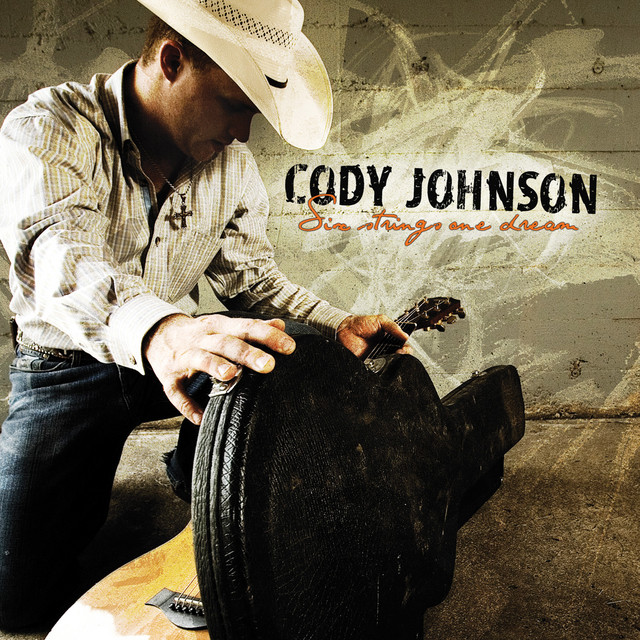
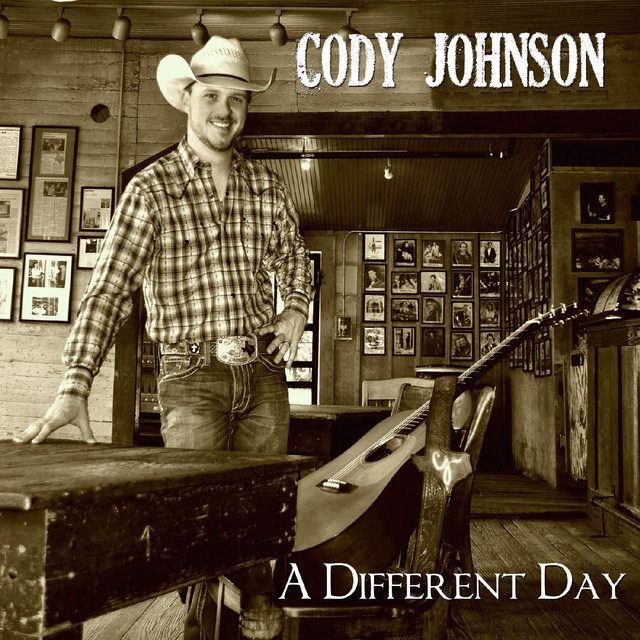
These albums built his grassroots fanbase across Texas before national success.
- 2006 – Black and White Label
- Debut album
- Raw, traditional country sound
- 2009 – Six Strings One Dream
- Expanded songwriting and touring reach
- 2011 – A Different Day
- Continued growth in Texas country scene
- 2014 – Cowboy Like Me
- First album to chart on Billboard
- Marked his rise beyond regional status
Breakthrough Independent Success

- 2016 – Gotta Be Me
- Major breakthrough
- #2 Billboard Top Country Albums
- #11 Billboard 200
- One of the biggest independent country releases ever
- 2018 – Live at the Ryman (Live Album)
- Recorded at the Ryman Auditorium
- Showcased his powerful live performance reputation
 Major breakthrough
Major Label Era (Warner Music Nashville)
Ain’t Nothin’ to It (2019)

- Released: January 18, 2019
- First major-label album
- #1 Billboard Top Country Albums
Notable Songs:
- “On My Way to You”
- “Nothin’ on You”
Cemented his transition from independent star to national artist
Human: The Double Album (2021)
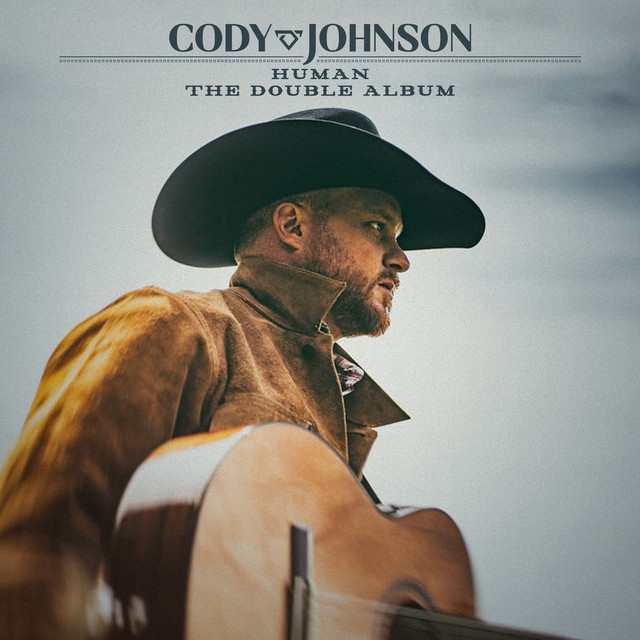
- Released: October 8, 2021
- 18-track double album
- Top 10 on Billboard 200
Major Songs:
- “’Til You Can’t” (career-defining hit)
- “Human”
- “Dear Rodeo” (feat. Reba McEntire)
 (career-defining hit)
This album launched him into mainstream country superstardom
Leather (2023)

- Released: November 3, 2023
- Won CMA Album of the Year (2024)
Major Songs:
- “The Painter”
- “Dirt Cheap”
- “Work Boots”
Showed maturity and consistency as a top-tier country artist
Leather (Deluxe Edition) (2024)
- Released: November 1, 2024
- Expanded to 25 total tracks
Notable Additions:
- “I’m Gonna Love You” (feat. Carrie Underwood)
Other Notable Releases
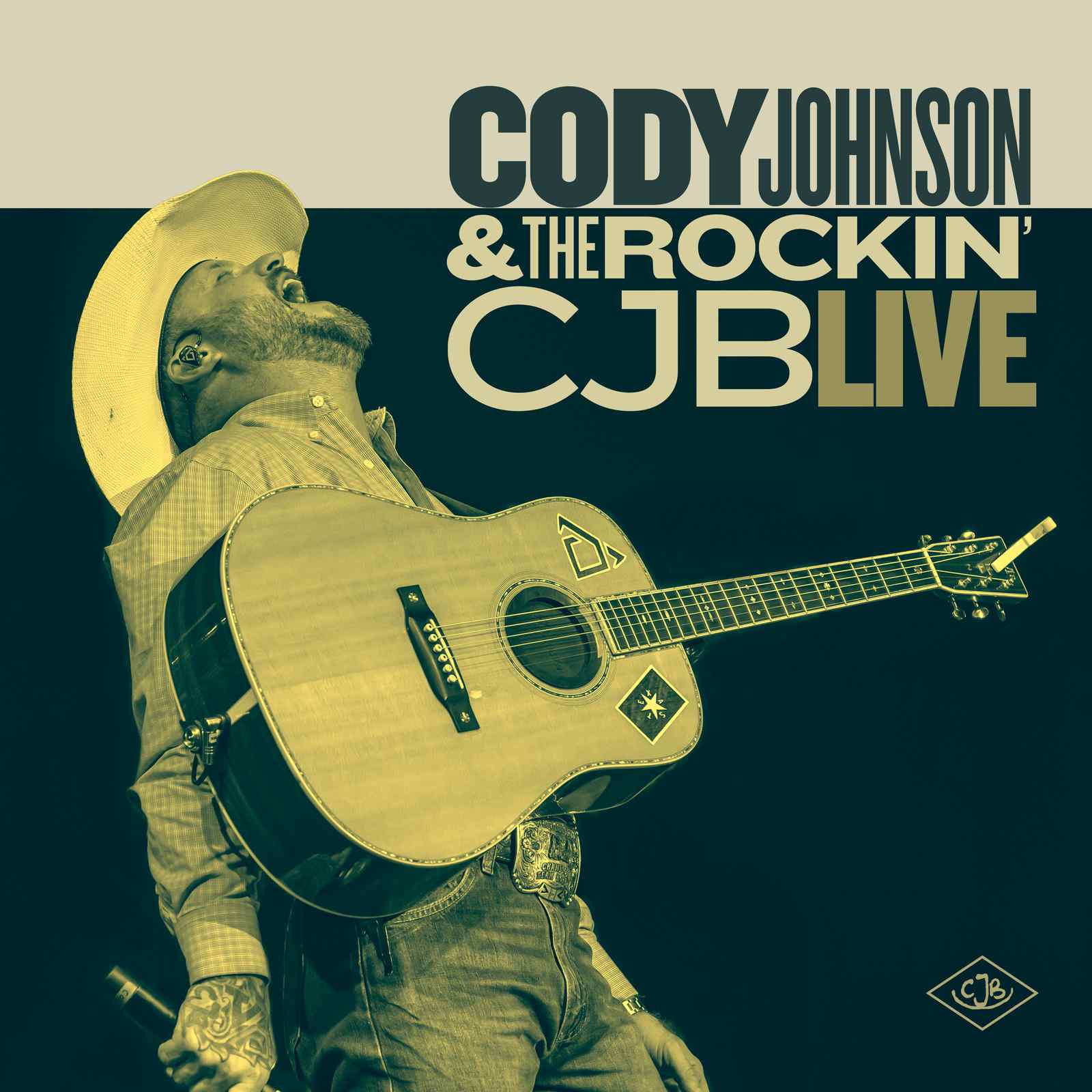
- 2021 – Cody Johnson & The Rockin’ CJB Live (Live recordings / special releases)
- Holiday Releases:
- “Christmas All Year Long”
- “Silent Night” (feat. family vocals)
Standalone & Recent Singles (2025–2026)


- 2025 – “The Fall”
- Continued radio success
- 2025 – “She Hurts Like Tequila” (with Carín León)
- Cross-genre collaboration
- 2026 – “Blame Texas”
- One of his highest-charting songs
- Released on Texas Independence Day
Discography Summary
- Studio Albums: 8+
- Live Albums: 1+
- Major Label Albums: 3 (plus deluxe)
- Breakthrough Album: Gotta Be Me (2016)
- Biggest Era: Human → Leather
More artist guides: Chris Stapleton and Jelly Roll.
Cody Johnson and Brothers Osborne: The Watertown Collaboration
Cody Johnson supplies featured vocals on “Born and Raised Hell,” the opening track of Brothers Osborne’s Watertown, released October 23, 2026. The official release announcement confirms the collaboration. John Osborne, Lee Miller and Kendell Marvel wrote the song; Johnson is not a listed songwriter. Explore our Brothers Osborne biography, songs and albums guide for the duo’s career, and read our Watertown album review for the complete track list, production credits and collaboration context.