
Starting Her Music Career in Nashville
Nashville did not turn her into a star overnight, but it did give her the setting where her skills could evolve quickly. Langley has said she was patient in those early years and treated the move almost like an education. She spent time in writers’ rounds, absorbed the habits of working songwriters, and worked on becoming better at lyric writing rather than simply chasing a quick break.
That matters because one of the clearest threads in her career is that people inside the industry recognized her writing before the general public fully caught up. Before many casual country listeners knew her name, she was already getting traction as a songwriter and collaborator. Her social media presence also started to matter more around this period.
Like many artists of her generation, she used TikTok and other platforms not just as promotional tools but as testing grounds. A major early turning point came with “If You Have To,” which built momentum online and helped expand her audience beyond regional shows and local word of mouth.
The song did not make her a household name, but it did something more important in the short term: it proved there was an audience for her voice, her writing, and her attitude.
In the crowded space of young country artists, Langley stood out because she did not feel overly sanded down. She came across as a little rough around the edges, and that roughness became part of the appeal.
Signing With Columbia Records and Building Momentum
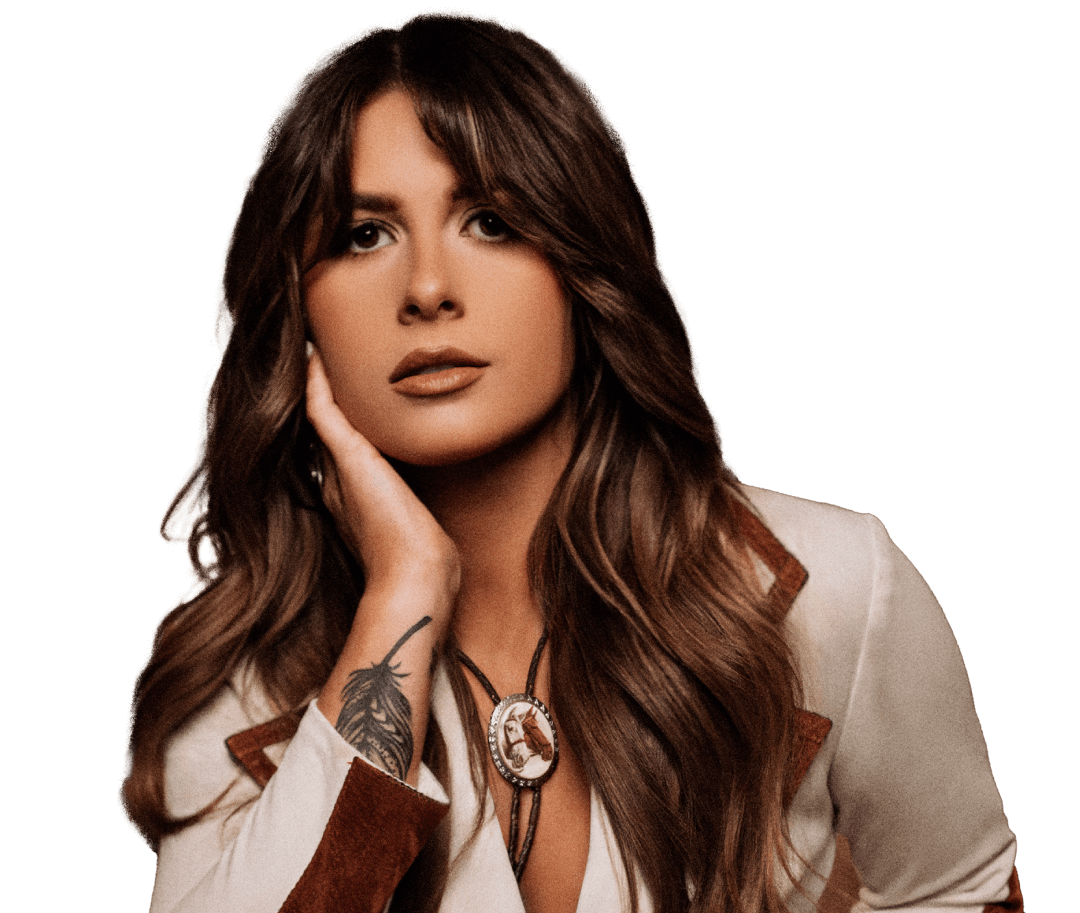
By 2022 and early 2023, Langley had begun translating that momentum into more formal career milestones. Her song “Country Boy’s Dream Girl” helped broaden her visibility, and industry attention followed. In February 2023, she signed with Columbia Records and Sony Music Nashville, a major step that gave her national infrastructure without requiring her to abandon the personality that had gotten her noticed in the first place.
Around that same time, she made her Grand Ole Opry debut, another symbolic leap. The Opry still carries weight in country music because it functions as both validation and initiation. For a young singer-songwriter from Alabama, standing on that stage so early in her major-label era said a lot about how seriously she was being taken.
Her official Opry artist page also underscored how much ground she had already covered as a performer, noting her work with artists such as Koe Wetzel, Randy Houser, Cody Johnson, Jamey Johnson, Lainey Wilson, and Parker McCollum. This period also shows how broad her skill set was becoming. She was not only releasing her own music but writing for others, including cuts on Elle King’s Come Get Your Wife and work connected to Runaway June.
In other words, before her mainstream breakthrough, Langley was already building credibility from several directions at once: songwriter, opener, collaborator, and developing recording artist.
Her first significant release in this new phase was the 2023 EP Excuse the Mess. It was not yet the blockbuster project that would later reshape her profile, but it was an important statement of intent. The EP helped define what listeners could expect from her: country foundations, rock edges, candid writing, and a point of view that felt more lived-in than polished.
This was also the period when collaborations started to expand her reach further. She teamed with Koe Wetzel on “That’s Why We Fight,” and she appeared with Kameron Marlowe on “Strangers,” the lead single from his 2024 album Keepin’ the Lights On. At the same time, she continued touring with bigger names, including support dates with Jon Pardi and Riley Green.
That road experience was important. Langley’s rise was never just an algorithm story. Digital traction mattered, but she was also earning her audience in physical spaces, night after night, in front of country crowds who tend to be skeptical of hype.
By the time casual fans started hearing more about her, she had already built the bones of a career that could survive beyond a moment.
Ella Langley’s Breakthrough With “You Look Like You Love Me”
The real breakthrough came in 2024. On August 2 of that year, Langley released her debut full-length album, Hungover. Billboard later identified the album on the Billboard 200, and its long chart life became one of the strongest signs that her appeal was not just tied to one song.
The album introduced a wider audience to her full range as a writer and performer, but the song that changed everything was “You Look Like You Love Me,” her duet with Riley Green. The track had an unusual structure, a spoken-sung feel, and a hook that sounded conversational enough to spread online. It did exactly that.
Billboard tracked the song’s jump onto the Hot 100, and by the end of 2024 it had gone all the way to No. 1 on Country Airplay. Billboard specifically noted that it became the first song performed or co-performed by a woman to reach the top of that chart in 2024, breaking a long male-dominated streak at country radio. For Langley, that was more than a hit.
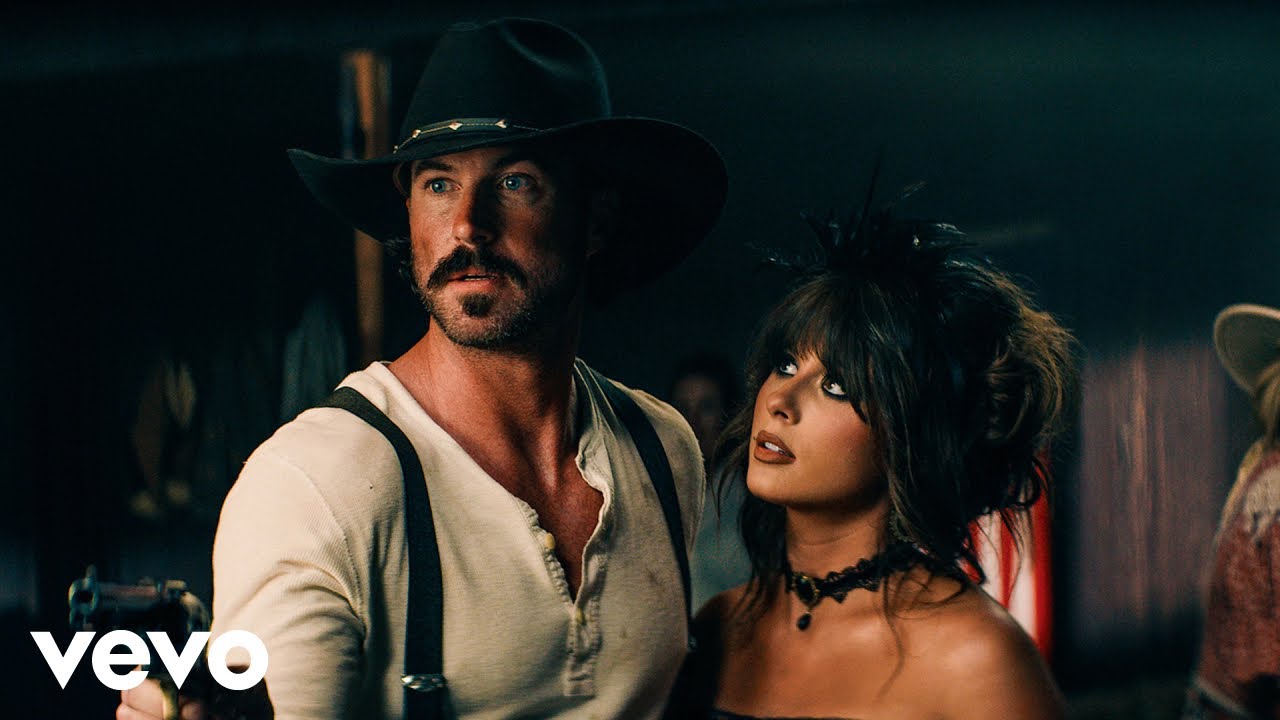
It was proof that her blend of attitude, humor, and emotional instability-as-aesthetic could work on a mass scale. The song also brought prestige. At the 2024 CMA Awards, “You Look Like You Love Me” won Musical Event of the Year, and its success positioned Langley not as a promising newcomer but as a real force in the format.
What followed showed that Langley was not going to be boxed in as the singer of one quirky duet. Hungover continued to generate attention, and its later deluxe version, Still Hungover, helped extend the project’s commercial life.
“Weren’t for the Wind” became a major follow-up and pushed her farther into solo-star territory. Billboard reported the song reaching the Country Airplay top 10 in May 2025 and later noted that it peaked at No. 2 on the format.
On the all-genre side, it also became a meaningful Hot 100 entry, which mattered because it proved Langley’s audience was growing beyond a single collaboration. Around the same time, she received major institutional recognition from the Academy of Country Music. At the 2025 ACM Awards, Langley entered as the most nominated artist and left as the night’s biggest winner, taking home five awards overall.
The ACM highlighted not only her win for New Female Artist of the Year but also the dominance of “You Look Like You Love Me,” which collected honors including Single of the Year, Music Event of the Year, and Visual Media of the Year. That was the kind of awards-night performance that can change an artist’s industry position in one evening. It did not simply celebrate what she had already done; it elevated expectations for what came next.
By the middle of 2025, Langley was no longer being discussed as a rising artist in the abstract. She was one of country music’s central young stars.
The next phase of her career was about proving that the breakthrough could scale. She kept touring, including headlining runs and major support slots, and her name began appearing more naturally alongside top-level acts rather than just beneath them on posters. Billboard’s 2025 reporting described her as a no-filter presence making country music feel newer and more alive, while Pollstar later framed her as a multi-platinum, award-winning chart-topper with a major tour on the horizon.
The 2025 CMA Awards reinforced that momentum. Langley received six nominations, and when the awards were handed out in November 2025, “You Look Like You Love Me” won Single of the Year, Song of the Year, and Music Video of the Year. That haul mattered because the CMAs and ACMs do not always tell the same story.
When an artist wins big at both, it usually signals something deeper than a hot streak. It means radio, peers, industry executives, and voters are all seeing the same thing. In Langley’s case, what they seemed to be seeing was a rare balance: someone commercially potent enough for radio and streaming, but distinctive enough that success did not make her seem generic.
Even visually and temperamentally, she projected something harder-edged than the polished mainstream center of country often prefers. Yet by late 2025, that edge was not an obstacle. It was part of the selling point.
“Choosin’ Texas” and Crossover Success
Then came “Choosin’ Texas,” the song that pushed Ella Langley from major country success into crossover history. Co-written with Miranda Lambert, Luke Dick, and Joybeth Taylor, it reached No. 1 on the Billboard Hot 100 in February 2026 and also topped Country Airplay. The achievement gave Langley her first all-genre chart-topper and established her as one of the biggest artists in American music.
The Dandelion Album and Arena Tour
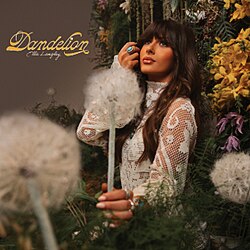
That success set the stage for her second studio album, Dandelion. Released on April 10, 2026, through SAWGOD and Columbia Records, the 18-track album was produced by Langley, Miranda Lambert, and Ben West. Its songs explore resilience, healing, identity, heartbreak, and personal growth while combining traditional country influences with country-pop and rock textures.
Dandelion debuted at No. 1 on the Billboard 200 with 169,000 equivalent album units. It became Langley’s first No. 1 album and confirmed that the audience built through “You Look Like You Love Me,” “Weren’t for the Wind,” and “Choosin’ Texas” would follow her into a full album era.
The project also expanded Langley’s creative authority. Rather than rushing a follow-up to Hungover, she helped shape the album’s production and visual identity. Songs including “Dandelion,” “Be Her,” “Speaking Terms,” and “I Gotta Quit” showed a broader emotional and musical range, while “Butterfly Season” reunited her with Miranda Lambert.
Langley supported the album with her first arena-headlining run, The Dandelion Tour. The move from clubs and support slots into arenas demonstrated how quickly her audience had grown and positioned her as a lasting headliner rather than a one-song phenomenon.
By September 2026, Langley’s career had moved well beyond the “rising star” label. She had progressed from Alabama church singing and barroom cover sets to major awards, No. 1 records, arena shows, and crossover recognition—all while retaining the rough-edged Southern identity that first distinguished her music.