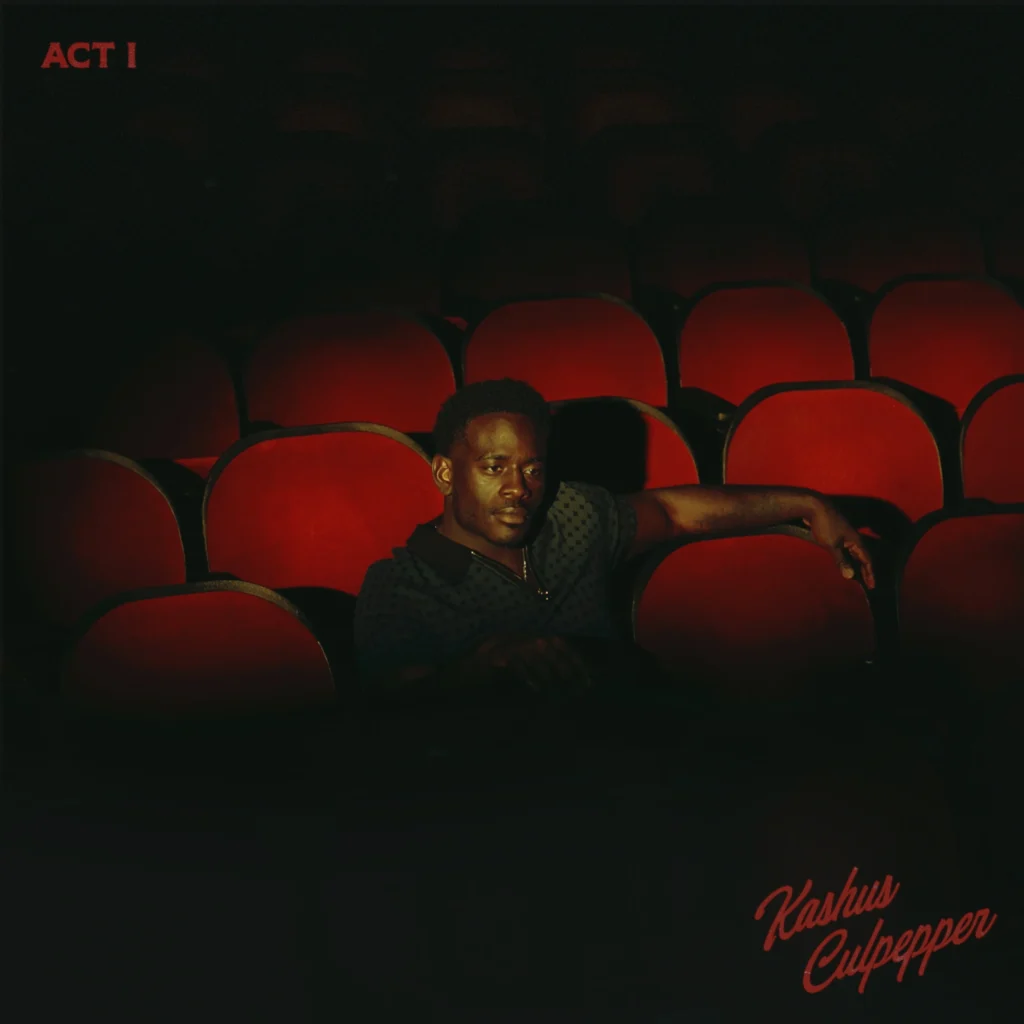
If you’re here for the full story of Kashus Culpepper Act 1, you’re not looking for a casual skim—you’re looking for the why behind the record. Why this debut hits like a lived-in classic. Why it can sound like Alabama red dirt, Muscle Shoals electricity, and a late-night soul confessional all in the same breath. And why Kashus Culpepper Act 1 feels less like “a new artist introducing himself” and more like a first scene that’s already in motion.
Kashus Culpepper Act 1 is positioned (in the artist’s own words) as a “timestamp”—a snapshot of where his head and heart were as both an artist and a man. That matters, because this album doesn’t play like a perfectly manicured résumé. It plays like a documentary reel: raw moments, big swings, and a voice that sounds like it’s carrying history even when the songs are brand new.
There’s also a very specific sense of place baked into Kashus Culpepper Act 1. Culpepper leaned into the gravitational pull of Muscle Shoals while making the album—choosing to cut his debut in the same town whose studios helped define American soul and rock’s emotional vocabulary. And in the process, the record becomes more than “genre-blending.” It becomes Southern on purpose—country, soul, blues, folk, and rock all treated like members of the same family tree.
A huge part of what makes Kashus Culpepper Act 1 connect is the way it connects. It doesn’t ask permission to be multiple things. One minute you’re in a southern-rock blaze (with a feature that practically dares the speakers to survive), and the next you’re in a traditional-leaning duet that feels like it was written under a porch light at 2 a.m.
And it’s worth saying clearly: Culpepper’s story is part of the emotional voltage here. He grew up singing gospel in church and later served in the U.S. military, picking up guitar and writing during that period—an origin story that helps explain why these songs often feel like they’re reaching for something bigger than cleverness. His breakout single “After Me?” went viral, and suddenly the world wanted a full-length statement. Kashus Culpepper Act 1 is that statement—18 tracks, all co-written by Culpepper, recorded in Muscle Shoals, and produced by Brian Elmquist.
Table of Contents
ToggleBefore we press play: what Act 1 is trying to do
From the outset, Kashus Culpepper Act 1 frames itself like cinema—Culpepper is a film buff, and the project’s core ethos leans into old-school film inspiration and linear visual storytelling. That’s not just a cute aesthetic choice; it changes how the album lands. Instead of “here are 18 songs,” it feels like “here are 18 scenes.” Some scenes are loud. Some are intimate. Some are messy in a way that feels honest.
Industry-wise, it’s also notable where this record sits: it arrives via Big Loud Records, and yet much of the contributor ecosystem (co-writers, producer) pulls from Americana-adjacent worlds. That tension—mainstream reach with roots-minded instincts—creates a debut that can flirt with big hooks without losing the grain in the wood.
1) “Intro” (Culpepper / Jordan Dozzi / Jacob Durrett)
The opening “Intro” matters more than people give intros credit for—especially on a record that’s literally named like a theater bill. On Kashus Culpepper Act 1, multiple reviewers point out a “fake radio show” framing device, which immediately signals the album’s intention to be experienced, not just consumed. It’s a choice that might feel like a familiar trope, but it also works like a camera pan across the setting: this is the South, this is broadcast culture, this is storytelling with a wink.
What makes the “Intro” effective in this context is how it sets expectations for range. Before you even get to the first full song, you’re primed for a record that’s going to move between worlds—country and soul, grit and polish, porchlight intimacy and stage-light volume. That’s not accidental; the album is described as blending country, soul, blues, folk, and rock, with varied instrumentation across the project.
As an opener, “Intro” also quietly underlines the “timestamp” concept Culpepper mentions: if this is a snapshot of who he is right now, then an intro acts like a slate clap—take one, roll film. It invites you to listen as if these songs are scenes from a personal documentary, where the “plot” isn’t a gimmick but an emotional through-line.
If you’re sequencing an 18-track debut, an intro can either feel like fluff or like a doorway. Here, because the next track hits hard and fast, “Intro” functions as contrast—a breath before impact, a dimming of the lights before the band kicks in.
2) “Southern Man” (feat. Marcus King)
If Kashus Culpepper Act 1 is a mission statement, “Southern Man” is the boldface headline. Critics repeatedly frame it as the album’s early “statement of intent,” and that’s exactly how it plays in the narrative arc: Culpepper doesn’t warm up quietly—he arrives.
The feature is a big deal. Marcus King brings a reputation for blues-rock firepower, and coverage notes his guitar presence as a major ingredient in the track’s energy. The way reviewers talk about it, you can almost hear the amps humming: southern rock intensity with blues DNA, like a muscle car built out of old soul records and roadhouse stages.
But “Southern Man” isn’t just about volume—it’s about identity. In the People interview, Culpepper ties the project’s Southern heat and cinematic inspiration directly to this title, calling it something only a “Southern Man” could provide. That reads like more than branding. It’s a claim: this is where I’m from, and I’m not sanding the edges off.
The best “intro tracks” on debut albums do a tricky thing: they’re accessible enough to pull in new listeners, but specific enough to feel real. “Southern Man” seems to earn that balance by leaning into tradition without pretending it’s trapped in the past. Critics describe the record’s sweet spot as using classic sounds to spice up modern expression—and they single “Southern Man” out as a prime example.
In a track-by-track sense, “Southern Man” also establishes a recurring theme of Act 1: Culpepper’s voice is the through-line. Even when the band gets loud, the vocal tone—gospel-rooted, rough-edged, emotionally forward—anchors the chaos. That’s why fans connect: the performances don’t feel like genre exercises. They feel like somebody trying to tell the truth loudly enough that you can’t ignore it.
3) “Alabama Beauty Queen” (Culpepper / Luke Preston / Diego Urias)
Where “Southern Man” comes out swinging, “Alabama Beauty Queen” shifts the light—still Southern, but more textured, more delicate in its emotional presentation. One review calls it “gentler” while still strong, and places it closer to a soul/pop edge of country. That’s a useful description because it highlights something Kashus Culpepper Act 1 does repeatedly: it lets softness be powerful.
The most vivid detail we get from coverage is the arrangement’s sense of motion: overlapping guitar, pedal steel, and banjo lines that “threaten to overwhelm” the vocal, creating a feeling of “impending chaos.” That’s such a specific image that it practically tells you how to feel while listening—like beauty and turbulence are happening at the same time.
Even without quoting lyrics, the title “Alabama Beauty Queen” carries narrative weight. In Southern storytelling, a “beauty queen” can be a symbol of aspiration, performance, public gaze, and private cost. Paired with the review’s note about near-chaotic instrumentation, the track reads like a portrait where glamour isn’t separate from pressure—it’s built on it.
In the flow of Act 1, this track also deepens the album’s relationship to place. The album is explicitly rooted in Alabama identity—Culpepper recording in Muscle Shoals and consistently framing his music as “Southern sound.” So when the song name drops “Alabama” up front, it’s not a throwaway. It’s part of the thesis: the South isn’t just a backdrop; it’s a character.
There’s also a performance identity component here. Culpepper’s voice gets described as soulful and emotionally activating, and songs like this seem designed to put that front and center—especially when the arrangement builds pressure around it. When a vocalist stays steady while the instruments swirl, it creates the feeling of a narrator holding the story together while life gets loud.
4) “Woman” (Culpepper / Anderson East)
“Woman” sits in one of the album’s most interesting creative intersections: a soul groove foundation with a co-write featuring **Anderson East. That pairing matters, because East’s musical world often lives in that same borderland where Southern soul, roots-rock, and singer-songwriter confession meet.
Americana UK frames “Woman” as a moment where Culpepper sounds “most at home,” praising it as a “properly good soul song” mixing traditional and modern effectively. That’s a strong endorsement—and it helps explain why Kashus Culpepper Act 1 can feel so grounded even while it genre-hops. When the album locks into that southern groove, Culpepper doesn’t feel like he’s borrowing a costume. He feels like he’s speaking in his natural accent.
Not every critic is equally glowing about the track, though, and that contrast is worth holding. Saving Country Music mentions that some songs—including “Woman”—can lean into “sonic clichés” of the vintage soul motif, reading at times as imitation rather than synthesis. The truth is probably in the tension: “Woman” may be a deliberate nod to classic soul language, and whether that lands as “timeless” or “too familiar” will depend on what a listener wants from modern country-soul.
But even that debate is part of the album’s charm. Debut records often show artists trying on the full closet: everything they love, everything they grew up with, everything they want to become. Act 1 literally advertises itself as the beginning, not the final form. So a track like “Woman” can be understood as one of the album’s grounding poles—Culpepper demonstrating, “Yes, I can live in a soul tradition,” even if he’ll sharpen that into something more uniquely his over time.
From a fan-connection standpoint, “Woman” also taps into a universal theme: direct address, devotion, complication—classic emotional material that soul music has always handled well. When Culpepper stays in that groove, the record becomes less about genre labels and more about body language—how the rhythm carries feeling.
5) “Break Me Like” (Culpepper / Grady Block / Hank Compton)
“Break Me Like” is one of those titles that doesn’t pretend to be anything other than what it is: a direct emotional demand. It signals vulnerability and volatility before the first note. And in the context of Kashus Culpepper Act 1, it lands right after the album establishes its soul groove—meaning it has a chance to deepen the mood rather than simply repeat it.
Americana UK suggests that by the time “Break Me Like” hits, the album has “definitely hit its stride,” and notes how the much-discussed Bill Withers comparison starts to make sense around here. That’s not just a name-drop; it’s a way of describing economy. Withers’ best songs are famously straightforward on the surface, devastating underneath. “Break Me Like” (at least in the way critics position it) seems to chase that same kind of clarity: say the thing plainly, and let the delivery do the heavy lifting.
At the same time, Saving Country Music groups “Break Me Like” among songs where the vintage soul production can feel cliché—again, a reminder that this album is walking a tightrope between homage and originality. But here’s what makes that less of a problem than it might be on another artist: Culpepper’s credibility and authenticity get repeatedly emphasized by critics, even when they’re skeptical of certain sonic choices. In other words, even if the template is familiar, the person inside it feels real.
That matters because a song like “Break Me Like” rises or falls on believability. The words “break me” can sound melodramatic in the wrong mouth. In Culpepper’s, they read more like a confession he’s tired of carrying alone. The “timestamp” framing helps here too: this album wants you to understand what it felt like to be inside his head at that time. A track like this becomes a chapter in that internal journal.
Sequencing-wise, “Break Me Like” also acts as a pivot toward the album’s heart-on-sleeve midsection—setting up “Believe,” “Stay,” and beyond. Even without exact lyrical references, you can feel the album tightening its focus: not just “here’s my sound,” but “here’s my bruises.”
6) “Believe” (Culpepper / Foy Vance)
If there’s a track critics consistently elevate as a peak performance moment, it’s “Believe.” Saving Country Music calls it “an excellent specimen” of Culpepper at his “impassioned best.” Americana UK also highlights it, describing a blues-leaning vibe and noting details like “spaghetti western guitar and organ” creating a slightly sinister feel.
That combination—belief, grit, and a hint of darkness—fits the emotional logic of Kashus Culpepper Act 1. “Believe” isn’t just about faith in the religious sense (though Culpepper’s gospel upbringing is part of his foundation); it’s also about survival faith: the kind you need when your life changes fast, when you’re coming up from nowhere, when your own voice becomes your job.
The co-write with Foy Vance is also a meaningful data point. Vance is known for emotionally direct songwriting, the kind that can carry spiritual weight without turning preachy. And Americana UK even suggests that pairing Culpepper with a more focused co-writing setup (instead of large writer rooms) may yield stronger results. That’s a fascinating lens for fans: “Believe” may be where Culpepper’s voice and writing feel most locked-in because the collaboration supports his instincts rather than diluting them.
Musically, “Believe” seems to sit in that Robert Cray / Albert King-adjacent blues space described by reviewers, but filtered through Culpepper’s Southern-soul identity. That’s important: it’s not “here’s a blues song” as a genre flex—it’s “here’s blues as part of my language.” And that’s exactly what the album keeps trying to prove: the South isn’t a playlist category; it’s a lived mixture.
For fans, “Believe” can become the emotional core because it sounds like someone choosing hope without pretending it’s easy. A sinister tint in the instrumentation suggests the stakes. The vocal intensity suggests the cost. And the title suggests the decision anyway.
7) “Stay” (Culpepper / Jordan Dozzi / Jacob Durrett)
“Stay” is where the album’s ambition—18 tracks, wide stylistic reach—runs into the reality that not every moment will hit every listener the same way. Americana UK calls “Stay” “string-drenched soul” and suggests it’s a track best “glossed over,” framing it as an example of debut-album bloat where artists include every passable song they’ve lived with for years. Saving Country Music also groups it among songs where vintage soul production can feel cliché.
So why spend real time on it? Because in a project like Kashus Culpepper Act 1, the “lesser-loved” tracks often reveal the most about what the artist is trying to learn in public.
“Stay” is (at least by critical description) a maximalist emotional move—strings, rich soul palette, big romantic gravity. That aesthetic is part of the broader album toolkit: MusicRow notes the project’s varied instrumentation across the record, including orchestral textures like cello, violin, and harp in addition to country staples like pedal steel and banjo. If “Stay” leans hard into that cinematic string language, it’s consistent with the album’s film-inspired framing.
The question becomes: does it feel earned? Some critics say no—at least not in a way that feels fresh. But even that critique points to Culpepper’s bigger artistic challenge: how to use the grandeur of classic soul without falling into a museum display. On a debut, it’s understandable to want to show you can do it all. “Stay” may be Culpepper reaching for that big-screen emotional swell—strings as spotlight, voice as narrator—before he’s fully refined how to make that approach unmistakably his.
For fans, though, this is often where “critical take” and “personal connection” diverge. A track can be dismissed as cliché and still become someone’s favorite because it hits their life at the right angle. “Stay” is the kind of title that invites listeners to project their own story into it. If you’ve ever begged for time, begged for one more chance, begged for a door not to close, a song like this can feel like a hand on your shoulder—even if it’s not reinventing the form.
8) “Mean To Me” (Culpepper / Oscar Charles / Diego Urias / Matt Warren)
“Mean To Me” is one of the clearest examples of Kashus Culpepper Act 1 brushing up against modern pop sensibility—at least according to critics. Americana UK notes it can feel “country-by-numbers” with an “almost Coldplay feel.” That’s a striking comparison, because it suggests arena-ready chord emotion—big, bright, open-hearted—rather than dirt-under-the-nails grit.
This is where Culpepper’s “don’t put me in a box” philosophy becomes both exciting and risky. On one hand, it’s refreshing to hear an artist move freely across styles. On the other, the more you lean into broadly recognizable pop language, the more you risk sounding like you’re chasing a shape instead of telling a story.
But titles matter. “Mean To Me” isn’t abstract—it’s relational. It implies confusion and hurt: “Why are you treating me this way?” In a classic country frame, it could be a bar-room heartbreak plea. In a pop-rock frame, it could be a stadium-sized lament. Either way, the emotional content is direct, and Culpepper’s voice is built for directness.
From a songwriting-credits perspective, this is also one of the “big room” collaborations (four writers), which Americana UK suggests isn’t always where Culpepper thrives best compared with more focused pairings. That doesn’t mean the song fails—it means it may carry more of that “engineered for wide appeal” sheen.
In the flow of the album, “Mean To Me” can function like a palate shift. After several tracks rooted in soul/blues identity, a cleaner, bigger, more modern hook can feel like stepping into bright light. It gives the listener a different emotional texture—less smoke, more open sky.
For fans, this could be the “gateway track”—the one you play for your friend who doesn’t live in Americana or country-soul world but loves a chorus that lifts. And if the album’s mission is to show “all the sides” of Culpepper, then “Mean To Me” is one of the sides where he tests how far he can stretch toward modern, melodic accessibility without losing his Southern fingerprint.
9) “Broken Wing Bird” (feat. Sierra Ferrell) (Culpepper / Brian Elmquist)
“Broken Wing Bird” is widely framed as one of the record’s standout country moments, and it’s easy to understand why. The collaboration with Sierra Ferrell is described as tender, traditional-leaning, and a sharp stylistic pivot from the fiery rock energy elsewhere on Kashus Culpepper Act 1.
Saving Country Music specifically recommends it as a starting point for listeners seeking the country side of the record, calling it a great song—even if not fully representative of the album’s dominant approach. Americana UK goes further, calling it “a delightful traditional country tune” and “one of the best songs and performances here.”
This track’s title is already a short story: a “broken wing bird” suggests damage, fragility, survival, and the instinct to keep trying anyway. Pair that imagery with the presence of Ferrell—an artist often associated with timeless, old-world vocal character—and you get the sense that the song is meant to feel like it could have existed decades ago. But crucially, it’s placed inside a modern album whose identity is “Southern sound,” not “throwback act.”
That’s what makes “Broken Wing Bird” such a defining moment for Culpepper as an artist: it’s proof of range and taste. He’s not just dabbling in country aesthetics; he’s making a deliberate choice to honor tradition without turning the album into a costume party. The contrast also strengthens the surrounding songs. When you place something sparse and traditional beside richer soul-rock production, both sides feel bigger.
There’s also an artistic-identity lesson hiding here. Culpepper says he wants people to understand they can’t label him as only one thing, and he specifically points to “Broken Wing Bird” as evidence of that sonic 180. It’s not a detour—it’s a thesis paragraph.
For fans, this is the kind of track that earns lifelong loyalty because it feels intimate and generous. Duets, when done right, don’t feel like features—they feel like shared space. “Broken Wing Bird” reads (in coverage) like a moment where Culpepper steps back just enough to let the song breathe, trusting that subtlety can be as gripping as power.
10) “Better Weather” (Culpepper / Luke Preston)
“Better Weather” is one of the tracks that doesn’t receive a lot of direct critical description in the sources above, so let’s treat it with honesty: we can’t claim specific lyrical details without an official lyric sheet. What we can do is talk about how the title—and its placement in an 18-track “timestamp” album—functions as story.
In the emotional logic of Kashus Culpepper Act 1, “Better Weather” reads like an exhale. The record carries themes of heartbreak, identity, Southern pride, and the push-pull between grit and tenderness. In that landscape, “Better Weather” suggests a shift from immediate pain toward imagined relief. It’s the kind of phrase you say when you’re trying to convince yourself the storm won’t last forever.
Because the album blends country, soul, blues, folk, and rock—and explicitly features instruments like pedal steel, banjo, and orchestral textures across the project—“Better Weather” could reasonably sit in multiple lanes. But regardless of arrangement style, its narrative role is clear: it’s a hope-language track. It belongs to the part of the album where Culpepper is no longer just describing wounds—he’s reaching for what comes after.
The songwriting credit is relatively focused (two writers), which Americana UK suggests can be a strength for Culpepper’s material when paired with a sympathetic collaborator rather than a crowded room. That matters here because “Better Weather” as a concept doesn’t need complexity to work—it needs sincerity. A simple phrase can carry an entire life if the delivery is believable.
For fans, songs like “Better Weather” often become the quiet keepers—the tracks you return to on difficult days, not because they’re flashy, but because they offer a small, sturdy promise. Even if the song isn’t the album’s loudest moment, its existence in the sequence helps the record feel human. Nobody lives in tragedy for 18 straight scenes. At some point you look out the window and say, “Maybe tomorrow.”
11) “That’s The Feeling” (Culpepper / Brian Elmquist)
“That’s The Feeling” is another title that signals embodied emotion rather than storyline details. It’s less “here’s what happened” and more “here’s the sensation.” In a country-soul context, that’s a powerful move because soul music is often about naming the feeling and letting the groove do the rest.
This track shares a co-write with producer Brian Elmquist, which is an important clue to how it might function on Kashus Culpepper Act 1. When the producer is also a writer, the song often becomes a structural anchor—something that embodies the project’s sonic thesis. Elmquist is also highlighted as a major writing partner in coverage of the album, which suggests their collaborative chemistry is central to the record’s identity.
In terms of narrative placement, “That’s The Feeling” arrives after “Better Weather,” meaning it could operate like a bridge between hope and recognition—like the moment you realize you’re starting to change, even if you can’t explain why. The title implies recognition: oh—this is what it feels like.
And on a “timestamp” album, that’s exactly the kind of detail that makes the project resonate. Culpepper isn’t just documenting events; he’s documenting inner weather. A song called “That’s The Feeling” supports that thesis because it’s basically a caption under an emotional photograph.
Stylistically, the album’s critical consensus suggests Culpepper’s sweet spot is when classic elements are used to “spice up” modern expression rather than strictly imitate older forms. So the most convincing version of “That’s The Feeling” (as a conceptual role) would be one that uses familiar Southern-soul language to express something current—something about Culpepper’s life right now, not an imaginary past.
For fans, this type of track becomes the one you quote without quoting it—the one you send to a friend with “this is exactly what I mean.” It’s not about plot; it’s about recognition. And recognition is one of the strongest reasons people attach to artists.
12) “Man Of His Word” (Culpepper / Natalie Hemby)
“Man Of His Word” is a title with moral weight. It implies promise, integrity, expectation—and the pain that comes when any of those collapse. On Kashus Culpepper Act 1, it also stands out because of the co-write with Natalie Hemby, who’s explicitly mentioned among notable co-writers on the project.
Even without confirmed lyrical specifics, a song like “Man Of His Word” almost automatically invites a few Southern storytelling archetypes: the hardworking man trying to live up to his promises, the lover who swore he’d change, the father figure whose word was law, the narrator who’s either proud of keeping his word or haunted by failing to. In a culture where “your word” is currency, that phrase is a loaded gun.
Placed in the back half of an 18-track debut, “Man Of His Word” can function like a character-building chapter. The album has already shown Culpepper’s range—rock heat, soul groove, traditional duet. Now it can ask: who is he, ethically and emotionally? That lines up with Culpepper’s own framing of the record as a look inside his head as a man, not only as an artist.
Hemby’s presence also suggests an emphasis on craft. When a songwriter known for sharp, human detail enters the room, the song often leans toward specificity rather than vague feeling. That doesn’t mean we should invent scenes; it means we can reasonably expect the track aims for emotional clarity—exactly what a title like this demands.
For fans, “Man Of His Word” can hit in two directions. If the narrator is the one trying to be dependable, it’s an anthem for self-respect. If the narrator is calling out someone else’s broken promises, it’s a heartbreak song with backbone. Either way, it fits the “timestamp” idea: a song about keeping promises feels especially meaningful when your life is changing quickly and you’re trying to stay grounded.
13) “In Her Eyes” (Culpepper / Brent Cobb / Oscar Charles)
“In Her Eyes” is built for intimacy. The title implies observation, reflection, and emotional translation—trying to understand yourself by seeing how someone else sees you. On an album framed as a personal timestamp, that’s a fitting angle: who you are in a given season is often clearest in the gaze of someone who knows you.
This track’s credits include Brent Cobb, another notable name mentioned in coverage. Cobb’s songwriting reputation leans toward vivid, lived-in Southern storytelling. That suggests “In Her Eyes” likely aims for emotional realism rather than melodrama—again, not something we should fabricate, but a clue to the track’s intended tone.
In the context of Kashus Culpepper Act 1 as a genre-blending record, “In Her Eyes” also reads like a potential bridge between country narrative tradition and soul confession. The title is universal enough for soul, but specific enough for country. That’s the album’s whole thesis in miniature: these styles are not enemies; they’re dialects.
Sequencing-wise, “In Her Eyes” lands in the late stretch where the album starts to feel like it’s turning inward. Earlier tracks declare identity (“Southern Man”), paint portraits (“Alabama Beauty Queen”), and swing between styles. Later tracks, by title alone, suggest deeper interior movement: truth questions, “After Me?,” being out of your mind, a house on a hill. “In Her Eyes” is the kind of song that can gently pivot the record from external storytelling to internal reckoning.
For fans, these are the tracks that create parasocial closeness—the feeling that the artist is letting you sit in the passenger seat of his life. Culpepper explicitly says he wants listeners to understand him fully, to see all sides. A song like “In Her Eyes” supports that mission because it implies vulnerability: you can’t talk about someone’s gaze without admitting you care what they think.
14) “Is It True” (Culpepper / Rhett Akins / Rocky Block)
“Is It True” is a question-song, and question-songs tend to be emotional pressure cookers. They’re built around doubt: doubt about love, about rumors, about self-worth, about reality itself. And on Kashus Culpepper Act 1, Americana UK calls it “pop-soul,” suggesting it leans toward a more polished, modern lane compared to the album’s rootsier highlights.
That doesn’t automatically make it lesser—though the same review suggests tracks like this might have been left for later development. What it does mean is that “Is It True” likely plays an important structural role: it widens the album’s emotional palette by introducing a smoother, more radio-adjacent texture.
The title itself is deceptively simple. “Is it true?” can be asked softly (fear), sharply (anger), or even numbly (resignation). That versatility makes it a strong late-album track, where the listener is already emotionally invested and willing to follow nuance.
In terms of Culpepper’s stated artistic intent—being authentic and not trying to sound like anybody—“Is It True” becomes a kind of test case. Can he step into pop-soul gloss and still sound like himself? Fans who love the grit may bristle; fans who love melody may lean in. The important thing is that Culpepper is showing range, and range is part of the album’s “all sides of me” promise.
From a narrative arc standpoint, “Is It True” also sets up the run toward “After Me?” and the album’s closing stretch. Doubt leads to obsession, obsession leads to regret, regret leads to memory—those are classic emotional dominoes. Even if we can’t claim the exact storyline, the sequencing logic feels intentional.
15) “After Me?” (Culpepper / Mark Addison Chandler)
“After Me?” is the song that helped set this whole era in motion. People references the viral frenzy around the single and frames the debut album as the first cohesive glimpse into Culpepper’s mind after that breakout moment. And earlier coverage also details how “After Me?” was one of the singles that propelled attention during his rapid rise.
That makes “After Me?” more than just Track 15—it’s a narrative hinge. It arrives late enough in Kashus Culpepper Act 1 that you’ve already heard Culpepper’s range and emotional preoccupations. When the “breakthrough” song shows up inside the album rather than at the front, it functions like a reveal: this isn’t the beginning of his story; it’s the moment the outside world finally noticed.
Americana UK describes “After Me” as “bluesy,” and even suggests it points to another strand of his career—building on that blues aspect away from the more soulful band sound. That’s significant. It implies that “After Me?” might be one of the purest distillations of Culpepper’s grit: the part of him that doesn’t need lush strings or pop gloss, just groove and truth.
The title is brilliant because it’s ambiguous in an emotionally painful way. “After me?” can mean:
Will you be okay after me?
Are you going to someone else after me?
Were you ever really here, or was I just the chapter before the next?
That ambiguity is catnip for listeners because it lets them pour their own story into the phrase. It also fits Culpepper’s identity as a songwriter who activates emotion first—an approach critics describe as tapping into receptors tied to deep feeling.
In the larger “timestamp” framing, “After Me?” can be heard as the moment where private heartbreak becomes public art. Culpepper is moving from “posting covers” to carrying a debut album, and “After Me?” is part of the bridge between those lives.
16) “Out Of My Mind” (Culpepper / Brian Elmquist)
“Out Of My Mind” is where Kashus Culpepper Act 1 reportedly delivers one of its most delightful left turns. Saving Country Music points out an “unexpected banjo breakdown” in the middle of the track and calls it exactly the kind of moment you want from an album like this.
That detail is huge because it captures what makes Culpepper compelling right now: unpredictability with purpose. A banjo breakdown inside a track titled “Out Of My Mind” isn’t just sonic decoration—it’s thematic. It’s the sound of the floor tilting. It’s the musical equivalent of an intrusive thought cutting through your composure.
The co-write with Brian Elmquist again suggests this track is tightly integrated into the album’s sonic architecture. And because the album’s palette includes both traditional instruments (banjo, pedal steel) and orchestral textures, the banjo moment becomes a reminder that Culpepper’s “Southern sound” isn’t a marketing phrase—it’s a practical toolkit.
Narratively, “Out Of My Mind” tends to imply obsession, spiraling, or emotional chaos—classic country and soul territory. But what makes it interesting in this album’s sequence is where it appears: after the breakthrough track “After Me?” and before the emotional closer “House On A Hill.” That placement suggests escalation. The protagonist has asked the question, taken the hit, and now the mind is racing.
For fans, “Out Of My Mind” is likely a live-show favorite because it offers dynamics: tension you can feel, and a surprising instrumental pivot that makes people look at each other like, “Wait—did you hear that?” The best debuts include moments that feel like a personality reveal. The banjo breakdown is one of those—Culpepper showing he’s willing to gamble on texture, not just play it safe.
17) “House On A Hill” (Culpepper / Rhett Akins / Jimi Bell)
“House On A Hill” is widely framed as one of the album’s most emotionally effective songs. Saving Country Music calls it heartbreaking and says it’s where the country-soul fusion is exploited to its best results, mentioning fiddle as a key element in exposing the emotion of the story. Americana UK similarly notes a fiddle opening and highlights an impassioned vocal over a sparser arrangement that keeps threatening to take off but never fully does.
Those descriptions are incredibly telling. They point to restraint—an arrangement that holds back for maximum emotional tension. That’s a mature choice for a debut, because it shows Culpepper isn’t only interested in proving he can go big; he’s interested in proving he can go deep.
The title “House On A Hill” is classic symbolism. A house on a hill can be aspiration, memory, loneliness, distance, status, or isolation. It can be the place you wanted, the place you lost, or the place you can’t go back to. When paired with a sparse arrangement and fiddle emphasis, the imagery becomes even sharper: wide sky, open space, a lone figure looking up.
This is also where the Muscle Shoals context adds emotional resonance. Culpepper recorded the album there intentionally, drawn by the energy and the lineage of the place. “House On A Hill,” described as a peak emotional moment, feels like the kind of track that benefits from that environment—where room sound, live feel, and organic instruments can turn sadness into something tactile.
For fans, this is the track that proves Culpepper isn’t only a vibe—he’s a storyteller. Even critics who note some filler on the 18-track runtime still single this song out as a highlight, suggesting it rises above any debut-album excess.
If “Southern Man” is the album’s banner, “House On A Hill” is the album’s bruise. It’s the moment where pride and pain meet, where the Southern-soul blend becomes a delivery system for heartbreak that feels earned.
18) “Cherry Rose” (Culpepper / Mikky Ekko / Brian Elmquist)
“Cherry Rose” closes the album’s main tracklist and, according to Americana UK, lands as a soul ballad where the strings finally “work for him,” with a tune that nods toward classic soft-soul lineage (they reference The Commodores’ “Easy” as a point of comparison). That’s a meaningful note because it reframes the earlier critique of string-heavy moments like “Stay”: here, the lushness is described as effective rather than excessive.
As a closer, “Cherry Rose” also functions like the end credits of Culpepper’s film. The album starts with broadcast framing and then moves through identity, desire, doubt, spiral, heartbreak, and—finally—something that sounds like reflective softness. A soul ballad at the end makes emotional sense: after 18 tracks of trying to show every side, you end by showing the tender core.
The title itself—“Cherry Rose”—is romantic, almost mythic. It sounds like a nickname, a memory, or a symbol. “Cherry” suggests sweetness and color; “rose” suggests beauty with thorns. Together, they imply love that’s both gorgeous and potentially painful—again, perfectly aligned with the album’s emotional landscape.
It’s also worth noting the writing team here includes both Elmquist and Mikky Ekko, which hints at a song designed with melodic and emotional clarity. If the album is a “timestamp,” closers often function as the last diary entry—the line that lingers after you shut the book.
For fans, “Cherry Rose” can become the slow-dance track, the late-night drive track, the one you replay because it makes the whole record feel warmer in hindsight. And if you’re new to Culpepper, it might be the track that convinces you he’s not only a powerful vocalist—he’s someone with a sense of pacing and emotional architecture.
Why fans are locking in on Act 1 right now
Kashus Culpepper Act 1 matters in this moment because it’s resisting the flattening effect of modern genre marketing. Culpepper’s own words reject boxing-in—he calls his music simply “Southern sound,” and he emphasizes authenticity over imitation. Critics describe the project as a blend of country, soul, blues, folk, and rock, with everything from pedal steel and banjo to orchestral textures across the record.
And culturally, there’s a hunger for artists who can carry tradition without cosplay. Culpepper’s gospel roots, his nontraditional road into music, and his decision to cut the record in Muscle Shoals add up to a debut that feels like it has roots in the ground, not just a vibe in the air.