
Table of Contents
Toggle1) The real story of how Old Dominion formed
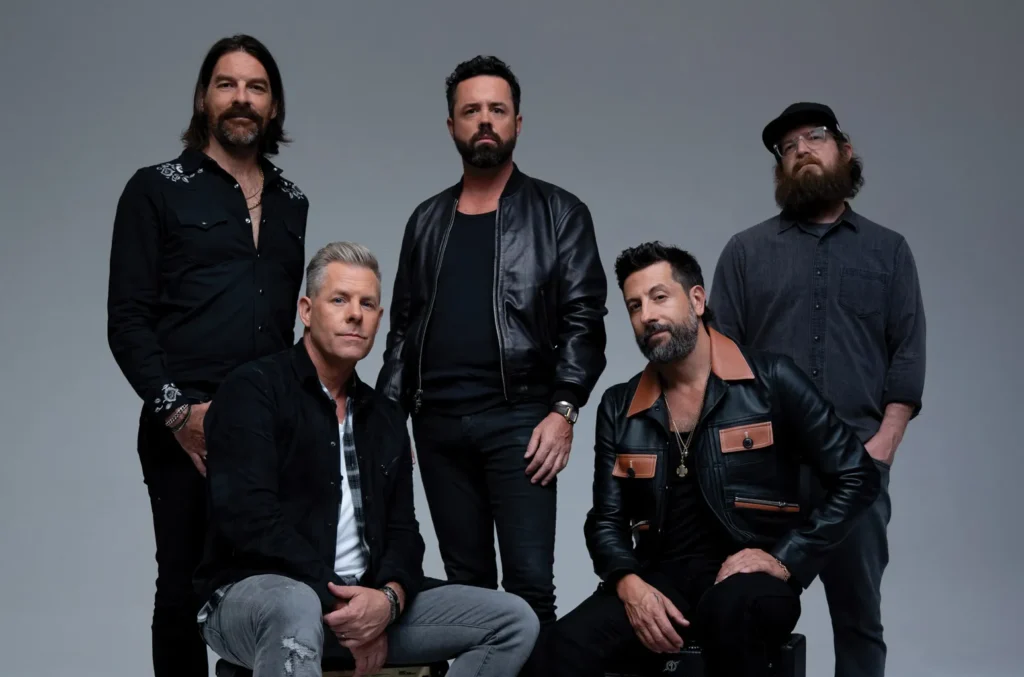
If you only know Old Dominion as the band that always sounds like summer with the windows down, you’re catching them mid-flight—not at takeoff. Their origin story is deeply “Nashville”: long nights, co-writes, rental vans, and the kind of slow-built chemistry you can’t fake.
The name Old Dominion itself nods to Virginia’s nickname—fitting, because several members have strong Virginia ties. The early connective tissue was songwriting first, band second: frontman Matthew Ramsey and multi-instrumentalist Trevor Rosen were already moving in the songwriting lanes before the full five-piece identity locked in. Meanwhile, Whit Sellers (drums) and Matthew Ramsey both grew up in Virginia and even came from rival high school drumline worlds—one of those small-life details that later becomes a big-life “how did this happen?” moment. Geoff Sprung and Brad Tursi connected through college circles and musicianship before the machine fully clicked.
What makes Old Dominion special is that they didn’t “assemble” like a typical label-built project. They grew into a unit—writers who became performers, musicians who became a brand, a hang that turned into a voice. That’s why their songs feel lived-in: the band wasn’t chasing a single hit as much as they were building a whole language.
2) The sound: why Old Dominion hits different
A lot of modern country leans on either (a) high-drama, arena-rock scale or (b) stripped-down, diary-page intimacy. Old Dominion sits in the sweet spot between those worlds—bright, melodic, and hook-forward, but with craftsmanship at the core.
From a guitarist’s ear, Old Dominion thrives on “song-first” arrangements:
Chord movement that supports the vocal rather than competes with it
Guitar layers that feel like a conversation (strummed acoustics + electric textures + tasteful lead lines)
Rhythm section discipline—drums and bass that push the groove without overcrowding the lyric
Pop-informed structure (tight intros, fast-to-hook choruses) without losing country identity
That’s why their music works for both the casual listener and the musician who can’t help analyzing the pocket.
3) Timeline: albums, eras, and turning points
The breakthrough runway
Before the albums became household titles, Old Dominion built credibility the hard way—touring and putting songs in front of real audiences until the reactions stopped being polite and started being loud.
Meat and Candy (2015): the foundation
Their 2015 debut Meat and Candy is often remembered as the moment the public got the full picture: this wasn’t one guy with a band—it was a band with a point of view. The writing is sharp, the choruses land, and the vibe is confident without being showy.
Happy Endings (2017): momentum becomes identity
By Happy Endings, Old Dominion felt like they knew exactly who they were: uplifting, modern, and emotionally specific without getting heavy. This era is where the group identity really solidified for a lot of fans.
Old Dominion (2019): the self-titled statement
A self-titled record is usually a flag planted in the ground. Their 2019 album Old Dominion reads like: “This is the whole package.” It’s refined, radio-ready, and built to be played loud in a crowd.
Time, Tequila & Therapy (2021): emotional range widens
By 2021, they weren’t just writing fun songs—they were writing felt songs. Time, Tequila & Therapy expands the palette: reflective, warm, and honest, while still keeping the hooks that define Old Dominion.
Memory Lane (2023): nostalgia without cliché
Memory Lane (2023) leans into reflection—how love changes, how life moves, how you miss things you didn’t realize were “the good old days” until they were gone. It’s a mature album that still plays like a good time.
4) Accomplishments and industry respect
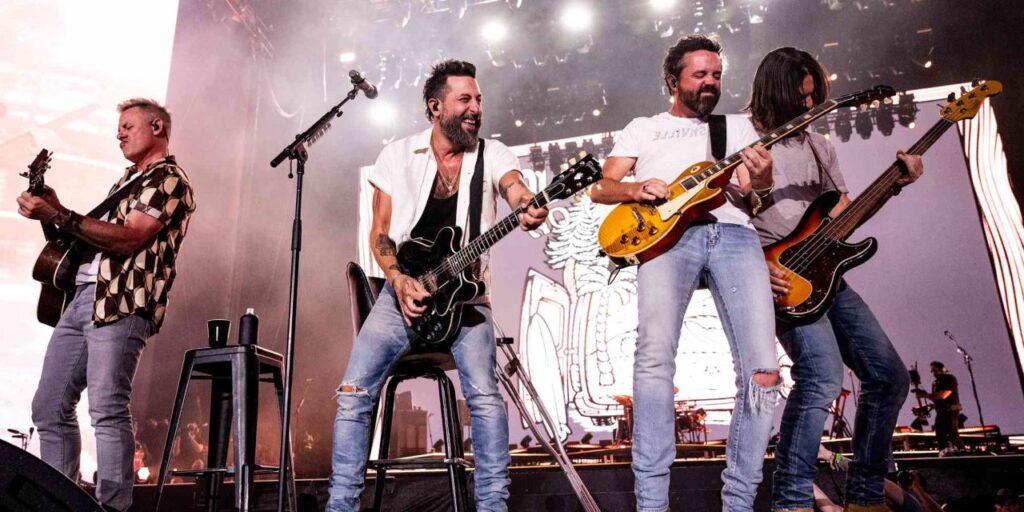
Awards aren’t everything—but they’re a great “outside proof” marker that the industry is hearing what fans already know.
CMA Vocal Group of the Year dominance
Old Dominion has been a major force in the CMA Vocal Group of the Year category for years—and as of the CMA listing, they’re the current holders (2024).
That’s not a one-off trophy—that’s sustained excellence, especially in a genre where legacy acts and breakout groups are constantly rotating through the spotlight.
More than trophies: cultural presence
What’s just as impressive is how Old Dominion became a reliable “soundtrack band” for modern country fans. Their catalog is stacked with songs that show up at weddings, tailgates, road trips, and those random Tuesday drives when you need a mood reset.
And importantly: they’ve maintained credibility as writers. They’re not just performers delivering someone else’s words—they’re builders of their own voice, which is why the band’s personality survives trend cycles.
5) Top songs (and why each one matters)
There are “top songs” by streaming numbers… and then there are top songs by impact. Here’s a fan-and-musician-friendly mix—what these tracks do and why people keep coming back.
“Break Up with Him”
A masterclass in modern country storytelling: direct, conversational, and built around a hook that feels inevitable. It’s a career-defining early single that introduced a lot of listeners to Old Dominion as hitmakers with personality.
“Song for Another Time”
This one is a love letter to nostalgia itself—how music becomes a time machine. The writing leans emotional without getting dramatic, which is a signature strength for Old Dominion.
“One Man Band”
A massive statement track: romantic, big-chorused, and designed to be sung back by arenas. It’s also one of their best examples of balancing pop polish with country heart. (If you’ve ever seen the crowd reaction, you already know.)
“Written in the Sand”
This one hits because it’s realistic—love isn’t always permanent, and that truth doesn’t have to be bitter. Old Dominion excels at bittersweet.
“Hotel Key”
Light, cheeky, and built for summer. It’s proof the band can do playful without sounding disposable—an underrated skill in country radio.
“Memory Lane”
The title track of the 2023 era is a clean example of grown-up nostalgia: it’s not just “remember when,” it’s “look who we became.” Old Dominion makes that emotional angle feel universal.
“No Such Thing as a Broken Heart”
This is peak Old Dominion optimism—resilient, melodic, and crowd-ready. It’s the kind of song that reminds you why their shows feel like a community hang.
“Snapback”
A clever metaphor with a hook that sticks. It’s also a great snapshot of the band’s pop instincts—tight phrasing, satisfying payoff, and a chorus that feels like it’s always existed.
“Make It Sweet”
Smooth, romantic, and built for replay value. This is one of those tracks that made Old Dominion feel like the dependable “date night” band for a huge part of their audience.
“I Was on a Boat That Day”
Comedic timing in musical form. It’s not easy to pull off novelty energy without becoming novelty only—but Old Dominion keeps it musical, not gimmicky.
“Some People Do”
An emotional centerpiece type of song—more reflective, more sincere. It shows the band’s range beyond party-core country.
(Note: if you want, I can tailor this “top songs” section to your preferred metric—Billboard peaks, streaming totals, fan-favorite setlist staples, or best guitar moments.)
6) The members of Old Dominion, in detail
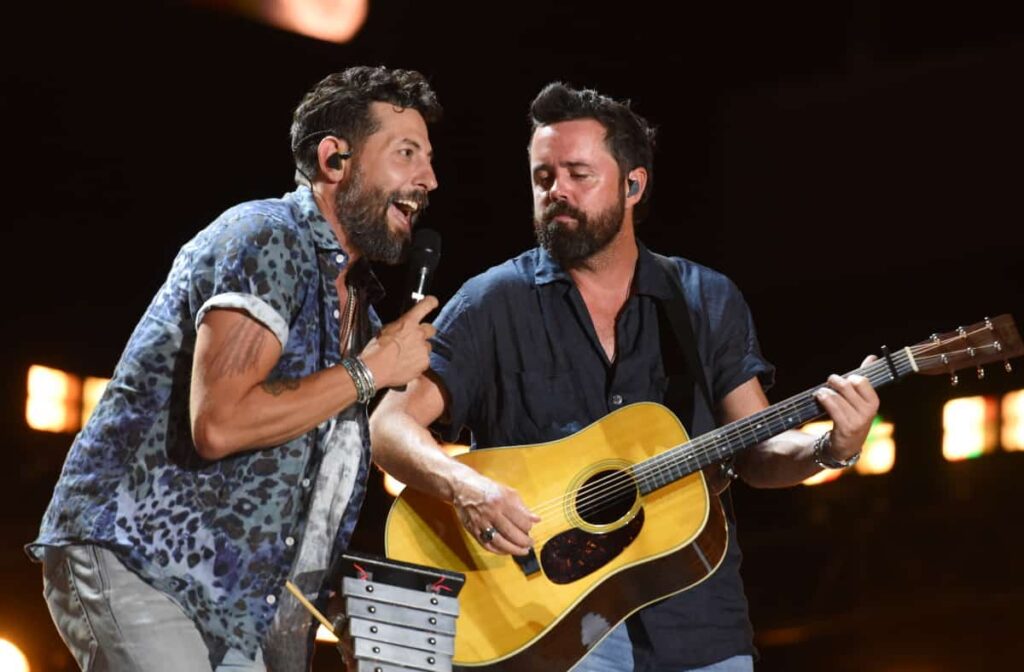
One reason Old Dominion feels so cohesive is that each member brings a defined musical role—but nobody is trying to “win” the arrangement. It’s a band that plays for the song.
Matthew Ramsey (lead vocals, guitar)
Matthew Ramsey is the front-door voice of Old Dominion: warm, conversational, and emotionally believable. His strength is how he phrases lyrics like he’s talking to a friend—never oversinging, never forcing drama.
As a guitarist, Ramsey tends to serve the vocal. That matters more than people realize. Frontmen who keep their rhythm playing simple and consistent make the entire band tighter—especially live. He also came up through songwriting, which shows in the way Old Dominion tracks are structured: clean sections, purposeful builds, and choruses that arrive fast enough to satisfy modern listeners while still feeling earned.
Why fans connect: Ramsey sells the lyric without acting it. The emotion lands because it’s believable.
Trevor Rosen (guitar, keyboards, vocals)
Trevor Rosen is one of the secret weapons of Old Dominion because he lives in the “writer-musician” intersection. He’s the guy who can hear a hook, shape the chord movement, and then color the production with keys or guitar textures that make the track feel modern.
In arrangement terms, Rosen’s role is often about glue: connecting sections, building transitions, and making sure the song stays exciting without needing a volume jump. That’s why Old Dominion songs can feel polished without feeling sterile.
Why it matters: modern country is crowded. Rosen helps the band sound current while staying emotionally grounded.
Brad Tursi (guitar)
Brad Tursi is a big part of why Old Dominion translates so well live. His guitar work is about feel and momentum—supportive rhythm choices, crisp articulation, and lead parts that elevate the hook rather than steal focus.
If you listen closely, Old Dominion guitar parts often act like backing vocals: repeating motifs, answering vocal lines, and reinforcing the groove. That’s a very “band” way to play—and it’s a big reason the records don’t feel like copy-paste track stacks.
Guitarist-to-guitarist respect point: he leaves space. That’s harder than shredding.
Geoff Sprung (bass)
Geoff Sprung’s bass work is the engine under the sunshine. In a band like Old Dominion, the bass has to do two jobs:
lock with the kick drum so the groove feels confident
outline chord movement so the song stays warm and emotional
Sprung brings a modern pocket—clean, supportive, and consistent. That stability is why Old Dominion can jump between “party track” and “heart track” without the band sounding like two different acts.
Why fans feel it: they may not notice the bass, but they feel the lift in the chorus because the foundation is right.
Whit Sellers (drums)
Whit Sellers is a major part of Old Dominion’s identity because his drumming supports the biggest band asset: singable choruses. His background includes that Virginia drumline world mentioned earlier, and it shows in his sense of timing and precision—especially when the band hits big section changes live.
But the real skill is restraint. In modern country, drums can easily overdo the “big radio” thing. Sellers keeps the groove energetic, not cluttered—so the lyric stays front and center.
Live-show superpower: dynamics. He knows when to push and when to let the crowd carry the moment.
7) The live show: what fans actually feel
People don’t keep buying tickets because you had a good record once. They come back because the show feels like belonging.
Old Dominion concerts work because:
the setlist is hook-stacked (you rarely go more than a few minutes without a “sing it” chorus)
the band’s chemistry reads as real—more friends than coworkers
the arrangements are built for crowd participation
the vibe is upbeat without being shallow
In other words, Old Dominion doesn’t just perform songs—they host a night.
8) FAQ: quick answers for new listeners
Where is Old Dominion from?
The band formed in Nashville, with strong Virginia connections among members, and the name references Virginia’s nickname.
Who are the members of Old Dominion?
Matthew Ramsey, Trevor Rosen, Brad Tursi, Geoff Sprung, and Whit Sellers.
What are Old Dominion’s major albums?
Meat and Candy (2015), Happy Endings (2017), Old Dominion (2019), Time, Tequila & Therapy (2021), Memory Lane (2023).
What’s a great starter playlist for Old Dominion?
Start with “Break Up with Him,” “Song for Another Time,” “One Man Band,” “Hotel Key,” and “Memory Lane,” then dive into the albums in order for the full story arc.