
Table of Contents
Toggle1) The Bryce Leatherwood sound in one sentence
Bryce Leatherwood is a throwback-country vocalist—rich baritone, clean phrasing, and a “say it like you lived it” delivery who broke through by winning The Voice Season 22 and then building a modern Nashville launch around that traditional core.
That matters right now because country has been stretching in two directions at once: arena-rock energy on one side, and neo-traditional storytelling on the other. Bryce slots naturally into the second lane—without feeling like a museum piece.
2) Early life in Georgia and the “classic country” pull
Bryce Leatherwood grew up in Woodstock, Georgia, and from the jump, his story reads like a classic country origin: small-town upbringing, a guitar in hand, and a musical compass pointed toward the greats. He’s been open about being drawn to traditional country legends—names like George Jones, Merle Haggard, and Conway Twitty—which explains a lot about how he shapes a line and why he doesn’t rush a lyric.
If you listen for it, you can hear that influence in the spaces he leaves. Traditional country singers don’t fill every crack with vocal gymnastics. They let the band breathe, they let the story breathe, and they let the audience lean in.
As a guitarist, I’ll put it this way: Bryce sings like a player who respects time. Not just tempo—time as in feel, pocket, the gentle push-and-pull that turns a simple progression into something human.
3) The Voice: the run that turned him into a household name
Most people met Bryce Leatherwood on Season 22 of The Voice—and that season gave him a narrative arc you couldn’t script better if you tried.
The audition that set the tone
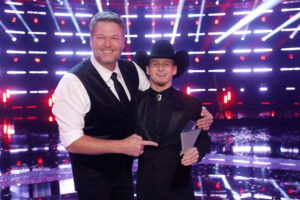
He walked into the Blind Auditions with “Goodbye Time” (associated with Conway Twitty, and famously covered by Blake Shelton), and multiple coaches turned their chairs. He ultimately joined Team Blake Shelton, which ended up being the perfect fit for his traditional-country lean.
The underdog wrinkle: Wildcard → winner
Here’s the piece of trivia fans still bring up: Bryce became the first winner of The Voice to win after being a Wildcard artist during the live playoffs. That’s not just a stat—it’s a pressure test. It means he had to fight for oxygen in the live rounds and still build momentum with the broader TV audience.
The win—and what it symbolized
Bryce Leatherwood won Season 22 on December 13, 2022, earning the show’s prize and a record deal with Universal Music Group—and it also marked Blake Shelton’s ninth (and final) coaching win.
In short: Bryce didn’t just win; he closed an era of the show in a very Blake coded way classic country, steady delivery, and a vocal that feels built for radio and honky-tonks, not just TV.
4) Why his baritone hits different (a guitarist’s ear-view)
Plenty of singers have big voices. Bryce Leatherwood has something rarer: a voice that sounds comfortable telling the truth.
A few musical reasons it works:
Resonance + restraint: His baritone carries weight, but he doesn’t oversing. He’ll sit on the front edge of a note and let the band do the lifting behind him.
Clear consonants: In story-driven country, diction is everything. If the audience can’t catch the line, the punch doesn’t land.
Phrasing that “leans back”: Traditional country phrasing often relaxes behind the beat. It’s the same reason a laid-back Telecaster rhythm part can feel better than a thousand notes of shred—pocket wins.
That combination is why Bryce Leatherwood’s performances on The Voice connected. Even when the song choice was familiar, he sounded like he believed it.
5) Life after The Voice: Nashville, writing rooms, and direction
After the show, Bryce did what serious modern country careers tend to require: he moved to Nashville and got to work in co-writes, developing his songwriting and building a sustainable lane beyond the TV spotlight.
That “post-show” period matters more than fans realize. Winning a TV competition creates a flashbulb moment; building a catalog creates a career. The goal is to turn recognition into replay value—songs people return to without the TV storyline.
6) The big career milestones so far
Here are the headline accomplishments Bryce Leatherwood has stacked early:
Winner, The Voice Season 22 (2022)
Record deal path with Universal Music Group Nashville (widely reported as the label umbrella tied to his launch)
First post-Voice release: “The Finger” (Oct 27, 2023)—his first widely promoted single after the win
Grand Ole Opry debut announced for Sept 14 (2024)—a meaningful “country credibility” milestone
Debut self-titled album release (2025)
That’s a clean early timeline: win → move to Nashville → release singles → Opry moment → debut album. It’s the traditional country career ladder, modernized.
7) Bryce Leatherwood’s debut album era
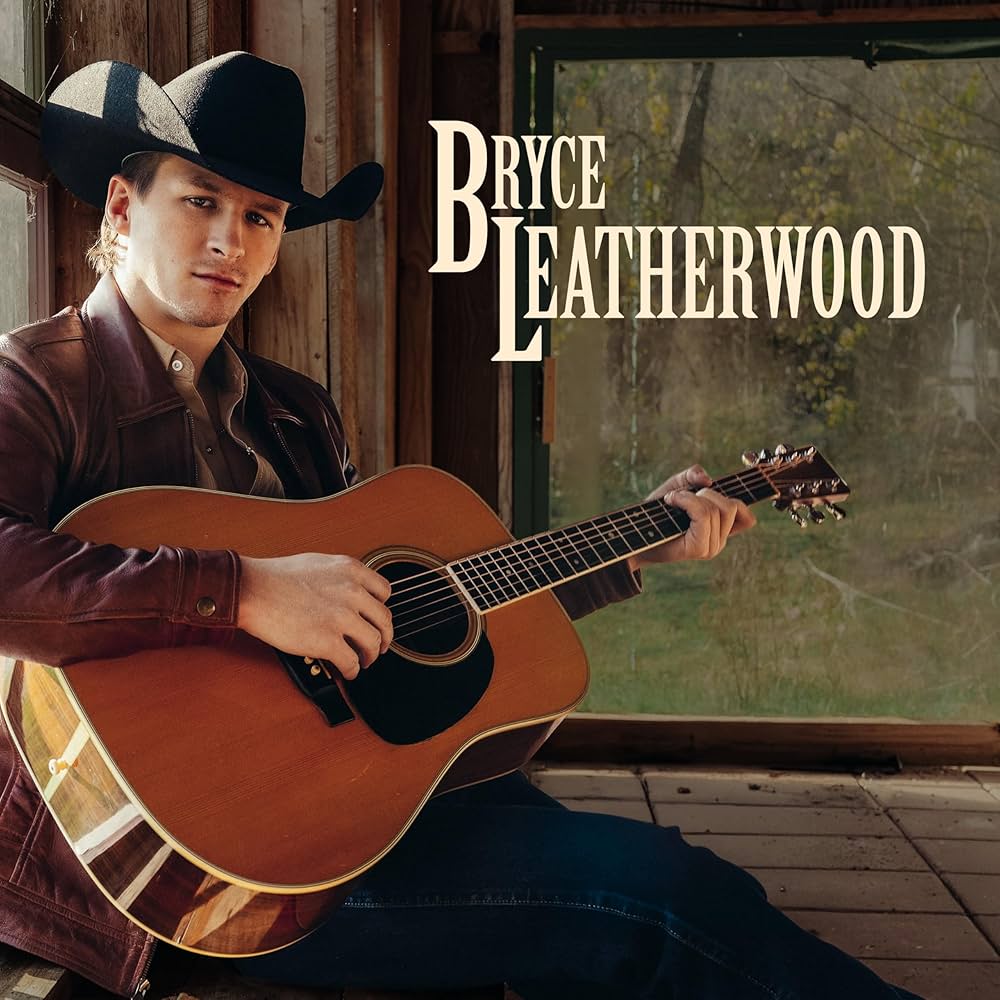
In 2025, Bryce Leatherwood stepped into his debut album season with a self-titled release a statement move that basically says: this is the foundation; learn my name.
Apple Music lists the self-titled record with tracks including:
“In Lieu Of Flowers”
“Neon Does”
“Something ’Bout A Girl”
“Still Learning”
“What If She Does”
Even from the titles alone, you can see the songwriting posture: relationship snapshots, barroom neon, reflection, and consequence—classic country subject matter without trying to be trendy for trend’s sake.
And that’s smart. Debut albums don’t have to reinvent the genre. They have to define the artist’s center of gravity so future records can expand outward without losing the core.
8) Top songs you should start with (and why they work)
Because streaming profiles shift as new singles roll out, I’m using platform listings (Apple Music/Spotify) as the “current snapshot” for top songs and notable releases.
1) “The Finger”
This is the post-win “first flag in the ground”—released Oct 27, 2023 and heavily positioned as his first major track after winning The Voice.
Why it works: it’s direct, hook-forward, and built to introduce him as an artist—not just a show winner.
2) “What If She Does”
Listed among his top songs on Apple Music and included on the self-titled album.
Why it works: the title hints at classic country tension—doubt, possibility, and the emotional risk that makes a chorus feel earned.
3) “Neon Does”
Appears both as a single and on the album tracklist.
Why it works: “neon” songs live in the honky-tonk universe. When done right, they’re cinematic: lights, regret, and one more decision.
4) “Still Learning”
On the album tracklist, and thematically it fits Bryce’s whole arc: young artist with an old soul, figuring out the next rung after a massive TV win.
5) “Hung Up On You”
Shows up among his singles/EP listings on streaming.
Why it works: it reads like a straight-down-the-middle country hook—emotionally plainspoken, melodically sticky.
6) “The One My Daddy Found”
Also listed as a single in Apple Music “More By”/top songs context.
Why it works: family references can turn into instant country anchors when they’re specific and sincere.
7) “Where The Bar Is”
Appears as a single on Apple Music’s artist page.
Why it works: bar songs are a country tradition because they’re communal—every listener has “their” bar, and every bar has “that” story.
Quick listening path: Start with “The Finger,” then jump to “What If She Does,” then let the album tracks (“Neon Does,” “Still Learning”) fill in the full picture.
9) What his influences tell us about what’s next
When an artist names George Jones, Merle Haggard, and Conway Twitty as inspirations, they’re not just picking cool names off a Mount Rushmore—they’re pointing to a skill set: interpretation.
Those singers were masters of:
making simple lyrics feel specific,
turning pain into something melodic instead of melodramatic,
letting the band serve the story.
So if Bryce Leatherwood keeps leaning into that school, the most likely “next chapter” is a catalog that grows deeper rather than louder—songs that perform well on radio and live, because the choruses aren’t tricks, they’re truths.
10) The live show factor: from TV stage to Opry stage
TV exposure is one thing; country legitimacy often gets measured in rooms and stages that have nothing to do with television.
That’s why the Grand Ole Opry debut matters. Bryce announced his Opry debut for September 14 (2024), and Opry social coverage also highlighted his debut appearance.
For traditional-leaning artists, the Opry isn’t just a gig—it’s a signal. It tells fans, industry folks, and other artists: this one belongs in the conversation.
11) The bottom line: where Bryce fits in modern country
Here’s the honest read: Bryce Leatherwood isn’t trying to be the loudest or weirdest or most viral. His lane is classic-country credibility with modern rollout strategy and that lane has been opening back up as audiences cycle toward storytelling again.
If you’re a fan, the best thing you can do is treat him like a career artist, not a “winner”: build your own relationship to the songs, not just the moment you first heard his name.
And if you’re a musician? Pay attention to his phrasing. It’s a reminder that you don’t need to overplay—vocally or instrumentally—when the feel is right and the lyric has weight.
FAQ about Bryce Leatherwood
Did Bryce Leatherwood win The Voice?
Yes—Bryce Leatherwood won Season 22 of The Voice in December 2022.
What team was Bryce Leatherwood on?
He competed on Team Blake Shelton.
What was Bryce Leatherwood’s first major single after winning?
His first widely promoted post-win track was “The Finger,” released October 27, 2023.
Does Bryce Leatherwood have an album?
Yes—streaming platforms list a self-titled album, Bryce Leatherwood (2025).
Where is Bryce Leatherwood from?
He’s from Woodstock, Georgia.

