
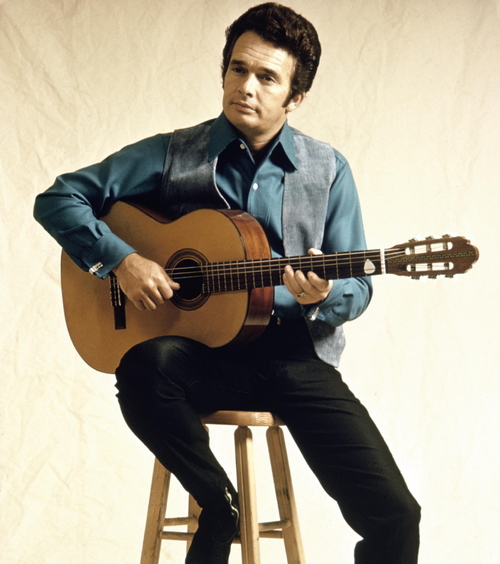
Merle Haggard isn’t just a country legend Haggard is a blueprint. A songwriter’s songwriter. A guitarist’s guitarist. A wanderer, a worker, a rebel, and a realist whose music carved a road that today’s artists still travel. When we talk about “authenticity” in country, we’re usually holding up some piece of Merle Haggard’s story raw edges and all without even knowing it.
Across a career that spanned more than five decades, He became one of the most influential voices in American music. His songs carried the weight of lived experience: poverty, prison, heartbreak, grit, patriotism, doubt, drinking, working, and getting back up when life knocks you sideways. His voice could swing from smoky smooth to scorched and jagged. His Telecaster work was deceptively simple, but incredibly musical. And his ability to turn a phrase bordered on the supernatural.
This blog dives deep into who Merle Haggard was, why he still matters, and how his music continues to shape genres far beyond country.
Table of Contents
ToggleFrom Boxcar Beginnings to Bakersfield Bars
Merle Haggard’s origin story is something out of a Steinbeck novel. Born in 1937 near Oildale, California, he literally grew up in a converted boxcar after his family fled the Oklahoma Dust Bowl. His father died when Merle Haggard was just nine years old, leaving behind a kid who suddenly had to figure the world out alone and fast.
Restless and sharp-witted, young Merle Haggard bounced between jobs, minor crimes, and time on the road. If Johnny Cash sang about prison, He actually lived it. After a string of petty offenses, he landed at San Quentin one of the toughest prisons in America. But fate has a sense of humor: Merle Haggard saw Johnny Cash’s legendary 1958 performance from inside that prison yard. That moment lit a fuse.
By the time he left San Quentin, Haggard had a new goal: he was going to make something of himself, and music was his way out.
The Bakersfield Sound: Electricity, Attitude, and a Telecaster’s Bite
If Nashville was creating polished, orchestral country in the 1950s and ‘60s, Bakersfield was making the opposite loud, twang-forward, electric, rough-around-the-edges honky-tonk. Think Telecasters through Fender amps, bar-band swagger, and zero patience for lush string arrangements.
Merle didn’t invent the Bakersfield sound (that credit goes mostly to Buck Owens and his Buckaroos), but he brought a level of songwriting grit that pushed the entire movement into the spotlight. Where Nashville felt smooth and safe, Merle Haggard sounded like a man with dirt on his boots and a past he wasn’t hiding.
As a guitarist, Merle Haggard favored clear, articulate picking nothing overly flashy, but always tasteful. His right-hand technique made each note feel intentional, and his phrasing carried the same honesty as his lyrics. If you’re a Telecaster player, you already know: Merle Haggard’s touch is the kind you spend years trying to emulate.
Merle Haggard the Songwriter: Truth First, Everything Else Second
The real magic of Merle Haggard wasn’t just his voice or his guitar playing it was his songwriting. Every line felt carved from experience. Every story felt lived-in.
Here’s the thing musicians understand: writing lyrics is easy. Writing true lyrics is hard. And Merle Haggard wrote truth like it was encoded in his DNA.
Working-class ballads
-
“Working Man Blues” is practically a national anthem for anyone who’s ever punched a clock and gone home sore.
-
“Big City” touches on the frustration of urban burnout long before it became a meme.
Outlaw reflections
-
“Mama Tried” remains one of the greatest musical apologies ever written—guilty, grateful, and defiant all at once.
-
“Sing Me Back Home” is a masterpiece in storytelling, weaving mercy, regret, and redemption.
Social commentary
-
“Okie from Muskogee” and “The Fightin’ Side of Me” sparked debate and divided listeners, but they also defined Merle Haggard as a chronicler of American tension.
Love him or argue with him, Merle Haggard didn’t pretend. He just wrote what he saw—and people saw themselves in it.
An Underrated Vocalist With Timeless Dynamics
Here’s a thing guitarists often overlook: Merle Haggard was one of the greatest vocal technicians in country music. His delivery balanced smooth phrasing with a conversational grit like he was telling you a secret at the back of a bar.
He could:
-
Lean into a bluesy bend.
-
Stretch a note until it cracked with emotion.
-
Glide through jazz-influenced runs.
-
Or land a line so straight and clean it felt spoken.
And he always knew when not to sing. Space was one of his best instruments.
The Musician’s Musician: Influences and Legacy
You don’t have to be a country fan to feel Merle Haggard’s influence. Rock, Americana, Red Dirt, outlaw country, folk, blues—even metal players can appreciate his mix of honesty and tone-forward playing.
Artists who openly cite Merle Haggard as inspiration include:
-
George Strait
-
Sturgill Simpson
-
Eric Church
-
Chris Stapleton
-
Keith Richards
-
Willie Nelson (who became one of Merle’s closest collaborators)
-
Kacey Musgraves
-
Tyler Childers
-
Even punk bands like Social Distortion have tipped their hats
His blend of grit and grace resonates across genres because it’s human. Guitarists, especially, gravitate to his no-nonsense approach. No overplaying. No showboating. Just feel.
Merle Haggard in the Modern Era: Why He Still Matters
In an age where music is often polished, filtered, and optimized for an algorithm, Merle Haggard’s authenticity hits like cold water.
Here’s why he still matters:
1. He stood for storytelling.
Not branding. Not image. Not metrics. Stories.
2. He kept the working class at the center.
Country music loses its compass when it forgets who it’s for. Merle Haggard never did.
3. He evolved without selling out.
Across decades, he let his sound shift—but always stayed himself.
4. He proved music can be both political and personal.
Not preachy. Not sanitized. Just honest.
5. He left a catalog that still teaches musicians today.
Whether you’re learning Telecaster tone, studying phrasing, refining lyrics, or shaping your own voice—Merle Haggard is a masterclass.
Essential Merle Haggard Songs (for Fans, Musicians, and Guitar Players)
If you want to understand the depth of Merle Haggard’s artistry, start with these:
-
“Mama Tried” – A cornerstone of country music and an autobiographical classic.
-
“Silver Wings” – Pure melodic beauty; listen to the phrasing.
-
“Workin’ Man Blues” – A must for any guitarist—tight, clean, and grooving.
-
“Sing Me Back Home” – Emotionally devastating songwriting at its finest.
-
“The Bottle Let Me Down” – Bakersfield sound perfection.
-
“That’s the Way Love Goes” – Smooth, reflective, and timeless.
-
“If We Make It Through December” – One of the best holiday songs ever written.
-
“Big City” – A working-class anthem with bite.
-
“Kern River” – Haunting and poetic.
-
“Pancho and Lefty” (with Willie Nelson) – Two legends at their peak.
Conclusion: Merle Haggard’s Legacy Won’t Fade Because It’s Still Being Lived
Merle Haggard didn’t chase fame. He didn’t polish away his rough edges. He didn’t tailor his songs for trends. He simply wrote the truth as he saw it, played guitar with tone and intention, and sang like a man who’d already lived ten lives.
That’s why Merle Haggard endures.
That’s why new generations keep discovering him.
And that’s why his influence stretches far beyond country music—into rock, Americana, folk, and anywhere raw storytelling still matters.
If you’re a songwriter, study his lyrics.
If you’re a guitarist, study his touch.
If you’re a fan of human honesty, study his life.
Merle Haggard didn’t just shape a genre.
Merle Haggard shaped the American musical landscape.
And we’re still walking the road he paved
Pingback: Workin' Man: Willie Sings Merle tribute review - FrizzellMusic