
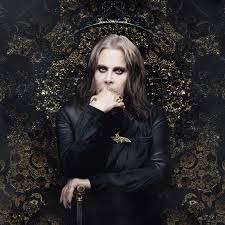
Ozzy Osbourne – often dubbed the “Prince of Darkness” – is a legendary figure in rock, known for his wild antics and pioneering role in heavy metal music. Rising to fame as the frontman of Black Sabbath in the 1970s, Osbourne helped define the heavy metal genre with his dramatic vocal style and dark, rebellious persona. Over a career spanning more than five decades, this Ozzy Osbourne heavy metal icon has sold over 100 million records and earned numerous awards, from Grammy wins to inductions into the Rock and Roll Hall of Fame. In addition to musical success, he became a pop culture staple – from reality TV stardom to a reputation for outrageous onstage stunts – all while influencing generations of hard rock and metal artists with his unmistakable voice and charisma.
Table of Contents
ToggleEarly Years and Black Sabbath (1948–1979)
Ozzy Osbourne was born John Michael Osbourne on December 3, 1948, in Birmingham, England. He grew up in a working-class family and left school at 15, taking up odd jobs and even dabbling in petty crime during his troubled youth. In fact, Osbourne spent time in jail as a teenager for burglary, an experience that he later admitted he “was no good at”. Despite these early struggles, his passion for music endured. In 1968 he teamed up with guitarist Tony Iommi, bassist Geezer Butler, and drummer Bill Ward to form a band first known as Earth. To avoid confusion with another group, they renamed themselves Black Sabbath, inspired by a Boris Karloff horror film, and forged a heavy, ominous sound that drew on blues-rock while embracing occult and macabre themes.
Black Sabbath’s self-titled debut album was released in 1970, marking the birth of a new genre of heavy metal. They quickly followed up with Paranoid (1970), a landmark album featuring classics like “War Pigs” and “Iron Man” that topped the UK charts. The band’s loud, downtuned riffs and Osbourne’s haunting wail on these tracks helped cement heavy metal as a distinct musical movement. Subsequent albums such as Master of Reality (1971) – whose sludgy, “doom”-laden sound influenced countless metal subgenres – and Sabbath Bloody Sabbath (1973) solidified Black Sabbath’s status as heavy metal innovators. By the late 1970s, Black Sabbath had delivered a string of six multiplatinum albums and attained global fame, with Ozzy Osbourne’s dramatic stage presence and vocals at the forefront of their appeal. However, years of relentless touring and substance abuse began taking a toll on Osbourne. His struggles with alcohol and drugs led to increasing instability, and in 1979 the band fired Osbourne from Black Sabbath, citing his unreliability due to addiction. This painful split marked the end of an era – but also paved the way for Ozzy’s remarkable rebirth as a solo artist.
Solo Career and 1980s Success
After his ouster from Black Sabbath, Ozzy Osbourne entered a period of depression and uncertainty, compounded by a messy divorce from his first wife as his personal life unraveled. Sharon Arden, who would later become his second wife, stepped in to guide him and urged him to launch a solo career. With renewed focus, Osbourne assembled a new band and, crucially, teamed up with a young guitar virtuoso named Randy Rhoads. The result was Blizzard of Ozz (1980) – Ozzy’s debut solo album – which became a multi-platinum hit thanks to its energetic heavy metal anthems and the now-classic single “Crazy Train”. The album’s success firmly established that Ozzy Osbourne heavy metal magic was alive and well even outside of Black Sabbath. He quickly followed up with Diary of a Madman (1981), another wildly popular album that sold over five million copies and continued to showcase Osbourne’s distinctive vocals alongside Rhoads’s innovative guitar work.
Tragically, Ozzy’s momentum was nearly derailed in 1982 when Randy Rhoads died in a shocking plane crash while on tour. The loss of his close friend and bandmate plunged Osbourne into grief, but he persevered. In the midst of these hardships, Osbourne’s reputation for outrageous stage antics also grew. Famously, during a 1982 concert, he bit the head off a bat, having mistakenly assumed the bat was a rubber toy thrown by a fan. (He would later joke about the incident after a rabies shot, cementing his image as rock’s ultimate wild man.) This and other notorious episodes – including biting the heads off two doves at a 1981 record label meeting – became rock lore and only fueled the public’s morbid fascination with Osbourne. Meanwhile, his solo career continued strong through the mid-1980s with albums like Bark at the Moon (1983) and The Ultimate Sin (1986), featuring hit songs that kept him on the charts. In 1991, Ozzy scored one of his biggest solo hits with the power ballad “Mama, I’m Coming Home,” which became his first Top 40 single in the U.S.. The following year, he surprised fans by announcing a farewell tour (cheekily dubbed “No More Tours”) in 1992 – yet his “retirement” proved short-lived, as he was back to recording and performing by the mid-90s.
Ozzfest, Awards, and Continued Stardom (1990s–2000s)
Despite health scares and talk of retirement, Ozzy Osbourne’s productivity in the 1990s remained high. In 1993, he won a Grammy Award for Best Metal Performance for the live track “I Don’t Want to Change the World,” validating his standing as one of metal’s premier vocalists. Around the same time, Osbourne and Sharon launched Ozzfest in 1996 – a traveling summer metal festival that became an annual institution, introducing dozens of up-and-coming heavy bands to mainstream audiences. Ozzfest’s success not only showcased Ozzy’s enduring influence on heavy metal but also demonstrated his savvy in nurturing the next generation of metal talent.
By the decade’s end, the Prince of Darkness had even mended fences with his old bandmates. Black Sabbath’s original lineup reunited to headline Ozzfest and eventually record a new studio album. In 1999, Black Sabbath won a Grammy for a live performance of their signature song “Iron Man,” and the reunion momentum led to 13 (2013) – the first Black Sabbath studio album with Ozzy in 35 years. That album debuted at No. 1, giving the band a long-awaited chart-topper in the U.S. and another Grammy Award (for the single “God Is Dead?”). Meanwhile, Ozzy’s solo catalog kept growing. He released albums like Ozzmosis (1995) and Down to Earth (2001), and in 2002 he achieved an unlikely UK No.1 single with “Changes,” a heartfelt duet with his daughter Kelly Osbourne.
Osbourne’s fame also reached new heights in the early 2000s thanks to television. The MTV reality series “The Osbournes” (2002–2005) became a pop culture phenomenon, giving fans an unvarnished (and often hilarious) look at Ozzy’s domestic life with Sharon and their children Jack and Kelly. The show was an instant hit, ranking among MTV’s highest-rated programs and even winning an Emmy Award in 2002. Ironically, the notorious hellraiser was now endeared to millions as a bumbling, lovable patriarch on TV – a transformation that broadened his appeal beyond the heavy metal diehards. Osbourne embraced other media ventures too, from guest appearances in films to voice roles in animated movies, further cementing his status as a crossover celebrity.
Later Years, Health Struggles, and “No More Tours” (2010s–2023)
Even as he entered his 60s and 70s, Ozzy Osbourne refused to slow down. He continued to record new music, releasing the albums Black Rain (2007) and Scream (2010), followed by a 10-year gap before 2020’s Ordinary Man. Impressively, his 2022 album Patient Number 9 earned critical acclaim and won Best Rock Album at the 2023 Grammy Awards, while its track “Degradation Rules” (featuring Tony Iommi) won Best Metal Performance. These achievements underscored that Osbourne’s talent and popularity endured, even as he made music into his seventh decade. Moreover, in recognition of his contributions, Ozzy received numerous honors. He was inducted into the Rock and Roll Hall of Fame twice – first as a member of Black Sabbath in 2006, and again as a solo artist in 2024. He also garnered a Lifetime Achievement Award with Black Sabbath at the Grammys in 2019, a Global Icon Award at the MTV Europe Music Awards in 2014, and various other accolades that solidified his legendary status.
However, alongside the triumphs came serious health challenges. Years of stage injuries and hard living began catching up with Osbourne. In 2003, he had a near-fatal ATV accident, breaking his neck, collarbone, and ribs. He was diagnosed with a form of Parkinson’s disease (Parkin syndrome) in 2005 and publicly revealed a Parkinson’s diagnosis in early 2020. These issues, compounded by spinal damage from a 2019 fall, led to a string of surgeries and treatments. Despite his determination, by 2023 Ozzy had become physically frail – he noted undergoing “three operations, stem cell treatments, endless physical therapy sessions, and… groundbreaking Cybernics (HAL) treatment” in an effort to recover. Consequently, in February 2023, the 74-year-old Osbourne announced with deep regret that he was retiring from touring, as he was “not physically capable” of the extensive travel and performance schedule that live tours require. “Never would I have imagined that my touring days would end this way,” he lamented, apologizing to fans and admitting that the thought of disappointing them “really f*s me up**”. This heartfelt statement showed Osbourne’s enduring love for his fans and performing, even as he faced the reality of his health limitations.
Importantly, retirement from full tours did not mean complete retreat. Osbourne expressed hope that he might still play select shows or one-off events if possible. Indeed, he continued recording music – in 2024, he even released a collaborative single titled “Crack Cocaine” with guitarist Billy Morrison – proving that his creative spark was still alive. Fans took comfort that while Ozzy Osbourne heavy metal concerts might be largely over, his musical output and spirit remained unbroken.
Final Performance and Reflections on Legacy
Ozzy Osbourne’s grand finale came on July 5, 2025, in his English hometown of Birmingham. Billed as “Back to the Beginning,” this all-star concert was both a tribute and a farewell, spanning an epic 10-hour celebration of heavy music. Osbourne, determined to take the stage one last time despite his health, opened the show dramatically seated on a black throne (as his Parkinson’s had left him unable to stand unaided). He delivered a rousing set of solo hits, his voice resilient and passionate, proving that even in his mid-70s he could captivate a crowd of 40,000 fans. The festival-like event featured metal titans such as Metallica, Slipknot, Guns N’ Roses, Tool, and more – all performing in honor of Ozzy and Black Sabbath’s immense influence on the genre. Fittingly, the night culminated in an emotional Black Sabbath reunion, with Ozzy reuniting onstage with Tony Iommi, Geezer Butler, and Bill Ward for the band’s final bow. This hometown encore brought his career full circle, ending where it all began over a half-century earlier.
Just two weeks after this victorious final show, on July 22, 2025, Ozzy Osbourne died at the age of 76 after years of declining health. He passed away peacefully, surrounded by family, and the news prompted an outpouring of tributes across the music world. Fellow rock legends and fans alike shared reflections on his outsized legacy. Members of Duran Duran, fellow Birmingham natives, remarked that it was “hard to imagine a world without him” and praised how Ozzy “brought so much joy, humour and raw power” through his life in music. Countless others hailed him as a “founding father of heavy metal” who inspired generations of artists. Indeed, Osbourne’s influence can be heard in the music of metal and hard rock bands around the globe – many of whom got their start on Ozzfest or cite Black Sabbath’s riffs as the reason they picked up instruments. His persona also broadened the template for rock stardom: Ozzy proved that a performer could be menacing onstage yet endearing offstage, remaining a beloved figure even after courting controversy.
In the end, Ozzy Osbourne’s life journey – from a disadvantaged youth in Birmingham to heavy metal icon – stands as one of rock’s most remarkable sagas. He broke new ground with Black Sabbath, reinvented himself as a solo superstar, survived personal demons, and remained culturally relevant across decades. Moreover, he did it all on his own terms, with a mischievous grin and an unshakeable bond with his audience. As the Ozzy Osbourne heavy metal legacy continues to resonate, fans will remember him not only for the dark, electrifying music he created, but also for his resilience, humor, and heart. Ozzy’s unmistakable voice and larger-than-life presence ensured that he will forever be known as one of the greatest figures in heavy metal history, a true Prince of Darkness who brought light to millions through his music.