

From the Bronx to the Main Stage: The Rise of Steven Tyler
Born March 26, 1948 in Manhattan and raised in Yonkers, New York, Steven Victor Tallarico (later known as Steven Tyler) came into a family steeped in music — his father was a classical pianist and teacher.
Early on Tyler played drums and eventually gravitated to singing.
By around 1970, Tyler teamed with guitarist Joe Perry and bassist Tom Hamilton, relocated to Boston’s Allston/Brighton area and formed Aerosmith. The band lived together, rehearsed hard, and cut their teeth in the club circuit.
Why this part matters for you (musicians & fans):
Tyler’s shift from percussion to frontman shows the value of versatility: if you play guitar and sing backup, you could evolve.
The band’s immersion (living & breathing together) built chemistry — a key ingredient often overlooked.
His early songwriting (he wrote what became “Dream On”) underscores the essential of original material.
Breakthrough & Wild Years
Aerosmith’s string of hits in the 1970s — albums like Toys in the Attic and Rocks — cemented their status. But the lifestyle caught up: excess, drugs, burnout. Tyler and the band were famously the “Toxic Twins.”
Then came the slump: fewer hits, internal drama, Tyler collapsing on stage in 1980.
The Comeback
By 1986-87 a key turning point: The reworked “Walk This Way” (with Run-DMC) brought Aerosmith back to a younger generation. From there albums like Permanent Vacation (1987) and Pump (1989) revived their star power.
Lesson for your brand as musician/fan: Persistence matters. Tyler and band didn’t fade — they reinvented and returned stronger.
The Voice, The Showmanship & The Craft Behind Steven Tyler
Vocal Range & Technique
Search “Steven Tyler vocal range” and you’ll find a variety of numbers — but everybody notes one thing: massive range. Some sources say he hits up to E6 and spans roughly four octaves. Others list it more modestly at C#3-D5.
From a musician’s lens, here’s what to pull:
Control at extremes: Hitting high notes (or lows) is one thing — sustaining them live consistently is something else. Tyler’s career shows he managed both.
Stage identity + technical skill: It’s not just about the notes — it’s about the scream, the phrasing (“Dream On” intro, the belted choruses) and the performance.
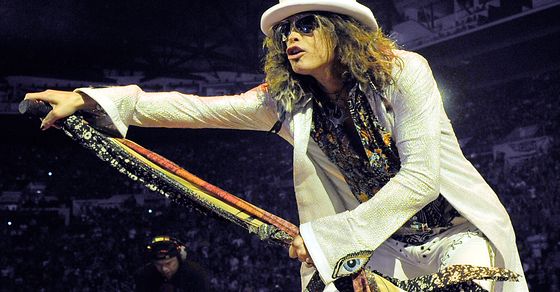
Gear & mic technique: Tyler often uses mic-stands wrapped in scarves (his signature look), leans into the mic to emphasize overtones, and mixes rock grit with bluesy nuance.
Showmanship & Visual Identity
Steven Tyler never looked or sounded like a typical jeans-and-tee rock frontman. His outfits were flamboyant, scarves wrapped round mic-stands, stage moves were acrobatic.
For musicians and content creators: Stage presence is like the amplifier to your guitar — if you have a flair or visual hook, it strengthens your sound. Tyler’s flamboyance works because it feels authentic to his voice and music.
Songwriting & Instrumentation
While he’s known for vocals, Tyler is also a multi-instrumentalist (keyboards, harmonica, percussion) and co-songwriter of many Aerosmith hits.
If you’re a musician: Don’t neglect songwriting and expanding your skill set. Being versatile helps you sustain and evolve.
Cultural Impact & Style Influence: Why Steven Tyler Still Matters


Steven Tyler didn’t stay locked into a 70’s rock template. He embraced:
Rap/rock crossover via the “Walk This Way” revival.
A solo country project around 2015-16, releasing “Love Is Your Name”.
Television appearances (judge on American Idol) and pop-culture cameo roles.
For your brand: Versatility is your friend. If you’re a rock guitarist rooted in one genre, exploring acoustic sets, cross-genre features, or digital formats keeps you relevant.
Style & Attitude
His androgynous fashion mix, scarves, platform boots, makeup — Tyler challenged the male rock front-man stereotype of jeans + tee.
As a content creator or musician: think about your visual “signature” — maybe a particular color, instrument wrap, mic accessory, stage move — something that becomes you.
Legacy & Influence
Tyler is often included in lists of top rock singers of all time.
His vocal stylings (the scream, the phrasing) informed later rock/metal vocalists.
His story (rise, fall, rebound) is mythic — as much about endurance as about talent.
Key Lessons for Fans & Musicians
Embrace your range: Whether you’re on guitar or vocals, push boundaries. Tyler lived by his range.
Never stop reinventing: Tyler’s career = early success → crash → comeback → diversification.
Stage identity matters: Your look, your gear, your accessories reflect your sound.
Authenticity > perfection: Tyler’s voice isn’t flawless — it’s real and raw. Musicians: don’t chase perfect — chase real.
Collaborate across genres: Tyler showed crossover works. Invite someone outside your comfort zone.
Story + emotion: A good guitar riff or vocal lick tells a story. Tyler’s songs like “Dream On” carry heart.
Health and longevity count: Tyler’s had battles (substance abuse, injuries) — tone the ego and respect the instrument (voice, body, gear).
In Conclusion
So, why does Steven Tyler still matter in 2025 and beyond? Because he embodies rock’s wild edge and the ability to adapt and survive. He’s more than a voice — he’s a symbol of resilience, style, and rock-raw bravery.
For fans: his catalogue is rich and still inspiring.
For musicians: his journey is a masterclass in craft, chaos, and comeback.
Next time you plug in, strap up, or warm up vocals — think of that mic-stand wrapped in scarves and ask: What’s my signature move? Then play it out loud.